

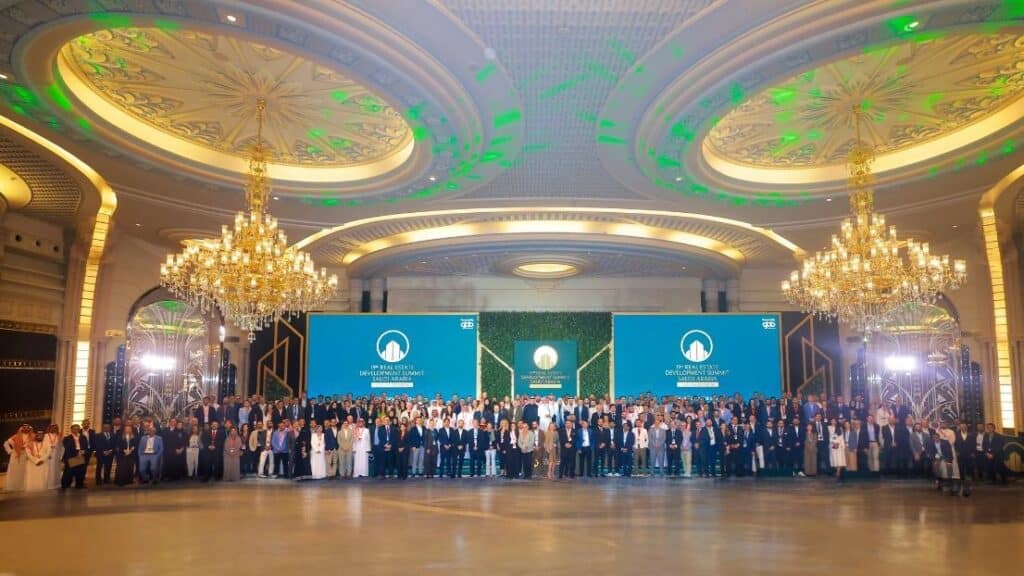
The 19th Real Estate Development Summit in Saudi Arabia emerged as a defining moment for the Kingdom’s property and infrastructure ambitions. More than a conference, it felt like a collective pause to reflect on how far the nation has come and a confident step forward into what lies ahead. The conversations, ideas, and strategies shared throughout the summit clearly showed that Vision 2030 is no longer a distant roadmap. It is an active force reshaping skylines, lifestyles, and investment priorities across the Kingdom.
With an estimated $2 trillion development pipeline in motion, Saudi Arabia’s real estate sector is entering a phase of unprecedented scale and sophistication. The summit captured this momentum by bringing together policymakers, developers, investors, architects, planners, and technology leaders who are directly shaping the next chapter of urban development.
A Summit That Reflected National Transformation
From the opening discussions, it was clear that the real estate sector is central to Saudi Arabia’s broader economic transformation. Vision 2030 has positioned real estate as a growth engine, a job creator, and a platform for improving quality of life. The summit reflected this alignment by focusing not just on buildings, but on communities, sustainability, and long-term value.
Participants spoke openly about the shift from traditional development models to integrated urban ecosystems. Residential, commercial, hospitality, logistics, and entertainment projects are now being planned together, ensuring cities are more liveable, connected, and resilient.
Confidence Built on Clear Direction
One of the strongest themes was confidence. Developers and investors expressed certainty because of the clarity provided by Vision 2030. Regulatory reforms, transparent frameworks, and government-backed initiatives have reduced uncertainty and encouraged both local and international participation.
This confidence was visible in discussions around project financing, land development, and public-private partnerships. Stakeholders repeatedly highlighted that Saudi Arabia is offering not just opportunities, but a structured environment where long-term investments can thrive.

The $2 Trillion Real Estate Pipeline Explained
The headline figure of a $2 trillion development pipeline dominated conversations, but the summit went deeper by unpacking what this number truly represents. It is not a single wave of construction, but a carefully phased transformation spanning decades.
Mega Projects Redefining Global Standards
Mega developments took center stage, with speakers discussing large-scale destinations that combine tourism, residential living, culture, and technology. These projects are designed to compete globally, attracting visitors, talent, and capital from around the world.
What stood out was the emphasis on identity. Rather than copying global cities, Saudi Arabia’s developments aim to reflect local culture, heritage, and landscapes while meeting international expectations for quality and innovation.
Urban Expansion and Housing Demand
Beyond high-profile mega projects, the summit placed strong focus on housing. Population growth, urbanization, and changing lifestyles are driving demand for diverse residential options. Developers shared insights on affordable housing, mid-income communities, and luxury living, all of which play a role in balanced urban growth.
There was a clear understanding that housing is not just about supply, but about accessibility, financing, and community services. Vision 2030’s housing programs were frequently cited as key enablers supporting both citizens and developers.
Vision 2030 as the Sector’s Guiding Force
Vision 2030 was not treated as a slogan at the summit. It was discussed as a practical framework influencing every decision, from zoning regulations to sustainability targets.
Aligning Public and Private Sectors
A recurring point was the strong alignment between government objectives and private sector execution. Ministries and authorities have moved from being regulators to strategic partners, working closely with developers to overcome challenges and accelerate delivery.
This collaboration has shortened approval timelines, improved infrastructure planning, and created more predictable development cycles. Speakers noted that this partnership model is one of Saudi Arabia’s strongest competitive advantages.
Economic Diversification Through Real Estate
Real estate was consistently linked to broader economic diversification goals. Developments are creating opportunities across construction, hospitality, retail, technology, and professional services. The sector is also attracting global expertise, helping to transfer knowledge and raise local capabilities.
The summit highlighted how mixed-use developments and special economic zones are becoming platforms for new industries, supporting Vision 2030’s aim to reduce reliance on oil revenues.
Sustainability Moves From Concept to Commitment
Sustainability was no longer discussed as an optional feature. At the summit, it was framed as a core requirement shaping design, construction, and long-term operations.
Green Building and Smart Cities
Developers shared progress on green building standards, energy efficiency, and smart city technologies. From water conservation systems to AI-driven building management, sustainability is being embedded into projects from the earliest planning stages.
There was also strong emphasis on climate-resilient design, particularly in response to regional environmental conditions. Speakers stressed that sustainability in Saudi Arabia must be practical, scalable, and economically viable.
Social Sustainability and Liveability
Beyond environmental factors, social sustainability received significant attention. Walkable neighborhoods, access to public spaces, cultural venues, and community facilities were highlighted as essential components of successful developments.
The summit reinforced the idea that real estate success is increasingly measured by how people feel living and working in these spaces, not just by financial returns.
Technology Reshaping Real Estate Development
Technology emerged as a powerful enabler across the entire real estate value chain. Discussions covered how digital tools are improving efficiency, transparency, and decision-making.
Data-Driven Planning and Construction
Speakers explained how data analytics, digital twins, and Building Information Modeling are reducing risks and optimizing project outcomes. These tools allow developers to simulate scenarios, control costs, and improve coordination among stakeholders.
Technology is also enhancing investor confidence by providing clearer visibility into project performance and timelines.
PropTech and the Future of Property Management
The summit also highlighted the growing role of property technology in asset management. Smart systems are improving tenant experiences, reducing operational costs, and supporting predictive maintenance.
This shift reflects a broader understanding that real estate value continues long after construction ends. Effective management and user experience are now critical to long-term success.
Global Interest and Local Empowerment
International participation at the summit underscored Saudi Arabia’s growing influence in global real estate markets. Investors from multiple regions expressed strong interest in the Kingdom’s pipeline, citing scale, ambition, and reform-driven stability.
Building Local Talent and Capabilities
At the same time, there was a strong focus on empowering local talent. Training programs, knowledge transfer, and Saudi workforce participation were discussed as priorities.
Speakers emphasized that sustainable growth depends on developing local expertise across development, engineering, design, and management roles. Vision 2030’s human capital goals were seen as closely linked to real estate success.
Challenges Acknowledged, Solutions Shared
While optimism dominated, the summit did not shy away from challenges. Supply chain pressures, cost management, and workforce capacity were openly discussed.
What made the conversations constructive was the focus on solutions. Collaborative procurement, local manufacturing, modular construction, and policy flexibility were presented as practical ways to address these challenges without slowing momentum.
A Clear Signal of What Comes Next
As the summit concluded, one message was clear. Saudi Arabia’s real estate sector is no longer in a planning phase. It is in execution mode. The scale of ambition is matched by structured strategies, committed leadership, and growing market maturity.
The 19th Real Estate Development Summit served as a powerful reminder that Vision 2030 is being built day by day, project by project. With a $2 trillion pipeline underway, the Kingdom is not only transforming its own cities but also redefining what large-scale, future-focused development looks like on a global stage.
For developers, investors, and communities alike, the summit reinforced a shared belief that Saudi Arabia’s real estate journey is just beginning, and its impact will be felt for generations to come.
Do follow Gulf Magazine on Instagram.
Also Read – Saudi Arabia Imposes 5-Year Jail, SR10M Fine for Fake Pesticides

