

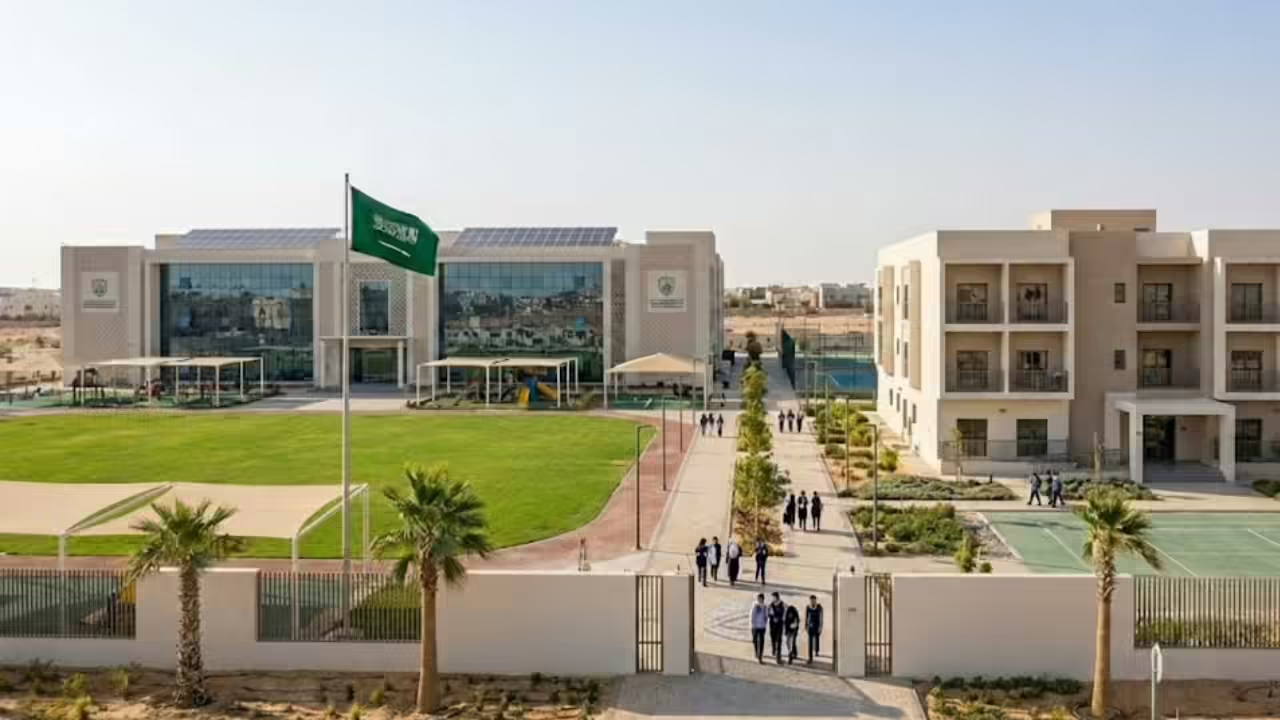
At the heart of this move is a renewed emphasis on learning environments. Authorities are no longer viewing school buildings as mere spaces for instruction but as ecosystems that shape student well-being, academic outcomes, and community trust. By tightening infrastructure standards and introducing regulated on-campus housing options, Saudi Arabia aims to elevate private schools to globally competitive institutions while remaining sensitive to local values and needs.
Saudi Arabia is taking a decisive step toward transforming its private education sector by introducing a strengthened regulatory framework that focuses heavily on infrastructure quality, student safety, and long-term sustainability. These new regulations signal a shift from basic compliance toward a more holistic vision of what private education should look like in a modern, rapidly developing society.
A Strategic Push Toward Higher Educational Quality
The updated framework reflects a broader national commitment to improving education outcomes across all levels. Private schools play a crucial role in this ecosystem, serving diverse communities, including expatriate families and Saudis seeking alternative curricula. With this growing influence comes greater responsibility, and regulators are making it clear that quality education begins with quality infrastructure.
The new standards are not merely technical requirements. They represent a philosophical shift, prioritizing safety, accessibility, and student-centered design. Schools are now expected to demonstrate that their physical environments actively support learning rather than simply accommodate it.
Why Infrastructure Is Now a Top Priority
Infrastructure has emerged as a key focus area because of its direct impact on students’ daily experiences. Overcrowded classrooms, poor ventilation, and inadequate safety measures can undermine even the strongest academic programs. Saudi regulators are addressing these concerns head-on by setting clearer benchmarks for space allocation, building materials, emergency preparedness, and overall campus design.
By enforcing these standards, authorities aim to ensure consistency across the private education sector. Parents can expect a more predictable level of quality, while schools are encouraged to invest thoughtfully in their facilities rather than opting for short-term or cost-cutting solutions.

New Infrastructure Standards Explained
The revised regulations introduce a comprehensive set of requirements that private schools must meet to operate or renew their licenses. These standards cover both new constructions and existing facilities undergoing expansion or renovation.
Schools are expected to provide adequate classroom sizes that align with student capacity limits, ensuring that learning spaces are not overcrowded. Natural lighting, proper ventilation, and noise control are also emphasized, recognizing their role in student concentration and overall well-being.
Safety and Accessibility at the Core
Student safety is a central pillar of the new framework. Schools must now comply with stricter fire safety protocols, including clearly marked exits, fire-resistant materials, and regular safety inspections. Emergency evacuation plans are no longer optional paperwork but operational requirements that must be tested and updated periodically.
Accessibility is another critical area. Campuses are required to accommodate students with physical disabilities through ramps, elevators where necessary, and accessible restrooms. This move reinforces the idea that inclusive education starts with inclusive design.
Recreational and Support Facilities
Beyond classrooms, the new standards extend to recreational and support spaces. Playgrounds, sports facilities, libraries, and science labs must meet minimum specifications to ensure they are safe, functional, and age-appropriate. Schools are encouraged to design spaces that promote physical activity, creativity, and collaboration, rather than limiting students to purely academic environments.
Counseling rooms, health clinics, and administrative offices are also addressed, reflecting a growing awareness of students’ mental and physical health needs.
Introducing the On-Campus Housing Option
One of the most notable aspects of the new framework is the regulated option for on-campus housing. This development is particularly relevant for schools serving students from different regions or countries, as well as institutions offering specialized programs that require extended hours or residential support.
On-campus housing is not mandatory, but schools that choose to offer it must adhere to detailed guidelines designed to protect students’ welfare.
Clear Rules for Student Accommodation
Residential facilities must meet strict standards related to room size, privacy, hygiene, and supervision. Separate accommodations for different age groups and genders are required where applicable, along with secure access controls to prevent unauthorized entry.
Supervision is a key component. Schools must employ trained residential staff responsible for student safety, well-being, and discipline outside academic hours. This ensures that on-campus housing is an extension of the school’s educational mission rather than a loosely managed add-on.

A Balance Between Independence and Care
The housing option reflects a careful balance between fostering student independence and ensuring adequate care. Regulators recognize that residential education can offer valuable life skills, cultural exchange, and academic focus when managed properly.
By formalizing standards for on-campus housing, Saudi Arabia is reducing risks associated with unregulated accommodation while giving families more confidence in choosing residential schooling options.
Impact on Private School Operators
For private school owners and administrators, the new regulations represent both a challenge and an opportunity. Compliance may require significant investment, particularly for older schools that need to upgrade existing facilities. However, those who meet or exceed the standards are likely to benefit from enhanced credibility and long-term sustainability.
Schools that proactively adapt to the framework can position themselves as premium institutions, appealing to parents who prioritize safety, quality, and holistic development.
Encouraging Long-Term Planning
The tightened framework discourages short-term thinking. Instead of focusing solely on enrollment numbers, schools are encouraged to plan for growth that aligns with infrastructure capacity and regulatory expectations.
This shift is expected to reduce instances of overcrowding and operational strain, leading to more stable and effective educational environments.
What This Means for Parents and Students
For parents, the new regulations offer reassurance. Choosing a private school can be a complex decision, often influenced by reputation, curriculum, and cost. Clear infrastructure standards add another layer of trust, helping families feel confident that schools are meeting baseline expectations for safety and quality.
Students stand to benefit most directly. Improved learning environments, safer campuses, and access to well-designed facilities can have a profound impact on motivation, engagement, and overall academic success.
Greater Transparency and Accountability
The framework also enhances transparency. Schools are required to document compliance and undergo regular evaluations, making it easier for authorities to monitor performance and address issues early.
This accountability helps ensure that private education remains aligned with national goals while respecting the diversity of educational models operating within the country.
Aligning with Saudi Arabia’s Broader Vision
The move to tighten regulations for private schools aligns closely with Saudi Arabia’s broader vision for social and economic development. Education is seen as a cornerstone of national progress, and private institutions are expected to contribute meaningfully to this ambition.
By raising standards, authorities are signaling that private education is not a parallel system operating independently, but an integral part of the country’s educational future.
Building Globally Competitive Institutions
With improved infrastructure and regulated residential options, Saudi private schools are better positioned to compete on a global level. International families, educators, and partners are more likely to engage with institutions that demonstrate clear commitment to quality and student welfare.
This global outlook does not come at the expense of local values. Instead, the framework seeks to blend international best practices with cultural sensitivity and national priorities.
Challenges and the Road Ahead
Implementing these regulations will not be without challenges. Smaller schools may face financial pressures, and timelines for compliance will need careful management. Authorities are expected to provide guidance and oversight to support a smooth transition.
Over time, however, the benefits are likely to outweigh the difficulties. A more regulated, transparent, and quality-driven private education sector can serve as a strong foundation for innovation and excellence.
A Defining Moment for Private Education
Saudi Arabia’s decision to tighten the regulatory framework for private schools marks a defining moment in the evolution of its education system. By focusing on infrastructure standards and introducing a well-regulated on-campus housing option, the country is setting clear expectations for what private education should deliver.
This is not just about buildings or rules. It is about creating environments where students feel safe, supported, and inspired to learn. For schools willing to rise to the occasion, the new framework offers a chance to build trust, enhance quality, and play a meaningful role in shaping the next generation.
Do follow Gulf Magazine on Instagram.
Also Read – Breitling Kitchen Debuts in Riyadh, Redefining Luxury Dining in the Middle East

