

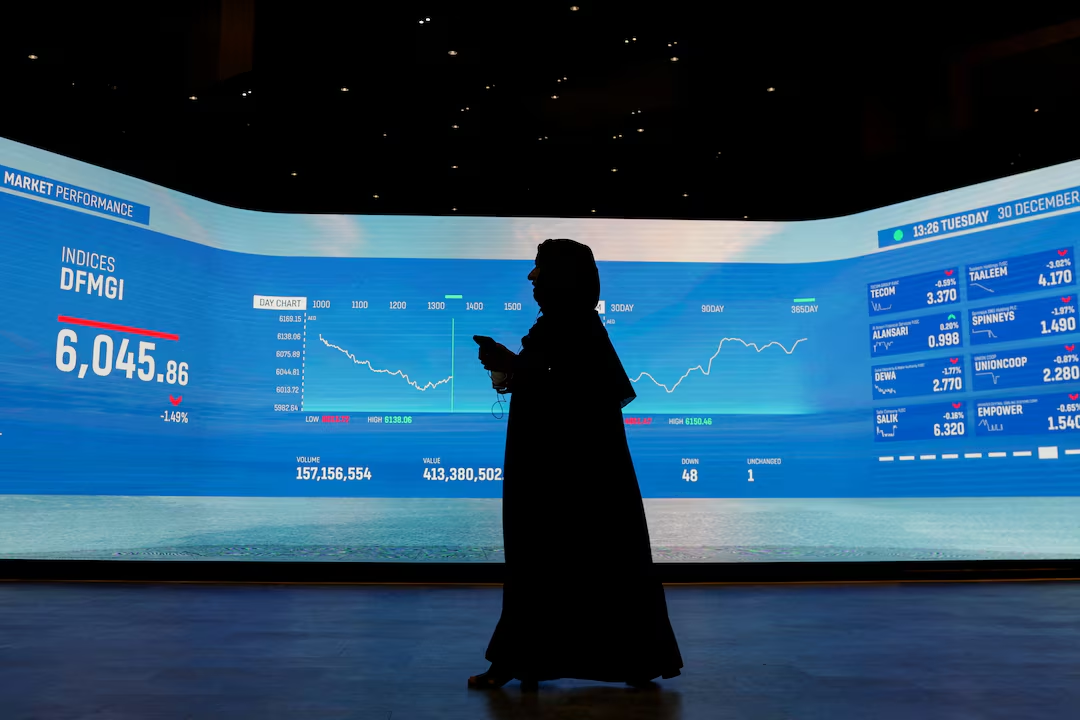
Gulf markets retreat as rising geopolitical tensions between Saudi Arabia and the United Arab Emirates over Yemen unsettle investors across the region. The sudden shift in sentiment triggered broad selling pressure, particularly in Dubai, Abu Dhabi, and Saudi Arabia, as traders reacted to growing uncertainty surrounding regional cooperation and stability.
The moment Gulf markets retreat, investor psychology turns defensive. Even long-term holders reassess risk when political disagreements involve two of the Gulf’s most influential economies. Market participants are not pricing in immediate conflict, but they are responding to the possibility of prolonged diplomatic strain that could affect economic coordination.
Market Performance Highlights the Scale of the Retreat
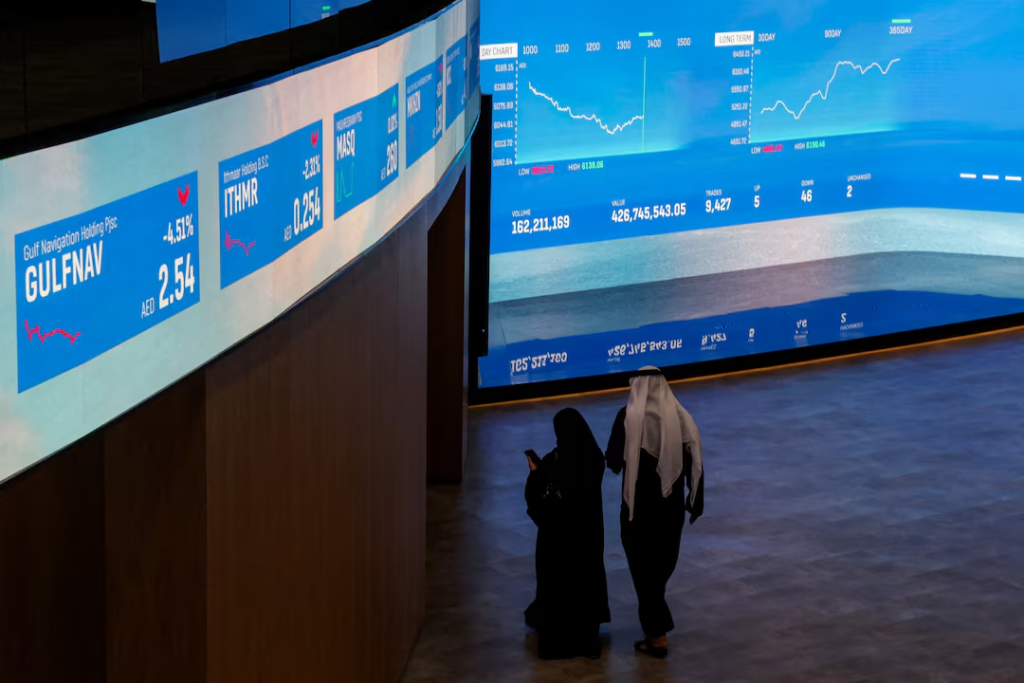
Dubai’s main index fell by around 2%, marking its biggest drop since early summer. The decline erased weeks of gradual gains and hit investor morale, especially among those who had been positioning for a stronger end to the year. Abu Dhabi’s index declined by nearly 1%, while Saudi Arabia’s Tadawul closed lower by approximately 0.6%, reflecting cautious trading rather than panic selling.
These movements may appear modest compared to global market crashes, but in the Gulf context they are significant. Regional markets are often driven by long-term investors, sovereign funds, and institutions that typically avoid rapid exits. A synchronized decline across multiple exchanges signals a collective reassessment of risk rather than isolated profit-taking.
Why Yemen Tensions Matter to Financial Markets
The conflict in Yemen has long been a geopolitical flashpoint, but renewed friction between Saudi Arabia and the UAE has added a new layer of complexity. Investors tend to price in not just the immediate risk of escalation, but also the broader implications for regional alliances, defense spending, and economic coordination.
Saudi Arabia and the UAE are pillars of the Gulf economy. Any sign of discord between them raises concerns about policy alignment, joint investments, and long-term regional strategies. Markets dislike uncertainty, and even the perception of strained relations can be enough to trigger sell-offs, especially when valuations have already risen on optimism.
Banking Stocks Feel the Pressure
Banking shares were among the hardest hit as investors moved away from sectors most sensitive to economic confidence. In Dubai and Abu Dhabi, major lenders saw noticeable declines, reflecting concerns that prolonged uncertainty could slow lending activity, investment flows, and corporate expansion plans.
Banks play a central role in Gulf economies, financing infrastructure projects, real estate developments, and private sector growth. When geopolitical risks rise, expectations for credit growth often soften. Even if fundamentals remain strong, market prices tend to adjust preemptively, anticipating potential headwinds.
Real Estate and Developers Face Renewed Caution
Property developers also came under pressure, particularly in Dubai, where real estate stocks have been a key driver of recent market performance. Investor sentiment toward the sector is closely linked to foreign investment, tourism, and overall economic stability. Any geopolitical tension that could deter capital inflows or delay projects tends to weigh heavily on valuations.
The recent retreat does not necessarily signal a structural downturn for Gulf real estate. Instead, it reflects a pause as investors reassess near-term risks. Many developers continue to report strong sales and robust demand, but markets are forward-looking, and uncertainty often prompts a temporary step back.
Saudi Arabia’s Market Balances Reform and Risk
Saudi Arabia’s Tadawul has undergone a remarkable transformation in recent years, driven by economic diversification, market reforms, and increased foreign participation. The latest decline highlights the delicate balance the market must maintain between long-term optimism and short-term geopolitical realities.
While the drop was smaller compared to Dubai, it was still notable given the size and depth of the Saudi market. Investors remain broadly confident in the Kingdom’s economic direction, but tensions involving regional security inevitably introduce caution, especially among international funds with strict risk management frameworks.
Investor Psychology and the Role of Headlines
Financial markets are not driven by data alone; perception and narrative play a powerful role. Headlines about rising tensions can amplify concerns, even before concrete economic impacts materialize. In this case, the idea of a rift between key Gulf allies was enough to prompt defensive positioning.
This does not mean investors expect an immediate crisis. Rather, they are adjusting portfolios to reflect a wider range of possible outcomes. Such behavior is typical during periods of geopolitical uncertainty, when preserving capital becomes as important as seeking returns.
How Regional Markets Have Responded in the Past
Historically, Gulf markets have shown an ability to recover from geopolitical shocks. Previous episodes of regional tension often triggered short-term volatility followed by stabilization once clarity emerged. Strong fiscal positions, government support, and long-term development plans have helped cushion the impact of political uncertainty.
This historical resilience offers some reassurance to investors. While the current retreat is uncomfortable, it does not automatically imply a prolonged downturn. Much will depend on how tensions evolve and whether diplomatic efforts succeed in reducing uncertainty.
The Role of Oil and Broader Economic Factors
Oil prices often act as a stabilizing force for Gulf markets, providing governments with the fiscal flexibility to support economies during turbulent periods. Although this market retreat was driven primarily by geopolitical concerns, energy revenues remain a critical backdrop.
If oil prices stay supportive, they could help limit the downside for regional equities. Strong government spending, infrastructure investment, and social programs can offset some of the negative sentiment caused by political developments, reinforcing confidence over the medium term.
What Investors Are Watching Next
Market participants are closely monitoring diplomatic signals, official statements, and any indications of de-escalation. Even small signs of improved coordination or dialogue between Saudi Arabia and the UAE could quickly lift sentiment and trigger a rebound in equities.
At the same time, investors are paying attention to corporate fundamentals. Earnings resilience, balance sheet strength, and continued economic reforms could help markets regain momentum once geopolitical fears subside.
A Test of Confidence, Not a Collapse
The recent retreat in Gulf markets represents a test of confidence rather than a collapse in fundamentals. Sharp declines often attract long-term investors looking for opportunities, particularly in markets with strong structural growth stories.
For now, caution dominates trading floors, but the underlying strengths of Gulf economies remain intact. Diversification efforts, infrastructure development, and demographic growth continue to support long-term prospects, even as short-term volatility persists.
Looking Ahead With Measured Optimism
While tensions over Yemen have introduced fresh uncertainty, Gulf markets have weathered similar storms before. Investors are recalibrating expectations, not abandoning the region. The coming weeks will be crucial in determining whether this retreat deepens or proves to be a temporary pause in a broader growth narrative.
In a region where economics and geopolitics are closely intertwined, moments like these remind investors of the importance of patience and perspective. The Gulf’s financial story is still being written, and resilience remains one of its defining themes
Do follow Gulf Magazine on Instagram.
Also Read – Saudi Arabia Support for Somalia Sovereignty Strengthens Unity and Stability

