

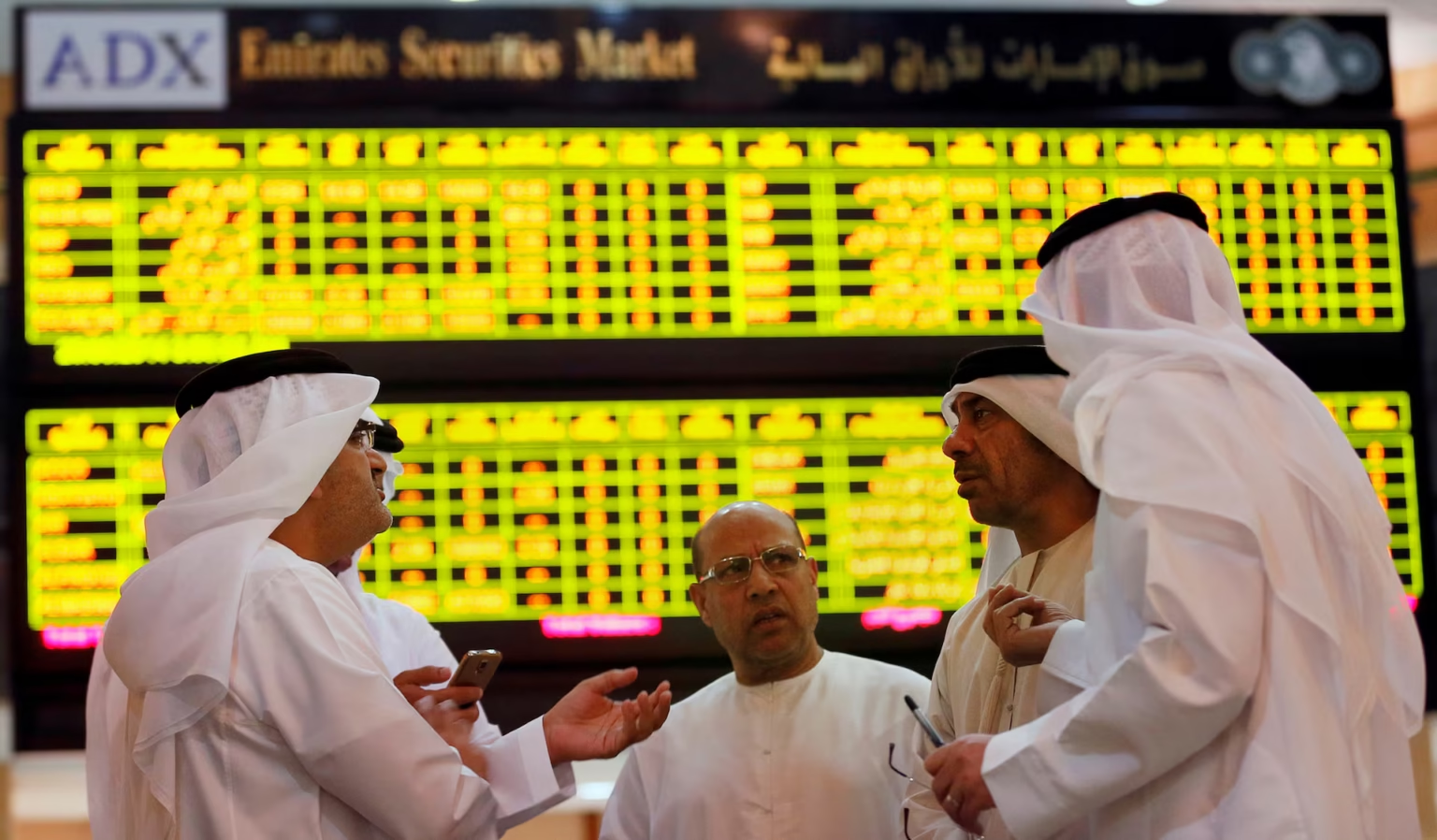
Gulf markets ended the trading session sharply lower, reflecting heightened investor caution amid renewed regional tensions. Major indices across the region closed in the red as traders reacted to diplomatic friction and military developments linked to the Yemen conflict. While the declines were broad-based, market participants stressed that the underlying economic fundamentals of the Gulf remain resilient despite short-term volatility.
Dubai’s benchmark index recorded the steepest fall, sliding close to 2 percent by the close of trading. Abu Dhabi and Saudi Arabia’s main indices were also under pressure, each declining by around 1 percent. The synchronized drop across key Gulf bourses highlighted how geopolitical developments can swiftly influence market sentiment in an interconnected regional economy.
Dubai Leads Losses as Blue-Chip Stocks Retreat
Dubai’s market bore the brunt of the sell-off, with several heavyweight stocks coming under intense selling pressure. Banking, real estate, and investment-linked shares were among the most affected as investors moved to lock in profits and reduce exposure to perceived risk.
Market analysts noted that Dubai’s sharper decline was partly due to its higher sensitivity to foreign investor flows. As global investors turned cautious, liquidity thinned and selling accelerated, pushing the index lower within a short span of time. Despite the downturn, traders emphasized that valuations in some sectors are now becoming more attractive for long-term investors.
Abu Dhabi and Saudi Markets Follow the Regional Trend
Abu Dhabi’s exchange also closed lower, though losses were more moderate compared to Dubai. Defensive stocks helped limit the downside, but sentiment remained subdued throughout the session. Energy-related shares fluctuated as oil prices remained volatile, adding another layer of uncertainty to trading decisions.
In Saudi Arabia, the region’s largest market by capitalization, the benchmark index slipped around 1 percent. Investors remained cautious, balancing concerns over regional security with confidence in the Kingdom’s ongoing economic reforms. While selling pressure was evident, market depth and domestic participation helped prevent a steeper decline.
Yemen Conflict Developments Add to Market Anxiety
The renewed focus on the Yemen conflict played a central role in shaping market sentiment. Diplomatic tensions and reports of military developments raised concerns about potential escalation, prompting investors to reassess risk exposure across the region.
Historically, Gulf markets have shown sensitivity to geopolitical headlines, especially when they involve security or energy supply routes. Traders noted that even without direct economic disruption, uncertainty alone can be enough to trigger short-term market corrections, as seen in the latest session.
Investor Behavior Reflects Cautious Optimism
Despite the sharp declines, market participants stressed that the sell-off appeared driven more by sentiment than by fundamentals. Many institutional investors adopted a wait-and-watch approach, while retail traders reacted more quickly to news flow.
There was also evidence of selective buying toward the close of trading, suggesting that some investors viewed the dip as an opportunity rather than a signal of prolonged weakness. This cautious optimism reflects confidence in the Gulf’s strong fiscal positions, ample reserves, and ongoing diversification efforts.
Economic Fundamentals Remain Strong
Economists and market strategists were quick to point out that the Gulf’s macroeconomic outlook remains broadly positive. Government spending continues to support growth, major infrastructure projects are progressing, and non-oil sectors are expanding across several economies.
Saudi Arabia’s Vision 2030 reforms, the UAE’s focus on attracting foreign investment, and regional efforts to strengthen financial markets all provide a strong foundation that could help markets stabilize once geopolitical concerns ease. These structural strengths have historically allowed Gulf markets to recover from external shocks more quickly than many peers.
Oil Prices and Global Factors in Focus
Alongside regional tensions, global factors also played a role in shaping market movements. Fluctuations in oil prices added to uncertainty, as energy revenues remain a key driver of fiscal health across the Gulf. At the same time, global investors are closely watching interest rate trends and economic data from major economies.
The combination of regional and global pressures created a challenging environment for risk assets, but analysts believe that clarity on either front could help restore confidence in the coming sessions.
Outlook: Short-Term Volatility, Long-Term Confidence
Looking ahead, analysts expect Gulf markets to remain volatile in the short term as investors digest ongoing developments. However, most agree that the recent declines do not signal a fundamental shift in the region’s economic trajectory.
If diplomatic efforts succeed in easing tensions and global conditions remain supportive, Gulf equities could see a rebound driven by strong earnings potential and continued economic reform. For now, investors are advised to stay informed, diversify exposure, and focus on long-term value rather than short-term noise.
Do follow Gulf Magazine on Instagram.
Also Read – Major Gulf Markets Decline Amid Rising Regional Tensions

