

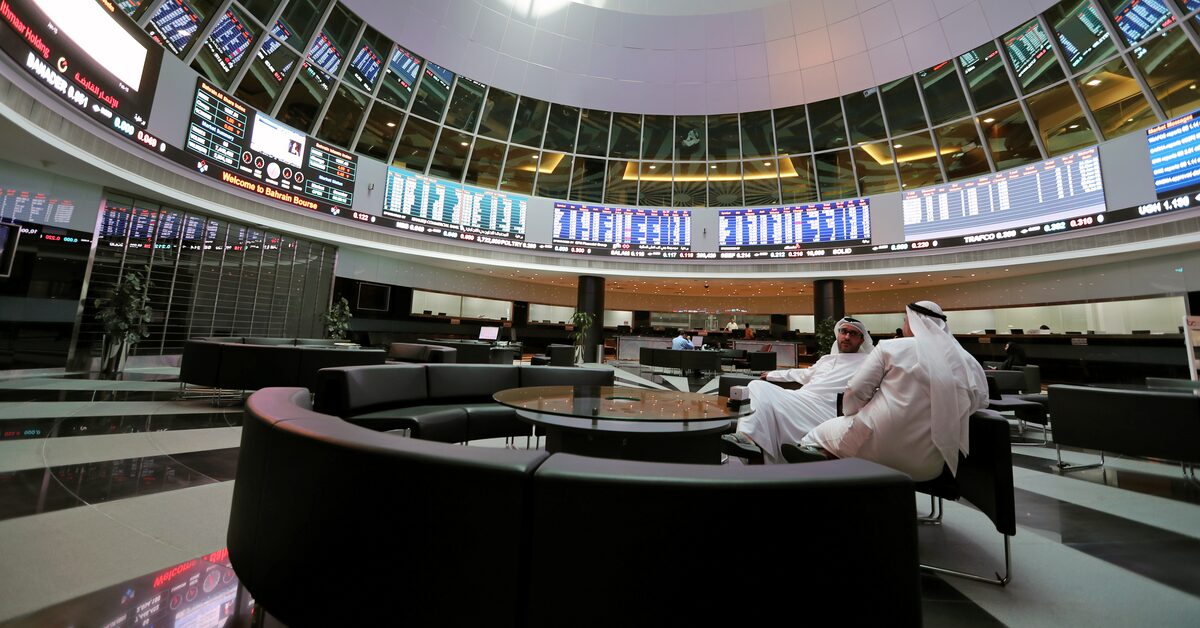
Major Gulf stock markets moved sharply lower as investor confidence weakened following renewed concerns over Saudi–UAE tensions. Market data highlighted widespread losses across the region, confirming that the downturn was not isolated to a single exchange but reflected broader unease among regional and international investors.
The sell-off was visible across multiple sectors, from banking and real estate to energy-linked stocks, underscoring how closely interconnected Gulf markets have become. While the long-term outlook for the region remains underpinned by diversification efforts and strong fiscal buffers, short-term sentiment has clearly turned cautious.
A Broad-Based Market Decline Across the Gulf
The slide in Gulf equities was notable for its scale and reach. Rather than being driven by company-specific news, the decline cut across multiple indices, signaling a regional risk-off mood.
Saudi Arabia’s benchmark index retreated as heavyweight stocks faced selling pressure, particularly in sectors closely tied to government spending and investor confidence. In the UAE, both Dubai and Abu Dhabi exchanges recorded losses, reflecting similar concerns among traders who opted to reduce exposure amid uncertainty.
Other Gulf markets followed the same trend, reinforcing the sense that the weakness was systemic rather than localized. This pattern suggests that investors are responding more to geopolitical and macroeconomic signals than to individual corporate fundamentals.
Saudi–UAE Tensions Weigh on Investor Confidence
At the heart of the market pullback lies growing sensitivity to diplomatic and economic frictions between Saudi Arabia and the United Arab Emirates. While both countries remain strategic partners and economic powerhouses within the Gulf, even subtle shifts in their relationship can influence investor psychology.
Markets tend to react swiftly to perceived risks, especially in regions where cross-border investments and policy coordination play a significant role. Traders appear to be factoring in the possibility of increased competition, policy divergence, or slower regional cooperation, even if no immediate structural changes are evident.
This reaction highlights how sentiment-driven Gulf markets can be in the short term, particularly when uncertainty clouds the outlook.
Sector-Wide Pressure Signals Deeper Caution
One of the most striking features of the market decline was the breadth of losses across sectors. Banking stocks, often seen as a barometer of economic health, slipped as concerns grew over lending growth and capital flows.
Real estate shares also came under pressure, reflecting fears that investor hesitation could slow project momentum or affect demand in the near term. Energy-related stocks, despite relatively stable oil prices, were not immune, as broader sentiment overshadowed fundamentals.
Such synchronized declines suggest that investors are temporarily prioritizing capital preservation over selective stock picking, a classic response during periods of heightened uncertainty.
Global Factors Add to Regional Nervousness
While regional tensions played a central role, global market conditions also contributed to the cautious mood. Investors worldwide remain sensitive to interest rate expectations, geopolitical developments, and shifting capital flows.
For Gulf markets, which attract significant foreign investment, global risk sentiment matters deeply. When international investors pull back from emerging or frontier markets, Gulf equities often feel the impact, regardless of domestic economic strength.
This interplay between global and regional factors amplifies market moves, making declines appear sharper even when underlying fundamentals remain intact.
Long-Term Fundamentals Remain Resilient
Despite the current downturn, many analysts and market participants emphasize that the Gulf’s long-term economic story remains strong. Governments across the region continue to invest heavily in diversification, infrastructure, tourism, and technology.
Saudi Arabia’s Vision-driven reforms and the UAE’s pro-business environment have reshaped regional economies over the past decade. These structural changes provide a cushion against short-term volatility and help sustain investor interest over the long run.
Market corrections, while uncomfortable, are often part of a healthy financial ecosystem, allowing valuations to reset and opportunities to emerge.

Investor Behavior Reflects Short-Term Risk Management
The recent slide appears to reflect tactical positioning rather than a fundamental reassessment of the Gulf’s prospects. Many institutional investors are likely trimming exposure temporarily, waiting for clearer signals before re-entering the market.
Retail investors, too, tend to react quickly to headlines, which can exaggerate market movements in the short term. This behavior underscores the importance of perspective, especially in regions where sentiment can shift rapidly.
Historically, Gulf markets have shown an ability to recover once uncertainty eases, supported by strong liquidity and government backing.
Opportunities Hidden Within Market Volatility
Periods of market weakness often create selective opportunities for long-term investors. Quality stocks with strong balance sheets and stable earnings may become more attractive as prices dip.
Experienced investors often use such phases to reassess portfolios, focusing on companies aligned with long-term growth themes such as renewable energy, logistics, tourism, and digital transformation.
While timing the market remains challenging, volatility can reward patience and disciplined investment strategies.
What to Watch in the Coming Weeks
Looking ahead, market participants will closely monitor diplomatic signals, policy announcements, and economic data from across the Gulf. Any indication of easing tensions or renewed cooperation could quickly restore confidence.
Earnings updates, government spending plans, and global market trends will also shape the direction of Gulf equities. Stability in oil markets, combined with continued reform momentum, could help offset current concerns.
For now, caution dominates, but the region’s strong economic foundations suggest that the current weakness may prove temporary rather than structural.
A Moment of Reflection for Gulf Markets
The recent slide in major Gulf stock markets serves as a reminder of how sensitive financial markets are to sentiment and perception. While Saudi–UAE tensions have clearly influenced investor behavior, the broader picture remains one of resilience and long-term ambition.
As markets digest new information and uncertainty fades, confidence may gradually return. For investors, this moment offers not only challenges but also the chance to reflect, recalibrate, and prepare for the next phase of the Gulf’s evolving economic journey.
Do follow Gulf Magazine on Instagram.
Also Read – Gulf Markets Down Sharply as Regional Tensions Rise

