

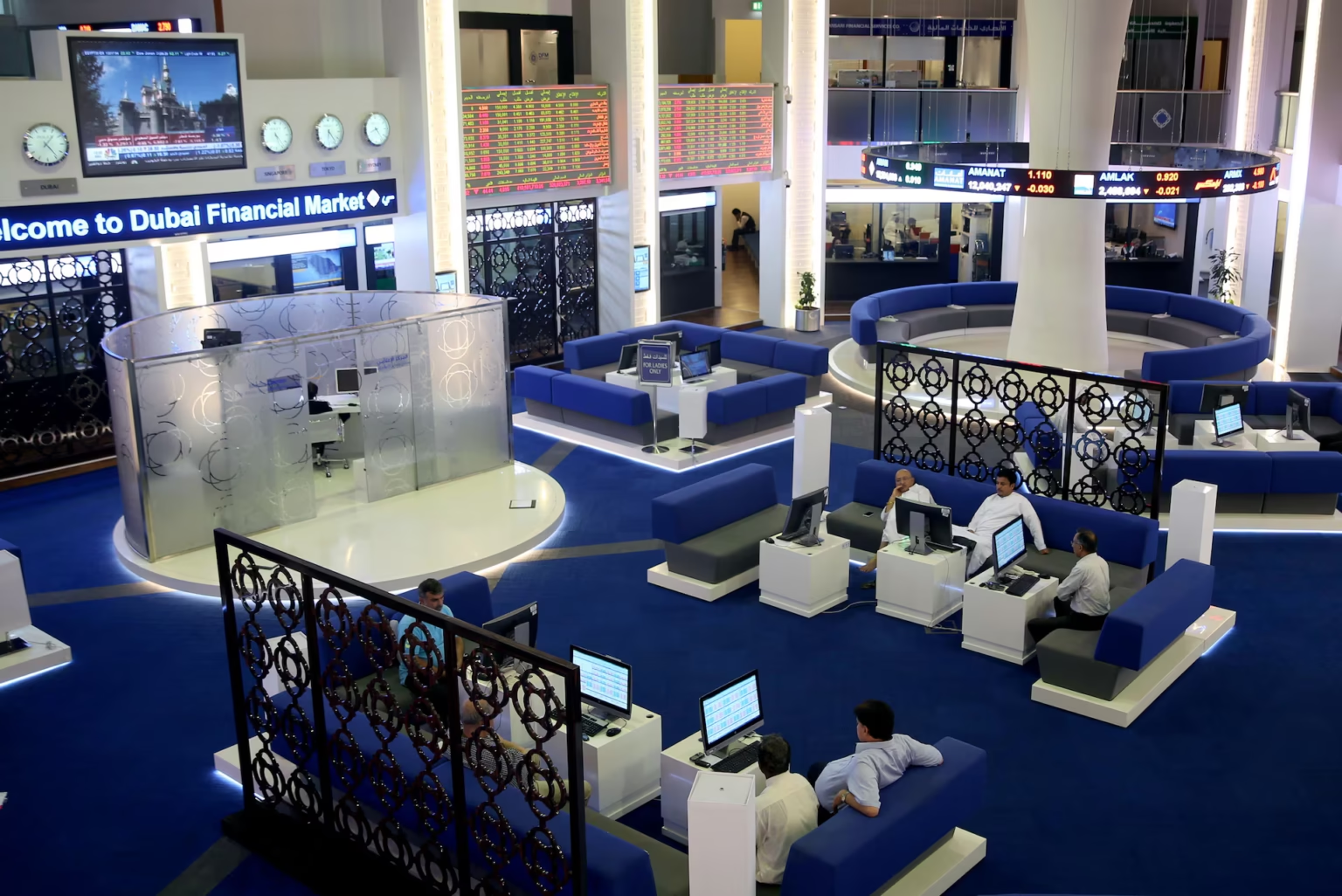
The closing chapter of 2025 revealed a striking contrast between global optimism and regional restraint. While equity markets worldwide surged on renewed confidence, innovation-led growth, and easing macroeconomic pressures, investor sentiment in the Middle East followed a more measured path. Returns across regional exchanges remained positive but noticeably muted, prompting closer examination of Gulf markets performance 2025 in comparison with global benchmarks.
This divergence does not reflect a single weakness, but rather a complex mix of structural realities, sector concentration, and cautious investor sentiment. At the same time, pockets of resilience in markets such as Oman and Kuwait offer important lessons and reasons for cautious optimism going into 2026.
A Strong Year for Global Equities
Globally, 2025 was a year defined by momentum. Equity markets benefited from stabilising interest rate expectations, improved supply chains, and strong consumer demand in key economies. Technology stocks once again led the charge, buoyed by advances in artificial intelligence, cloud computing, and automation. Financial markets also responded positively to clearer policy signals from central banks, allowing investors to price risk with greater confidence.
This supportive environment lifted the MSCI global index to robust gains, reinforcing the appeal of diversified international portfolios. For many investors, global equities delivered not only capital appreciation but also a renewed sense of confidence after years of volatility.
Gulf Markets: Steady but Unspectacular
In contrast, Gulf equity markets posted modest growth overall. Most indices ended the year higher than where they began, but the gains paled in comparison to global benchmarks. Saudi Arabia, the region’s largest market, experienced periods of volatility as investors balanced long-term reform optimism with short-term earnings pressures. Other markets, including the UAE and Qatar, also saw restrained performance despite solid economic fundamentals.
This underperformance does not suggest economic distress. On the contrary, Gulf economies continued to benefit from diversification efforts, infrastructure spending, and relatively stable fiscal positions. However, equity markets struggled to fully reflect these strengths within a year dominated globally by growth-oriented and technology-driven narratives.
The Oil Factor and Market Concentration
One of the most significant influences on Gulf markets in 2025 was the performance of the energy sector. Oil prices were broadly lower and more volatile compared to previous years, reflecting global supply adjustments and softer demand growth. While Gulf governments are less dependent on oil revenues than in the past, equity markets remain heavily weighted toward energy, banking, and petrochemicals.
This concentration can limit upside during global rallies led by technology and consumer sectors. When energy prices fail to provide a strong tailwind, Gulf indices often struggle to keep pace with more diversified global markets. Investors seeking rapid growth found fewer opportunities in traditional sectors that prioritise stability over expansion.
Higher Interest Rates and Investor Caution
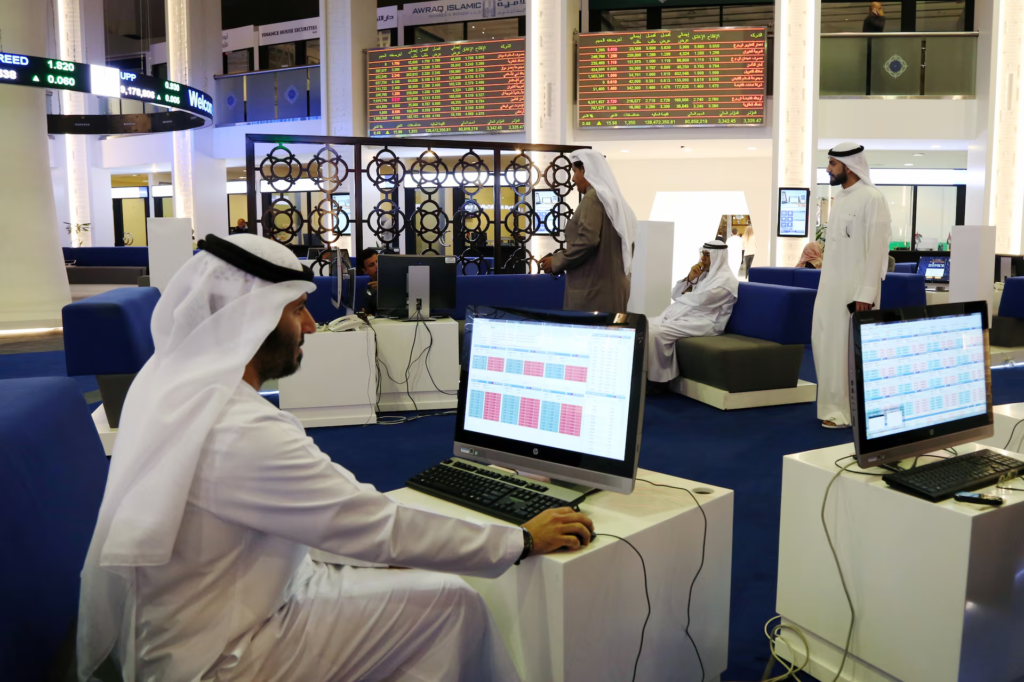
Another key factor was the global interest rate environment. Although rate hikes slowed, borrowing costs remained elevated for much of the year. This had a dampening effect on valuations, particularly for capital-intensive industries common in Gulf markets. Banks performed steadily, but not spectacularly, while real estate and industrial stocks faced selective pressure.
Investor behaviour also played a role. Regional investors tended to favour caution, focusing on dividends and capital preservation rather than aggressive growth strategies. While this approach supports long-term stability, it can limit short-term market momentum during periods when global investors are chasing higher-risk, higher-reward opportunities.
Oman and Kuwait: Quiet Outperformers
Despite the broader regional trend, Oman and Kuwait stood out as relative bright spots in 2025. Both markets delivered stronger returns than many of their Gulf peers, supported by local reforms, improved corporate governance, and renewed investor interest.
In Oman, fiscal consolidation and economic reforms helped strengthen investor confidence. Listed companies benefited from better cost controls and selective growth initiatives, translating into improved market performance. Kuwait, meanwhile, saw gains driven by banking and investment stocks, supported by regulatory clarity and steady domestic demand.
These markets demonstrated that targeted reforms and market-specific catalysts can still attract capital, even in a challenging regional environment.
Corporate Earnings Tell a Mixed Story
Corporate earnings across the Gulf were resilient but uneven. Many companies maintained healthy balance sheets and continued to pay attractive dividends, reinforcing the region’s reputation for income-focused investing. However, earnings growth was generally modest, reflecting cautious expansion plans and competitive pressures.
Unlike global technology leaders posting rapid revenue growth, Gulf corporates often prioritised operational efficiency and risk management. This conservative approach supports long-term sustainability but can leave equity valuations lagging during bullish global cycles.
Foreign Investment Flows Remain Selective
Foreign investor participation in Gulf markets remained steady but selective in 2025. While long-term investors continued to allocate capital to the region for diversification and income, short-term inflows were limited. Global funds often favoured markets offering higher growth exposure and liquidity, particularly in Asia and North America.
That said, the Gulf’s inclusion in major emerging market indices continues to provide a structural base of foreign investment. Over time, deeper capital markets and broader sector representation could enhance the region’s appeal to global investors.

The Human Side of Market Performance
Behind the numbers lies a human story of expectations and patience. Many Gulf investors entered 2025 hopeful that strong economic reforms and diversification efforts would translate into equity market outperformance. While that did not fully materialise, the year reinforced the value of a long-term perspective.
Market performance does not always move in sync with economic progress. Structural transformation takes time, and equity markets often respond unevenly as reforms unfold. For retail investors and institutions alike, 2025 was a reminder that steady returns and income generation remain core strengths of Gulf markets.
What 2025 Means for 2026 and Beyond
Looking ahead, the underperformance of Gulf markets in 2025 may not be a weakness but a reset. Valuations remain reasonable, dividends attractive, and economic fundamentals stable. As global markets potentially enter a more measured phase, the Gulf’s emphasis on stability and income could regain appeal.
Continued diversification, listings in non-traditional sectors, and deeper capital markets may gradually narrow the performance gap with global equities. Oman and Kuwait’s experiences also suggest that focused reforms and transparency can deliver tangible market rewards.
A Year of Reflection, Not Retreat
While 2025 belonged to global equities, Gulf markets quietly laid groundwork for the future. Modest growth, resilient earnings, and selective outperformance underline a region in transition rather than decline. For investors willing to look beyond headline returns, Gulf markets continue to offer stability, income, and long-term potential.
In a world of fast-moving capital and shifting narratives, sometimes the most enduring stories are written slowly. The Gulf’s equity journey in 2025 may not have captured global applause, but it remains firmly on a path shaped by patience, reform, and measured optimism.
Do follow Gulf Magazine on Instagram.
Also Read – Oil Price Weakness Reshapes Gulf Stock Market Outlook

