

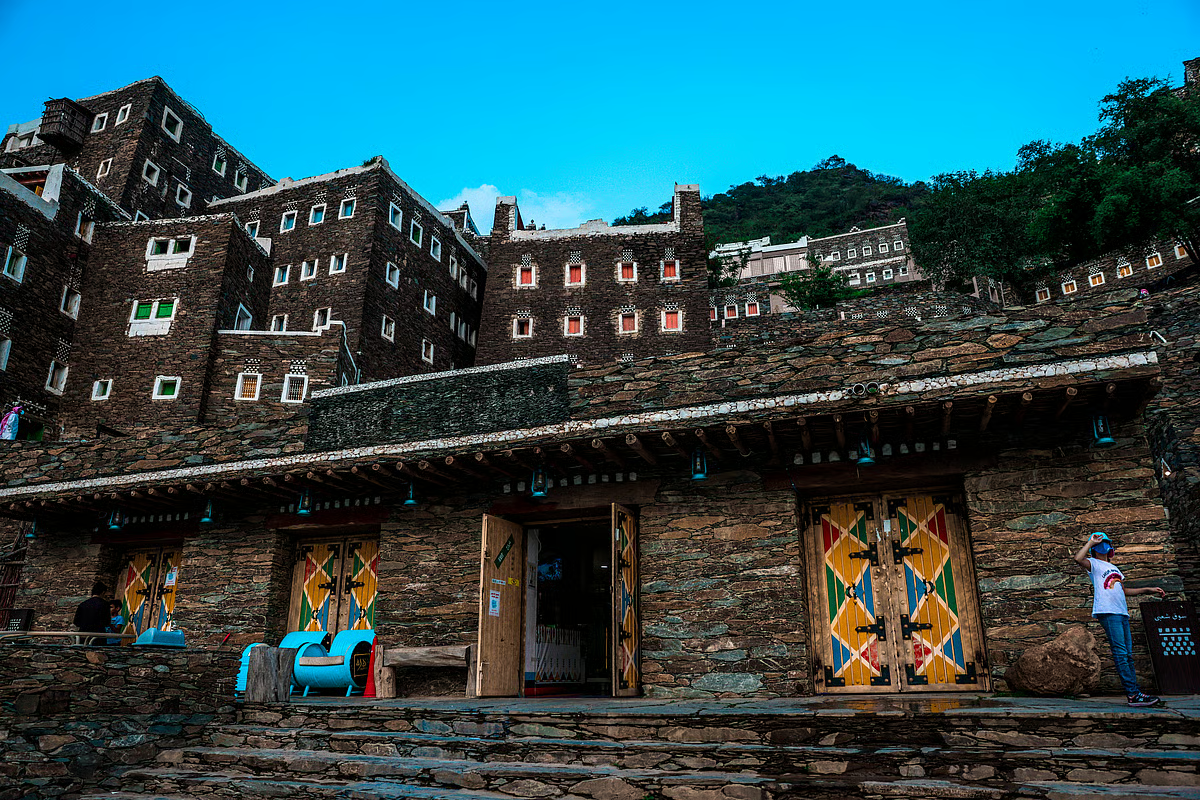
Nestled deep within the lush mountains of the Asir region, Rijal Almaa Heritage Village stands as one of Saudi Arabia’s most captivating cultural treasures. Often described as a living museum, this historic village offers visitors a rare chance to walk through centuries of tradition, architecture, and storytelling. Unlike modern tourist attractions, Rijal Almaa feels alive, as if the walls themselves are whispering the stories of merchants, farmers, and travelers who once passed through its narrow stone paths.
The village is not just a place to visit, but an experience to feel. The moment you step inside, you are surrounded by towering stone houses, colorful window frames, and a calm mountain breeze that makes time slow down. It is a reminder that Saudi Arabia’s heritage is not only preserved in books or museums, but still breathes in real places where people once lived, worked, and dreamed.
Historical Significance of Rijal Almaa
Rijal Almaa holds a unique position in Saudi history. Located near ancient trade routes, the village once served as an important stop for caravans traveling between Yemen, Mecca, and the Red Sea coast. Merchants would rest here, exchange goods, and share news from distant lands. Over time, this turned the village into a cultural crossroads, blending influences from different regions.
The name “Rijal Almaa” roughly translates to “Men of Almaa,” reflecting the strong identity and unity of the people who built and protected the village. For generations, families lived in tall multi-story homes made entirely of stone, forming a close-knit community that relied on agriculture, trade, and craftsmanship. Today, walking through the village feels like stepping into a frozen moment of that vibrant past.
Architectural Beauty and Design
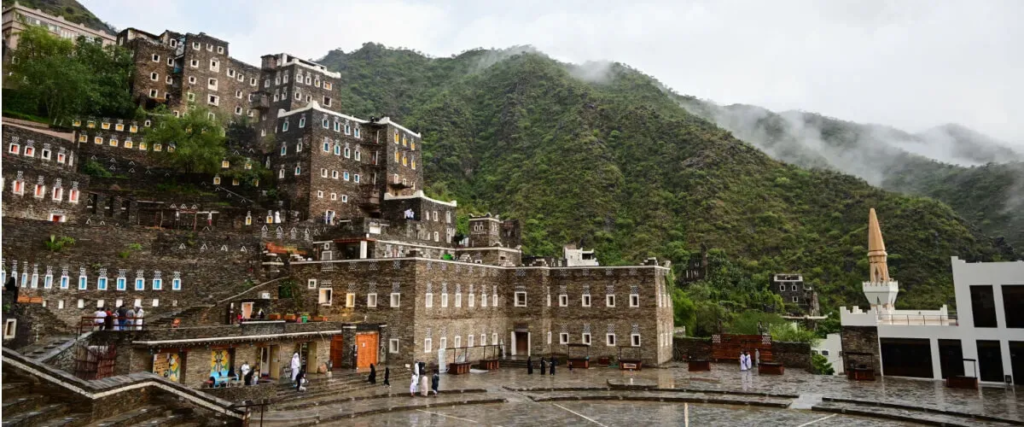
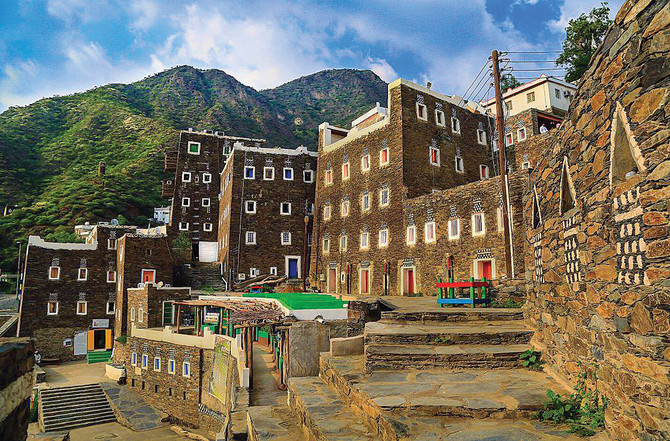
One of the most striking features of Rijal Almaa is its architecture. The village is made up of more than 60 stone houses, some rising up to eight floors high. These structures were built using local materials, mainly stone and clay, making them perfectly adapted to the mountainous environment.
What truly sets these buildings apart are the decorative elements. Brightly painted window frames, intricate wooden doors, and geometric patterns on the walls add color and personality to the village. These designs were not just for beauty, but also symbolized family identity and social status. Each house tells its own story through its colors and carvings, making the village feel like an open-air art gallery.
A Living Museum Experience
Rijal Almaa is often called a living museum because it does not feel static or artificial. Many of the houses have been carefully restored and transformed into small exhibition spaces. Inside, visitors can find traditional clothing, old weapons, farming tools, household items, and handwritten manuscripts.
Instead of glass cases and silent halls, the village offers a warm and immersive atmosphere. You can touch the walls, sit in traditional rooms, and imagine what daily life was like centuries ago. This human connection is what makes Rijal Almaa so special. It is not just about observing history, but about feeling part of it.
Cultural Traditions and Local Life
The culture of Rijal Almaa reflects the wider traditions of the Asir region, known for its strong community values and rich artistic heritage. Music, poetry, and dance played an important role in village life. During festivals and celebrations, people would gather in open spaces to perform traditional dances accompanied by drums and chanting.
Handicrafts were another essential part of daily life. Women created colorful textiles and wall paintings, while men worked on wood carving and metal tools. These skills were passed down from generation to generation, ensuring that knowledge and identity were never lost. Even today, these traditions are proudly displayed during cultural events held in the village.
Natural Setting and Scenic Views
Beyond its historical charm, Rijal Almaa is surrounded by breathtaking natural beauty. The village sits in a green valley, framed by dramatic mountains and flowing streams. Unlike the desert landscapes many associate with Saudi Arabia, Asir is known for its cooler climate and fertile land.
This unique environment adds another layer to the experience. As you explore the village, you can enjoy panoramic views of terraced fields, misty hills, and lush vegetation. The combination of human-made heritage and natural scenery creates a peaceful atmosphere that feels both grounding and inspiring.
Role in Saudi Tourism Vision
Rijal Almaa has become an important part of Saudi Arabia’s growing tourism vision. As the country opens up to international visitors, there is a strong focus on promoting cultural and heritage destinations. Rijal Almaa represents the perfect example of how history can be preserved while still welcoming modern travelers.
The village has received recognition for its restoration efforts and cultural value, making it a symbol of sustainable tourism. Instead of building new attractions from scratch, Saudi Arabia is investing in places like Rijal Almaa to share authentic stories with the world.
Emotional Connection and Human Stories
What truly makes Rijal Almaa unforgettable is the emotional connection it creates. Every stone seems to carry memories of families who lived, loved, and struggled within these walls. You can almost hear children playing in courtyards, elders sharing stories by lantern light, and merchants negotiating deals after long journeys.
Visitors often describe a sense of calm and nostalgia, even if they have no personal link to the place. This emotional response comes from the village’s honesty. It does not try to impress with luxury or technology. Instead, it touches the heart by reminding us of simpler times, strong communities, and the beauty of human resilience.
Why Rijal Almaa Matters Today
In a world dominated by skyscrapers and digital screens, Rijal Almaa offers something rare: a chance to reconnect with humanity’s roots. It shows how people once lived in harmony with nature, built homes with their own hands, and created culture through everyday life.
For Saudi Arabia, Rijal Almaa is more than a tourist attraction. It is a symbol of identity and pride. It proves that the nation’s story is not only about oil and modern cities, but also about ancient villages, artistic traditions, and strong cultural foundations.
Conclusion
Rijal Almaa Heritage Village in Asir stands as a powerful reminder that history does not belong in the past alone. It lives in stone walls, painted windows, and the quiet echoes of human stories. As a living museum, it offers more than knowledge. It offers connection, emotion, and inspiration.
For anyone seeking an authentic cultural experience, Rijal Almaa is not just a destination, but a journey into the soul of Saudi Arabia. It invites visitors to slow down, listen to the whispers of history, and rediscover the timeless beauty of heritage.
Do follow Gulf Magazine on Instagram.
Also Read – Al Muftaha Village Asir: A Vibrant Cultural Heart of Saudi Arabia

