


Gulf critical minerals strategy is quickly becoming one of the most important economic shifts in the Middle East. For decades, oil made the Gulf rich and powerful. Today, a new race is underway. Instead of drilling for crude, Gulf nations are investing billions in lithium, copper, nickel, cobalt, and rare earth elements. These materials are essential for electric vehicles, renewable energy, artificial intelligence, and advanced defense systems.
As the world moves toward clean energy and digital technology, critical minerals are becoming the new oil. And the Gulf wants to lead this new era.
Why Critical Minerals Matter More Than Ever
Critical minerals are the building blocks of the modern economy. Without them, the global shift to green energy would stop.
These minerals are used in:
- Electric vehicle batteries (lithium, nickel, cobalt)
- Solar panels (silicon, silver)
- Wind turbines (rare earth elements)
- Power grids (copper, aluminum)
- Smartphones and AI chips (rare earths, gallium)
Demand is rising at an incredible pace. The International Energy Agency has warned that mineral demand for clean energy technologies could double or even triple by 2040. Lithium demand alone may increase more than tenfold in the coming years.
Countries that control these minerals will hold significant economic and political power. This reality is shaping the Gulf critical minerals strategy.
From Oil Wells to Mineral Mines
For over 50 years, Gulf economies were built on oil and gas exports. Saudi Arabia, the United Arab Emirates, Qatar, and others used hydrocarbon revenues to build modern cities, world-class airlines, and global investment funds.
But oil markets are volatile. Prices rise and fall. Climate policies are also pushing the world away from fossil fuels. Gulf leaders know that oil wealth will not last forever.
That is why economic diversification has become a top priority. Saudi Arabia’s Vision 2030, the UAE’s industrial strategy, and similar plans across the region aim to reduce dependence on oil.
Critical minerals fit perfectly into this plan.
They offer:
- Long-term global demand
- Strong geopolitical importance
- Opportunities for downstream industries like battery production
- A bridge between energy expertise and future technologies
The Gulf is not just investing in mines. It is building a full ecosystem around minerals.
Saudi Arabia’s Ambitious Mineral Push
Saudi Arabia is leading the Gulf critical minerals strategy with a bold and aggressive plan.
The kingdom has identified mining as the “third pillar” of its economy after oil and petrochemicals. Officials estimate that Saudi Arabia has more than $1 trillion worth of untapped mineral resources.
To unlock this potential, the country has:
- Reformed mining laws to attract foreign investors
- Launched large exploration programs
- Invested heavily through its Public Investment Fund (PIF)
- Hosted global mining conferences in Riyadh
Saudi Arabia is also investing abroad. It has shown interest in mining projects in Africa, South America, and Asia. By securing overseas assets, it aims to guarantee long-term supply for its future industries.
The goal is not only to extract minerals but also to process them locally. That means building refineries, battery plants, and manufacturing hubs inside the kingdom.
In simple terms, Saudi Arabia wants to move up the value chain.
The UAE’s Strategic Investments Abroad
The United Arab Emirates is taking a slightly different approach, but it is equally determined.
The UAE is using its strong financial position and global trade networks to invest in mining assets around the world. Emirati companies have been active in:
- African copper and cobalt mines
- Latin American lithium projects
- Rare earth processing partnerships
Abu Dhabi and Dubai already serve as global logistics and trading hubs. By adding critical minerals to their portfolios, they strengthen their role as global supply chain centers.
The UAE is also investing in advanced processing and recycling technologies. Recycling batteries and extracting valuable minerals from old electronics could become a major industry in the future.
This fits well with the country’s broader push into clean energy, including solar and nuclear power.
Qatar and Oman Enter the Race
While Saudi Arabia and the UAE are leading, other Gulf states are not standing still.
Oman has long had a small mining sector. Now it is expanding exploration efforts, especially for copper and other industrial minerals. The country’s ports on the Arabian Sea offer easy access to global markets.
Qatar, known mainly for natural gas, is also exploring ways to invest in international mineral projects through its sovereign wealth fund.
Across the region, governments see a clear message: control of critical minerals means influence in the 21st century economy.
Gulf Critical Minerals Strategy and Geopolitics
The global supply of critical minerals is highly concentrated.
China dominates the processing of rare earth elements. The Democratic Republic of Congo supplies most of the world’s cobalt. Chile and Australia lead in lithium production.
This concentration creates risks. Trade disputes, political instability, or export restrictions can disrupt supply chains.
Western countries are looking for alternative partners to reduce dependence on China. The Gulf, with its capital, political stability, and global connections, sees an opportunity.
By investing in mining projects in Africa and Latin America, Gulf states can position themselves as trusted partners for Europe, the United States, and Asia.
This makes the Gulf critical minerals strategy not only an economic move but also a diplomatic one.
It strengthens ties with:
- Resource-rich developing nations
- Industrial economies seeking secure supplies
- Global technology companies
In many ways, minerals are becoming a new tool of foreign policy.
Building Domestic Industries
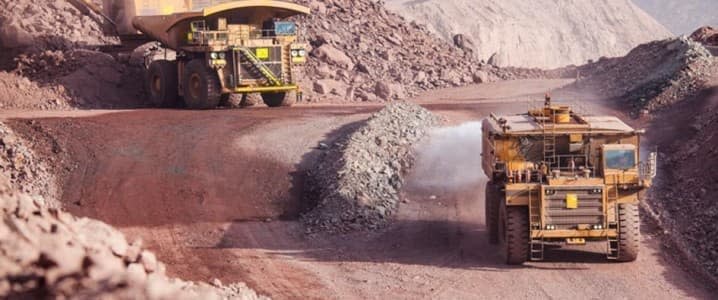
Mining alone does not create maximum value. Processing and manufacturing bring higher profits and more jobs.
That is why Gulf countries are focusing on building local industries around critical minerals.
Potential sectors include:
- Battery manufacturing plants
- Electric vehicle assembly
- Solar panel production
- Advanced metal processing
- Research and development centers
Saudi Arabia has already announced plans to produce electric vehicles domestically. Access to lithium and nickel will support that ambition.
If successful, this could transform the Gulf from a raw material exporter into a high-tech manufacturing hub.
Challenges Facing the Gulf Critical Minerals Strategy
Despite the excitement, there are serious challenges.
Mining is complex and risky. Exploration does not always lead to commercial discoveries. Projects can take years to develop. Environmental concerns are also significant.
Key challenges include:
Environmental impact
Mining can damage land, water, and ecosystems. Gulf governments will need strong regulations to avoid long-term harm.
Global competition
Countries like China, Australia, Canada, and the United States are also investing heavily in critical minerals.
Price volatility
Like oil, mineral prices can rise and fall sharply depending on global demand.
Technical expertise
The Gulf has deep experience in oil and gas. Mining requires different skills and technologies.
To overcome these obstacles, Gulf states are forming partnerships with global mining companies and hiring international experts.
Africa: A Key Focus Area
Africa plays a major role in the Gulf critical minerals strategy.
The continent holds large reserves of cobalt, copper, lithium, and rare earth elements. Many African governments are seeking investment to develop their resources.
Gulf countries offer:
- Large pools of capital
- Infrastructure expertise
- Political partnerships
In return, they gain access to long-term supply contracts.
However, this strategy must be handled carefully. Mining in developing countries can create social tensions if local communities do not benefit. Transparent agreements and fair practices will be essential.
The Energy Transition Connection
There is a clear link between critical minerals and the global energy transition.
Electric vehicles need far more minerals than traditional cars. Wind turbines require significant amounts of rare earth metals. Solar farms depend on copper and silver.
Ironically, oil-rich Gulf states are now investing in the materials that will power a post-oil world.
This is not a contradiction. It is a strategic evolution.
By participating in the clean energy supply chain, the Gulf can remain central to global energy markets even as fossil fuel demand changes.
In other words, the region is preparing for a future where energy looks very different.
Can Critical Minerals Replace Oil Wealth?
A key question remains: can minerals truly replace oil revenues?
Oil generates massive cash flows because of its scale and global demand. Critical minerals markets are growing fast, but they are still smaller than oil.
However, the opportunity lies in diversification rather than replacement.
Mining combined with:
- Manufacturing
- Technology
- Logistics
- Renewable energy
could create a more balanced and resilient economy.
The Gulf does not need minerals to fully replace oil. It needs them to reduce risk and create new growth engines.
A Long-Term Bet on the Future
The Gulf critical minerals strategy is not a short-term trend. It is a long-term bet on the direction of the global economy.
The world is becoming more electric, more digital, and more connected. All of this requires minerals.
By moving early and investing heavily, Gulf states aim to secure:
- Economic security
- Technological relevance
- Geopolitical influence
The strategy reflects a clear understanding: the energy transition is not just about solar panels and wind farms. It is about the materials behind them.
Conclusion: The New Oil Era
For decades, oil shaped the Gulf’s identity and power. Today, a new chapter is beginning.
Critical minerals may not look as dramatic as oil fields, but their importance is just as profound. Lithium, copper, and rare earths are becoming the foundation of modern life.
Through massive investments, global partnerships, and ambitious industrial plans, the Gulf is positioning itself at the heart of this transformation.
The Gulf critical minerals strategy shows that the region is not waiting for change. It is actively shaping it.
If oil was the fuel of the 20th century, critical minerals may well be the fuel of the 21st. And the Gulf is determined to play a leading role in this powerful new era.
Do Follow Gulf Magazine on Instagram
Also read: Jeddah Lanes Bowling Center: A Top Spot for Family Fun

