

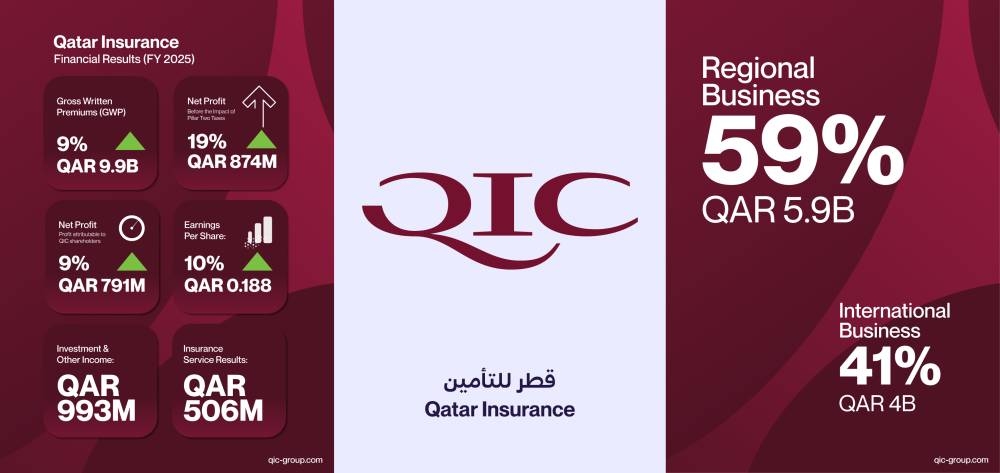
Qatar Insurance net profit 2025 climbed by 9 percent to reach QR791 million, reflecting a year of steady growth, disciplined underwriting, and improved investment returns. The strong performance highlights the resilience of the Gulf region’s insurance sector and reinforces the company’s position as one of the leading insurers in the Middle East and North Africa.
The results, announced by Qatar Insurance Company (QIC), signal not only financial strength but also a successful strategy focused on diversification, digital transformation, and operational efficiency. Despite global economic uncertainty, inflation pressures, and evolving risk landscapes, the company delivered solid gains across core business segments.
Industry analysts say the results demonstrate how regional insurers are adapting to new realities — from climate risks to cyber threats — while maintaining profitability and customer trust.
Strong financial results drive Qatar Insurance net profit 2025
The 9 percent increase in profit reflects multiple positive factors working together. According to company statements, disciplined risk management and improved claims performance played a key role.
Key financial highlights for 2025 include:
- Net profit: QR791 million
- Growth: 9% year-on-year
- Stable underwriting margins
- Improved investment income
- Strong capital position
Executives noted that the company maintained prudent underwriting standards even while expanding its market presence. This approach helped reduce volatility and protect profitability.
Insurance firms often struggle with fluctuating claims, especially in property and casualty lines. However, QIC’s balanced portfolio helped offset losses in some areas with gains in others.
Underwriting discipline boosts profitability
A major contributor to the Qatar Insurance net profit 2025 was disciplined underwriting — the process insurers use to evaluate risk before issuing policies.
Over the past few years, the company has tightened risk selection, improved pricing models, and invested in data analytics. These steps helped reduce exposure to high-risk segments while maintaining competitive offerings.
Better underwriting typically leads to:
- Lower claims ratios
- More predictable earnings
- Stronger long-term sustainability
- Increased investor confidence
Industry experts say this shift toward profitability over rapid growth reflects a broader trend across the global insurance sector.
Investment income adds momentum
Insurance companies rely not only on premiums but also on investment returns from the funds they hold. In 2025, improved financial market conditions helped boost QIC’s investment portfolio.
Diversified assets across equities, bonds, and real estate generated stable returns, contributing significantly to the overall profit increase.
Key investment drivers included:
- Recovery in global markets
- Higher interest rates supporting bond yields
- Strategic asset allocation
- Long-term investment discipline
By maintaining a balanced portfolio, the company was able to capture upside opportunities while limiting downside risks.
Regional growth across the Middle East
Expansion within the Gulf Cooperation Council (GCC) region played an important role in strengthening revenues. Rapid economic development, infrastructure projects, and population growth continue to drive demand for insurance products.
Operating from Doha, the company serves clients across Qatar and several international markets.
Growth areas included:
- Motor insurance
- Health insurance
- Property coverage
- Commercial risk solutions
- Energy sector insurance
Large infrastructure developments and major events in the region have increased the need for specialized insurance coverage, creating new business opportunities.
Digital transformation improving efficiency
Technology investment has become a key pillar of the company’s strategy. Digital platforms streamline customer service, reduce operational costs, and improve risk assessment accuracy.
In 2025, QIC continued expanding its digital capabilities, including:
- Online policy management
- Automated claims processing
- Data-driven risk analytics
- Mobile applications for customers
- Artificial intelligence tools
These innovations not only enhance customer experience but also help insurers detect fraud, predict claims trends, and optimize pricing.
Digital transformation is increasingly essential as younger customers expect fast, convenient, and transparent services.
Rising demand for health and motor insurance
Two segments that performed particularly well were health and motor insurance. Population growth, urbanization, and regulatory requirements are driving sustained demand in both areas.
Health insurance growth was supported by:
- Increased healthcare awareness
- Employer-provided coverage
- Medical cost inflation
- Expansion of private healthcare facilities
Motor insurance benefited from:
- Rising vehicle ownership
- Economic recovery
- Mandatory insurance regulations
- New car sales
Together, these segments provide stable recurring revenue, making them crucial to long-term profitability.
Managing risks in a changing world
The insurance industry faces evolving challenges, including climate change, geopolitical tensions, and cyber threats. Extreme weather events and natural disasters have increased claims worldwide, forcing insurers to adapt.
QIC has focused on strengthening risk modeling and reinsurance arrangements to protect against catastrophic losses.
Key risk management measures include:
- Diversified global reinsurance partnerships
- Advanced catastrophe modeling
- Conservative capital reserves
- Continuous monitoring of emerging risks
These steps help ensure the company can withstand unexpected shocks while continuing to serve customers.
Strong capital position supports future growth
Financial stability is essential for insurance companies, as they must be able to pay claims even in worst-case scenarios. QIC’s robust capital base provides confidence to policyholders, regulators, and investors.
A strong balance sheet enables the company to:
- Expand into new markets
- Invest in technology
- Launch innovative products
- Withstand economic downturns
- Maintain credit ratings
Analysts say the company’s capital strength positions it well for long-term expansion both regionally and internationally.
Contribution to Qatar’s financial sector
The performance of major insurers like QIC reflects the broader health of the country’s financial system. Insurance plays a crucial role in economic stability by protecting businesses, individuals, and infrastructure from risk.
As one of the largest insurers in the region, QIC contributes to:
- Financial market development
- Job creation
- Investment flows
- Support for large projects
- Risk mitigation for businesses
The company’s success aligns with national goals to diversify the economy beyond energy resources.
Customer-centric approach driving loyalty
In an increasingly competitive market, customer trust is a major differentiator. QIC has emphasized service quality, transparency, and quick claims settlement.
Customer-focused initiatives include:
- Simplified policy terms
- Faster claims processing
- 24/7 support channels
- Personalized insurance solutions
- Digital self-service tools
Satisfied customers are more likely to renew policies and recommend the company to others, supporting sustainable growth.
Sustainability and ESG initiatives
Environmental, Social, and Governance (ESG) factors are becoming increasingly important in the insurance industry. Companies are expected to manage risks responsibly while supporting sustainable development.
QIC has taken steps toward sustainability, such as:
- Responsible investment strategies
- Support for green projects
- Climate risk assessment
- Community initiatives
- Ethical governance practices
These efforts not only enhance reputation but also align with global trends in responsible business.
Competitive landscape in the Gulf insurance market
The GCC insurance sector is highly competitive, with both local and international players seeking market share. Companies compete on pricing, service quality, product innovation, and financial strength.
Despite competition, QIC maintains a strong position due to:
- Long operating history
- Brand recognition
- Wide product range
- Strong distribution networks
- Financial stability
Industry observers believe consolidation and partnerships may shape the future of the sector as companies seek scale and efficiency.
Outlook for the coming years
Looking ahead, analysts expect moderate but steady growth in the regional insurance market. Key drivers include economic diversification, infrastructure spending, and increasing awareness of risk protection.
Opportunities for QIC include:
- Expansion into emerging markets
- Development of digital insurance products
- Growth in cyber and specialty insurance
- Partnerships with fintech companies
- Adoption of advanced analytics
However, challenges remain, such as regulatory changes, inflation, and global economic uncertainty.
Investor confidence strengthened
The rise in Qatar Insurance net profit 2025 is likely to reassure investors about the company’s stability and growth prospects. Consistent earnings growth often translates into stronger market valuation and shareholder returns.
Investors typically look for:
- Sustainable profitability
- Dividend potential
- Risk management capability
- Growth opportunities
- Strong governance
The latest results suggest QIC is well positioned to meet these expectations.
Role of reinsurance in stability
Reinsurance — insurance for insurers — plays a vital role in protecting companies from large losses. By transferring part of their risk to global reinsurers, firms like QIC can handle major claims without jeopardizing financial stability.
Effective reinsurance programs help:
- Reduce volatility
- Protect capital
- Support large policy coverage
- Enable business expansion
This strategy has become increasingly important as catastrophic events become more frequent.
Innovation shaping the future of insurance
The insurance industry is undergoing rapid transformation due to technology. From telematics in motor insurance to wearable devices in health coverage, innovation is changing how risk is assessed and priced.
QIC has explored new technologies such as:
- Usage-based insurance models
- Predictive analytics
- Blockchain applications
- AI-driven underwriting
- Digital distribution channels
These innovations could open new revenue streams while improving efficiency.
Conclusion: A year of resilience and growth
The strong performance reflected in Qatar Insurance net profit 2025 demonstrates the company’s ability to navigate a complex global environment while delivering consistent results. With QR791 million in net profit and a 9 percent increase from the previous year, QIC has reinforced its leadership position in the regional insurance market.
Key factors behind the success include disciplined underwriting, diversified investments, digital transformation, and expanding regional demand for insurance services. A solid capital base and forward-looking strategy provide a strong foundation for future growth.
As risks continue to evolve in the modern world, insurance companies that combine financial strength with innovation and customer focus are likely to thrive. QIC’s 2025 results suggest it is well prepared to meet these challenges and seize new opportunities.
For policyholders, investors, and the broader financial sector, the company’s performance offers reassurance that stability and growth can coexist — even in uncertain times.
Do follow Gulf Magazine on Instagram
Also Read – B-Lounge Doha: The Ultimate Sunset Dining Destination

