

Introduction
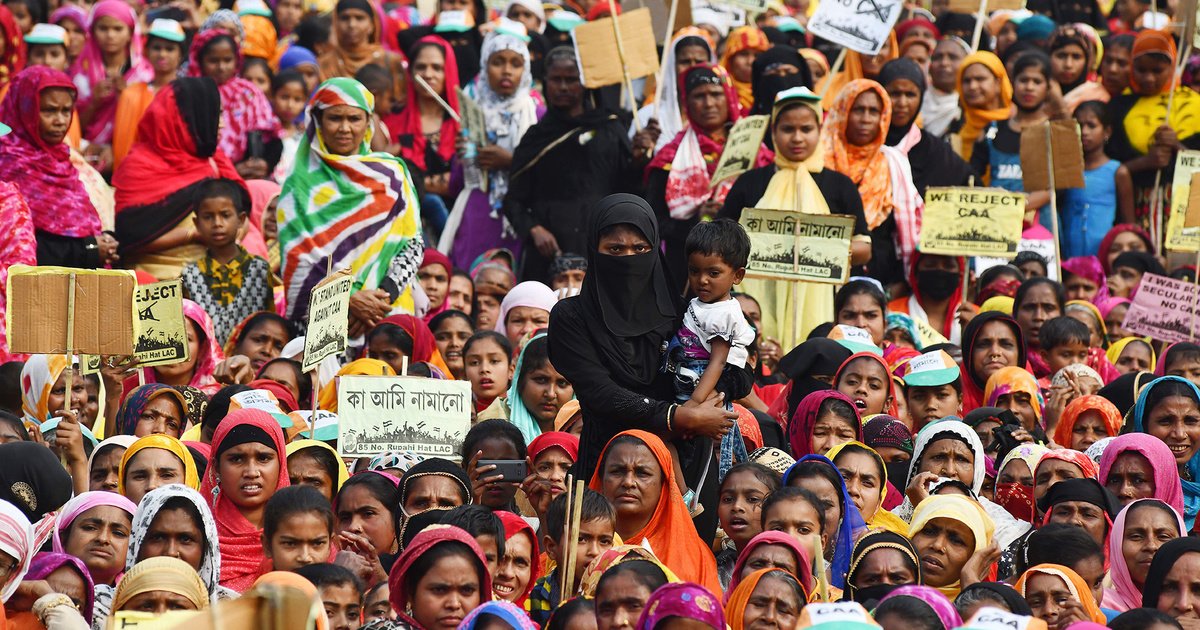
Hindu migration across the world has been a topic of interest for decades. While Gulf countries like the UAE, Qatar, and Oman have significant Hindu populations due to employment-driven migration, one Muslim-majority nation stands out as home to the highest number of Hindu migrants. Surprisingly, it is neither Qatar, Bahrain, nor Oman—it is Bangladesh.
With a deep-rooted historical connection and complex migration patterns, Bangladesh has emerged as the Muslim-majority country with the largest Hindu population. This demographic reality is tied to the region’s history, dating back to the partition of India and subsequent socio-political events. Today, Hindus make up a significant portion of Bangladesh’s population, playing an important role in the country’s cultural and social fabric.
Hindu Population in Bangladesh
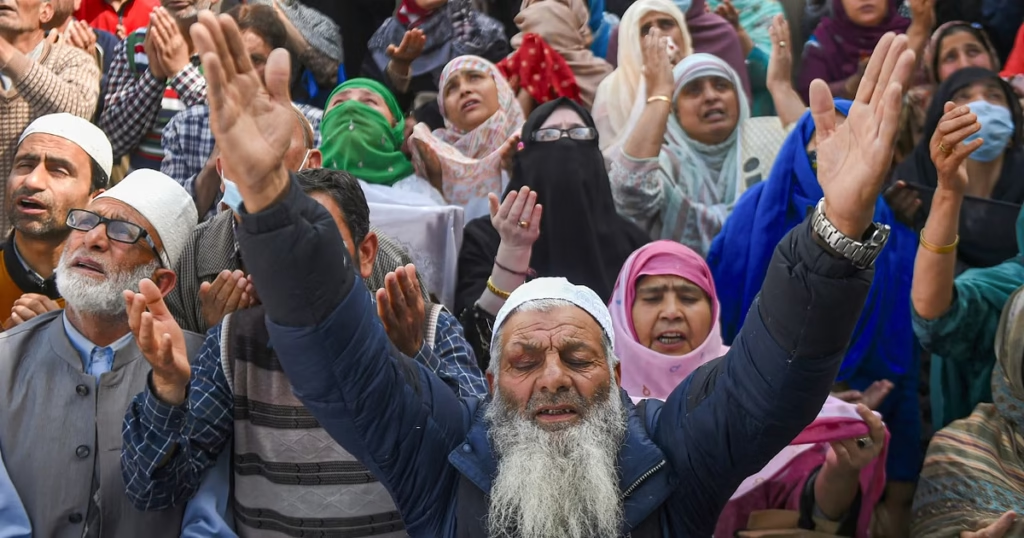
Bangladesh, a nation with a predominantly Muslim population, is home to approximately 14 million Hindus. This constitutes around 8.2% of the country’s total population. Hinduism has existed in the region for thousands of years, predating Islam’s arrival in South Asia. The presence of a large Hindu community in Bangladesh is not merely due to recent migration but is deeply rooted in the region’s history.
The demographic shift in Bangladesh’s Hindu population can be traced back to significant historical events such as the 1947 partition of India and the Bangladesh Liberation War in 1971. These events led to large-scale migration, with many Hindus relocating to India and other countries, while a considerable number chose to remain in Bangladesh.
Historical Context of Hindu Migration
The history of Hindu migration in Bangladesh is complex. Before 1947, the area that is now Bangladesh was part of undivided India, where Hindus and Muslims coexisted for centuries. However, the partition of India led to the division of Bengal into West Bengal (India) and East Pakistan (now Bangladesh). This resulted in a mass migration of Hindus from East Pakistan to India and vice versa for Muslims. Many Hindus remained in East Pakistan despite facing socio-political challenges.
In 1971, Bangladesh fought for independence from Pakistan, leading to the establishment of a new nation. During this period, communal violence and political turmoil caused another wave of Hindu migration to India. However, many Hindus stayed in Bangladesh and continue to be an integral part of the country’s social and cultural framework.
How Bangladesh Compares to Other Muslim-Majority Countries
While Bangladesh leads in Hindu population among Muslim-majority nations, other countries also have notable Hindu communities. Pakistan, Indonesia, and Malaysia each have sizable Hindu populations.
- Pakistan: Home to around 7 million Hindus, making up about 4.5% of its total population. Hindus in Pakistan are mostly concentrated in the Sindh province and have contributed significantly to the country’s business and cultural landscape.
- Indonesia: The world’s largest Muslim-majority country has approximately 7 million Hindus, primarily in Bali, where Hinduism is the dominant religion.
- Malaysia: Around 1 million Hindus live in Malaysia, constituting 3.2% of the total population. Most of them are of Indian Tamil descent and have a strong presence in trade and business.
- Afghanistan: An estimated 4 million Hindus reside in Afghanistan, forming about 2.5% of the national population. Their numbers have declined due to migration, mainly to India and Western countries.
Challenges Faced by Hindus in Bangladesh
Despite their deep historical presence, Hindus in Bangladesh face various challenges, including social discrimination, political marginalization, and security concerns. While the Bangladeshi government has taken measures to protect minority rights, incidents of violence and property disputes continue to affect the Hindu community.
Legal and Social Issues
Hindu property and religious sites have occasionally been targets of land grabbing and vandalism. The Vested Property Act, initially introduced during the Pakistan era, allowed authorities to confiscate land from Hindus, leading to significant economic challenges for many families. Although the law has been repealed, its effects still linger.
Religious and Cultural Challenges
Hindu festivals, such as Durga Puja, often see heightened security due to fears of communal tensions. In some cases, religious sites have been attacked, creating an atmosphere of uncertainty among the Hindu population. Despite this, Hindus continue to celebrate their traditions, contributing to the cultural diversity of Bangladesh.
Political Representation
Hindus in Bangladesh have played a role in politics, but their representation remains limited. While some Hindu leaders have been elected to the parliament, many argue that their political influence does not match their population size. The issue of fair representation remains a topic of debate in Bangladeshi politics.
Hindu Migration Patterns Beyond Bangladesh
The global Hindu diaspora has expanded significantly over the years, with India being the largest source of Hindu migrants. The United States, the United Kingdom, Canada, and Australia have all witnessed a rise in Hindu migration. Employment opportunities, education, and economic prospects have driven many Hindus to settle abroad.
Hindus in the Gulf Countries
Apart from Bangladesh, the Gulf Cooperation Council (GCC) countries collectively host about 3 million Hindu migrants. The UAE, Saudi Arabia, Qatar, Oman, and Bahrain have all seen a rise in Hindu migration, largely due to job opportunities in construction, healthcare, and business sectors.
Among these, the UAE has witnessed the most significant increase in its Hindu population, growing from approximately 140,000 in 1990 to over 1.1 million today. The UAE is one of the few Muslim-majority nations that has officially allowed the construction of Hindu temples, recognizing the contribution of Hindu expatriates to its economy.
The Future of Hindu Migration in Bangladesh
The Hindu population in Bangladesh has declined over the decades, primarily due to migration and socio-political factors. However, those who remain continue to shape the country’s identity. As Bangladesh progresses economically and socially, ensuring religious harmony and protecting minority rights will be crucial for its continued development.
The government has made efforts to address minority concerns, but more work needs to be done to create an environment where Hindus and other minorities can thrive without fear of discrimination. Strengthening laws that protect religious freedom, ensuring political representation, and fostering interfaith dialogue can help in creating a more inclusive society.
Conclusion
Bangladesh’s position as the Muslim-majority country with the highest Hindu population highlights the deep-rooted historical connections of Hindus in the region. Unlike Qatar, Bahrain, or Oman—where Hindu populations primarily consist of migrant workers—Bangladesh’s Hindu community has existed for centuries. While challenges persist, their contributions to the country’s culture, economy, and society remain undeniable.
As migration patterns continue to evolve, the presence of Hindus in Bangladesh and other Muslim-majority countries serves as a testament to the region’s rich and diverse history. For a nation that prides itself on inclusivity and progress, addressing the concerns of its Hindu population will be a key factor in shaping a harmonious future.
Is Parking Free Today in Dubai? Understanding the City’s Parking Regulations

