

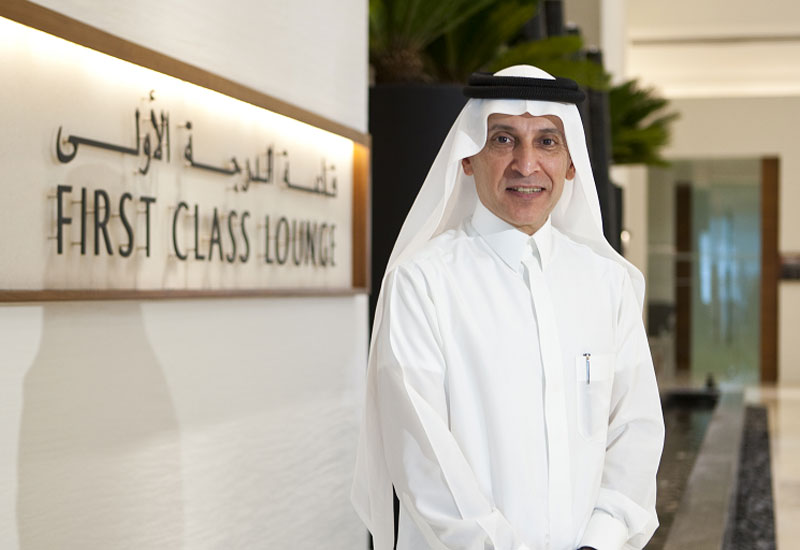
Qatar Airways, a prominent player in the global aviation industry, has announced plans to decelerate its rapid expansion following one more substantial aircraft order. This strategic decision, articulated by CEO Badr Mohammed Al-Meer, underscores the airline’s commitment to prioritizing service excellence and operational sustainability over sheer growth.
Rapid Expansion and Future Plans
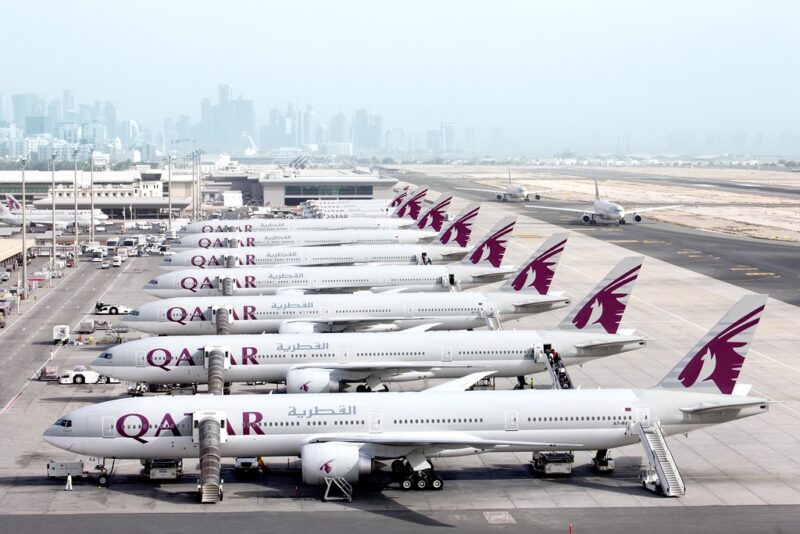
In recent years, Qatar Airways has experienced significant growth, operating approximately 300 aircraft and transporting around 200,000 passengers daily. The airline’s ambitious expansion strategy has positioned it as a key competitor among Gulf carriers, vying with the likes of Emirates and Etihad. However, Al-Meer has indicated that after securing an upcoming aircraft order, the airline intends to “slow down” its expansion efforts to focus more intently on maintaining and enhancing service quality.
The forthcoming aircraft acquisition involves negotiations with major manufacturers, Airbus and Boeing, aiming to increase the airline’s annual passenger capacity from the current 50 million to 80 million over the next five to six years. This growth is designed to be the final phase of rapid expansion before the airline shifts its focus toward consolidating its market position and enhancing the passenger experience.
Emphasis on Service Quality
Al-Meer has expressed concerns about the sustainability of rapid growth without compromising service quality. He noted that many competitors have experienced a decline in service standards due to overexpansion, leading to customer dissatisfaction. “If we want to continue growing at the same speed, we can… But can I guarantee you that… I can provide the same level of service? No, nobody can do this,” he stated.
This strategic shift highlights the intense competition among Gulf carriers, where airlines are often seen as instruments of national growth and soft power projection. Qatar Airways competes directly with Dubai’s Emirates and Abu Dhabi’s Etihad. Notably, Dubai International Airport recorded over 92 million travelers in 2024, maintaining its status as the world’s busiest international airport. Plans are underway to expand Dubai World Central into a facility capable of accommodating 150 million passengers annually within the next decade.
Despite these developments, Al-Meer remains confident that Doha’s Hamad International Airport will continue to attract passengers seeking quality service. He likened the choice between airports to dining preferences: “Would you rather have dinner at McDonald’s or go to a Michelin star restaurant?”
Strategic Investments and Partnerships
In addition to focusing on service quality, Qatar Airways is exploring opportunities for strategic investments and partnerships. The airline currently holds minority stakes in several carriers worldwide, including a 25% stake in Virgin Australia and shares in International Airlines Group (parent company of British Airways and Vueling), LATAM Airlines, South Africa’s Airlink, and Cathay Pacific. Al-Meer indicated that a long-delayed deal to acquire a stake in African carrier RwandAir could materialize within a month, and the airline is evaluating other merger and acquisition opportunities.
Furthermore, Qatar Airways aims to expand its network by collaborating with partner carriers, thereby enhancing connectivity and offering passengers a broader range of destinations.
European Market and Competitive Landscape
European airlines have voiced concerns about competing with Gulf carriers, citing factors such as environmental taxes and restrictions on Russian airspace that increase operational costs. Air France-KLM’s CEO, Ben Smith, recently stated that European airlines do not compete “on a level playing field” with Gulf carriers. Al-Meer dismissed these complaints, suggesting that European airlines could improve their competitiveness by enhancing various aspects of their service, including cabin design, Wi-Fi speed, catering, and ground services.
Technological Innovations and Customer Experience
Qatar Airways is also investing in technological advancements to enhance the passenger experience. The airline has been the first to introduce Starlink Wi-Fi across its fleet, providing high-speed internet connectivity to passengers. This initiative reflects the airline’s commitment to leveraging technology to meet evolving customer expectations and maintain its competitive edge.
Conclusion
In summary, Qatar Airways is strategically shifting its focus from rapid expansion to enhancing service quality and customer experience. By carefully managing growth, investing in technological innovations, and fostering strategic partnerships, the airline aims to maintain its reputation for excellence in the highly competitive aviation industry.
Kate Middleton to Play Key Role in Emir of Qatar’s State Visit to the UK

