

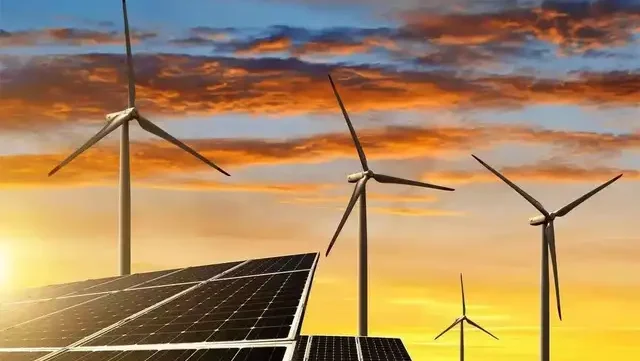
Renewable Energy in the GCC: Moving Towards a Green Future
The Gulf Cooperation Council (GCC) countries are accelerating their shift towards renewable energy, marking a significant departure from their traditional reliance on fossil fuels. This transition is driven by the need to diversify economies, meet rising energy demands, and address global climate commitments. As global energy trends evolve, GCC nations are investing heavily in sustainable solutions, leveraging their vast desert landscapes and abundant sunshine to harness clean energy sources.
Surging Investments in Renewable Projects
The Middle East is emerging as one of the fastest-growing markets for renewable energy, second only to China. Governments across the region are introducing ambitious clean energy targets, supported by extensive investments in solar and wind energy. The United Arab Emirates (UAE) has unveiled plans for a $6 billion, 5-gigawatt solar plant equipped with 19GWh of battery storage, aiming to provide a consistent 1GW power output. This project, set to commence within two years, will play a crucial role in stabilizing energy supply and reducing reliance on conventional energy sources.
Similarly, Saudi Aramco is venturing into the lithium market for battery production, with a strategic plan to develop local capabilities by 2027. Lithium is a key component in energy storage systems, crucial for maintaining a steady renewable energy supply. Collectively, Gulf nations plan to increase renewable energy’s share to 30% of their total energy capacity by 2030. This ambitious target aligns with their broader economic diversification plans under Vision 2030 initiatives in Saudi Arabia, the UAE, and other Gulf nations.
UAE’s Pioneering Initiatives
Masdar, the UAE’s state-owned renewable energy firm, has launched a facility capable of producing 1 gigawatt of uninterrupted clean power. Announced during Abu Dhabi Sustainability Week, this $6 billion project is slated to be operational by 2027 and will span 90 square kilometers in Abu Dhabi’s desert. This initiative underscores the UAE’s commitment to making renewable energy a reliable baseload power source, marking a shift from intermittent solar and wind solutions to a more stable energy infrastructure.
Furthermore, Masdar has significantly increased its renewable energy capacity by 150%, reaching 51GW by the end of 2024. This growth aligns with the company’s target of achieving 100GW of renewable energy capacity by 2030. In 2024 alone, Masdar deployed $8 billion in equity investments and secured $4.5 billion in project financing across nine countries, facilitating the development of over 6.5GW of new capacity. These investments are helping position the UAE as a global leader in clean energy innovation, attracting international partnerships and fostering technological advancements in sustainable power generation.
Regional Collaborations and International Partnerships
The Gulf region is not only investing in domestic renewable energy projects but also playing a key role in global clean energy collaborations. Italy, Albania, and the UAE have signed a clean energy cooperation agreement to produce renewable energy in Albania, leveraging the UAE’s expertise in solar and wind power. Valued at approximately 1 billion euros, this deal aims to help Italy meet its sustainable energy targets, with some energy transferred to Italy via an underwater cable. This agreement highlights the importance of international collaboration in advancing clean energy solutions and reflects the growing influence of GCC nations in shaping global energy transitions.
In Saudi Arabia, French companies TotalEnergies and EDF Renewables have been awarded significant solar tender contracts. TotalEnergies will construct a 0.3 GW solar park in Rabigh Industrial City, expected to be completed by 2026. EDF Renewables, in partnership with China’s State Power Investment Corporation, will develop two solar parks totaling 1.4 GW. These projects contribute to Saudi Arabia’s ambitious goal of achieving 130 GW of renewable energy capacity by 2030, a key milestone in the country’s push towards sustainability under Vision 2030.
Growth in Renewable Energy Capacity
The Middle East and North Africa (MENA) region’s renewable energy installations reached 30.3 GW by the end of 2024, reflecting a 119% growth from 2020. The UAE led with 6.3 GW, followed by Egypt (4.6 GW) and Saudi Arabia (4.5 GW). The Mohammed bin Rashid Al Maktoum Solar Park significantly contributed to the UAE’s capacity, cementing its position as a renewable energy hub in the region. Solar power dominates the region’s renewable energy landscape, with a total capacity of 22.3 GW, demonstrating the effectiveness of large-scale solar projects in meeting the region’s growing energy demands.
Among the most notable solar developments is the UAE’s Al Dhafra project, a 2 GW single-site solar installation, one of the world’s largest. This project, along with several others across the GCC, highlights the region’s commitment to investing in large-scale renewable energy infrastructure. By harnessing the power of the sun, these nations are not only reducing their carbon footprints but also establishing themselves as key players in the global energy transition.
Challenges and Future Outlook
Despite significant progress, integrating renewable energy into grids designed for fossil fuels presents challenges. The intermittent nature of solar and wind power necessitates substantial investment in energy storage technologies to ensure a stable power supply. Energy storage solutions such as lithium-ion batteries and pumped hydro storage are becoming critical in addressing these challenges.
The region is making strides in energy storage, with nine operational projects totaling 13,000 MWh and additional projects under development. Investment in research and development is also increasing, with governments and private sector players exploring innovative solutions like green hydrogen production and smart grid technologies.
Furthermore, policy frameworks and regulatory structures need to evolve to support the growing renewable energy sector. Governments are implementing favorable policies, such as feed-in tariffs and long-term power purchase agreements, to encourage private sector participation and attract foreign investment.
Conclusion
The GCC’s commitment to renewable energy signifies a transformative shift towards a sustainable future. Through substantial investments, international collaborations, and innovative projects, the region is poised to become a global leader in clean energy. As these nations continue to diversify their energy portfolios, they contribute significantly to global efforts in combating climate change and promoting environmental sustainability.
While challenges remain, the rapid expansion of renewable energy in the GCC marks the beginning of a greener and more sustainable era. By leveraging their financial resources, technological advancements, and strategic collaborations, Gulf nations are well on their way to becoming pioneers in the global transition towards clean energy. With ongoing initiatives and a clear vision for the future, the GCC is not just adapting to change—it is leading it.
Do follow gulf magazine on Instagram

