

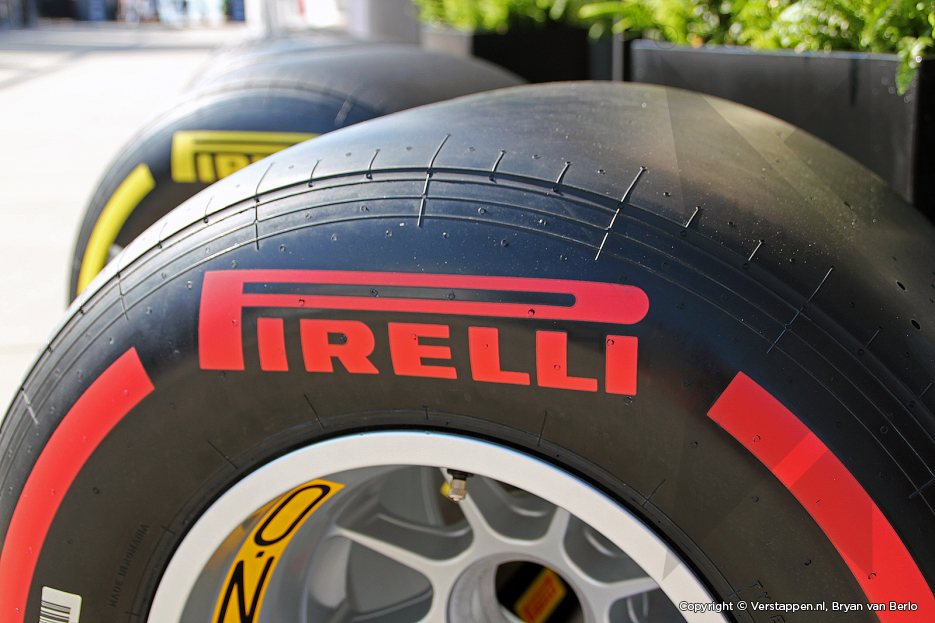
As the Formula 1 circus rolls into the Middle East for Round 4 of the 2025 season, the spotlight isn’t just on the drivers or their machines—but on the tyres. Pirelli, the sport’s exclusive tyre supplier, has confirmed that teams will race on the hardest available compounds during the upcoming Bahrain Grand Prix on April 13.
These compounds—C1 (hard), C2 (medium), and C3 (soft)—are known for their durability, but also their reduced grip compared to softer options. This move by Pirelli adds an extra layer of complexity to the race weekend at the Bahrain International Circuit in Sakhir, a track notorious for high tyre wear, soaring temperatures, and heavy braking zones.
Hardest Compounds for One of F1’s Toughest Tracks
This isn’t the first time Pirelli has opted for its toughest tyres in Bahrain. The company’s decision is based on detailed simulations, past data, and recent learnings from similar circuits like Suzuka in Japan. The Japanese Grand Prix also featured the C1 to C3 range, which offered a good balance between tyre life and race performance.
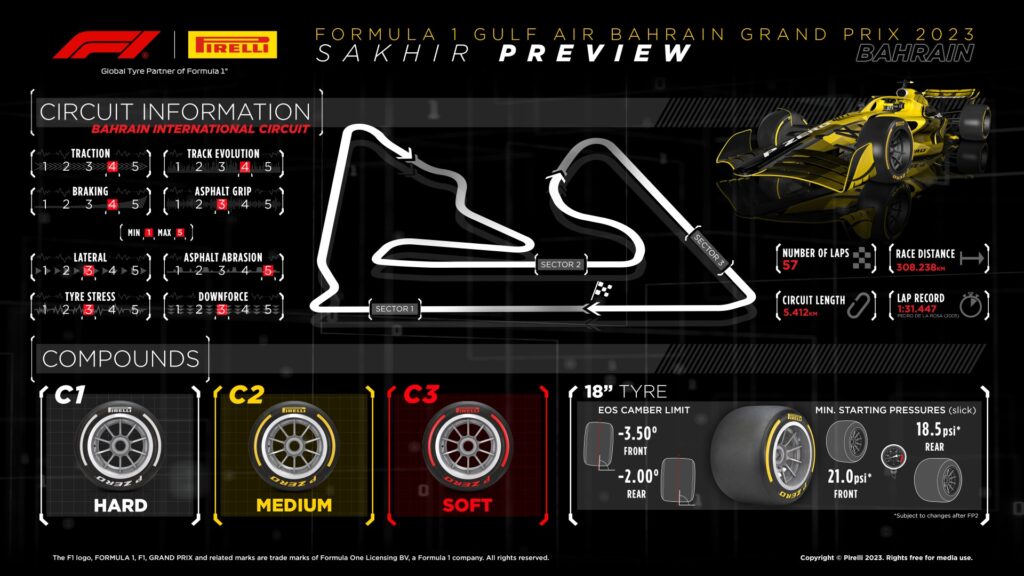
Bahrain’s tarmac is one of the most abrasive on the F1 calendar. Combine that with long straights and tight corners, and you get a circuit that demands robust tyre strategies. Choosing the three hardest compounds ensures safety and strategic variety while also giving teams room to experiment.
One-Stop or Two? Strategy Will Be Everything
In previous Bahrain Grands Prix, most teams leaned towards two-stop strategies due to the rapid degradation caused by the hot desert conditions and track surface. However, with the C1 compound being especially hard-wearing, some teams might now gamble on a one-stop strategy, especially if they qualify further down the grid and aim to make up places through fewer pit stops.
This could create unpredictable racing scenarios, where teams and drivers may have vastly different strategies, depending on how their car handles tyre temperatures and degradation.
Expect to see a mix of early stoppers trying the undercut and brave contenders stretching their stints on the C1 or C2 tyres.
Championship Heats Up with Close Title Fight
The 2025 season is off to a thrilling start, and Bahrain is shaping up to be a crucial race in the championship battle. Lando Norris leads the Drivers’ Championship with 62 points, followed very closely by three-time world champion Max Verstappen, who is just one point behind. McLaren’s Oscar Piastri is also in the hunt, sitting third with 49 points.
In the Constructors’ standings, McLaren has surged ahead with 111 points, followed by Mercedes at 75 and Red Bull Racing with 61. A strong performance in Bahrain could solidify McLaren’s position at the top or allow their closest rivals to close the gap. Tyre strategy, as it turns out, might be the ultimate decider.
Free Practice Set to Feature Young Drivers
Another exciting element for fans and insiders alike will be the first free practice session (FP1), where several teams are set to run alternate or rookie drivers as part of F1’s young driver development program.
Among them will be Japan’s Ryō Hirakawa, who will take the wheel for Haas. Ferrari will run Dino Beganovic, a rising star from their junior program. These sessions are essential opportunities for the next generation of talent to get valuable F1 mileage and offer feedback to engineers—while teams get an early look at their future driver lineup options.
Why Tyre Choice Matters More Than Ever
The importance of tyres in Formula 1 cannot be overstated. Tyres are the only part of the car that makes contact with the track, and small differences in compound performance can have a massive impact on lap times, pit strategy, and race outcome.
In Bahrain, with its unique conditions, teams will need to carefully analyze data collected from free practice to make the right calls during qualifying and the race. Overheating, graining, and thermal degradation will all be factors to watch—especially in the softer C3 compound, which might offer the best pace in qualifying but may not last long during race stints.
Drivers who can manage their tyres well—keeping them in the optimal temperature window—will have a big advantage. Expect veterans like Lewis Hamilton, Fernando Alonso, and Verstappen to excel in this area.
Lessons from the Past and Eyes on the Future
Looking back at previous Bahrain Grands Prix, it’s clear that tyre strategy often plays a major role in determining winners. From last-lap overtakes to surprise podiums, Bahrain has delivered some of the most dramatic races in recent memory—and 2025 could be no different.
With the added twist of rookie drivers in practice and a tightly packed championship leaderboard, the upcoming race offers the perfect recipe for drama and unpredictability.
Additionally, with F1’s 2026 regulation changes just around the corner, teams are already using races like Bahrain to test new ideas and gather data—not just to win now, but to prepare for future success.
Final Thoughts: Bahrain Will Be a Game of Chess on Asphalt
In many ways, the 2025 Bahrain Grand Prix will be like a game of high-speed chess. Every team must calculate their moves carefully, balancing pace with tyre preservation, pit stops with track position, and performance with risk.
With Pirelli bringing its toughest tyre compounds to one of the most demanding tracks on the calendar, nothing can be taken for granted. Smart strategy and sharp execution will separate winners from losers.
As the lights go out on Sunday, fans can expect not just a race—but a tactical battle where every lap matters.
Jewish Children in UAE Face Rising Antisemitism Amid Gaza Conflict, Say Parents

