

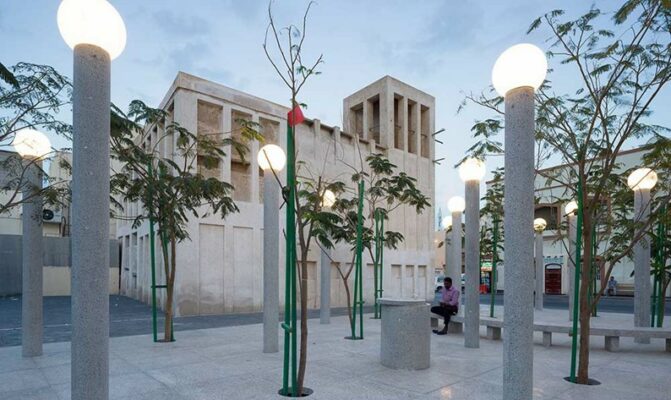
Muharraq, Bahrain — In an ambitious move that unites the past with the future, Bahrain has unveiled a groundbreaking urban restoration and design project in the historic city of Muharraq. Known as the Pearling Path, this newly developed cultural trail is capturing global attention not only for its rich storytelling of Bahrain’s pearl-diving heritage but also for its bold, futuristic architecture—including a set of unique car parks that look like they were pulled from a science fiction film.
The project is part of a national effort to preserve Bahrain’s identity while embracing modern innovation, transforming the urban landscape into a living museum that surprises, educates, and inspires.
A Tribute to Bahrain’s Pearling Heritage
The Pearling Path is a 3.5-kilometer route weaving through the narrow alleyways and vibrant corners of Muharraq, Bahrain’s former capital and a historic hub for the pearl-diving trade. Before the discovery of oil in the 1930s, pearl diving was the backbone of Bahrain’s economy. Thousands of divers risked their lives every season to harvest pearls from the depths of the Arabian Gulf, providing livelihoods for entire communities.
The path links together 17 restored buildings, ranging from modest pearl divers’ homes to merchant mansions, boatyards, and historic oyster beds. These spaces have been carefully refurbished to reflect the architecture, atmosphere, and way of life that once defined this region.

Visitors walking along the trail are taken on a journey through time, encountering stories, photographs, and cultural exhibits that shed light on one of the Gulf’s oldest and most romanticized professions.
Futuristic Car Parks: A Bold Statement in Design
While the restoration of historical buildings has been warmly welcomed, it is the addition of four ultra-modern car parks that has truly captured the public’s imagination. Designed by Swiss architect Christian Kerez, these car parks defy traditional expectations.
From the outside, the concrete slabs appear to float and fold over each other in thin layers, earning them the nickname “filo pastry car parks.” Their appearance has prompted reactions ranging from awe to confusion—some locals said they “goggled and gawped” upon seeing them for the first time.
The structures aren’t just for parking cars. They serve a dual purpose as open community spaces where markets, pop-up exhibitions, and local gatherings can be hosted. In this way, they blend functionality with public engagement.
The complexity behind their construction is astonishing. Engineers had to produce over 75,000 individual section drawings to build these wave-like structures. Each car park is an architectural feat, intended to provoke curiosity while offering utility to local residents and visitors alike.
Blending the Old with the New
The futuristic look of the car parks has sparked debate. Some heritage advocates have expressed concern that the high-concept modern design may overshadow the historical significance of Muharraq’s centuries-old architecture. Others see it differently.
Project lead and architect Noura Al Sayeh explains that the intention was never to mimic the past but rather to build a meaningful bridge between tradition and contemporary design. She emphasized that materials such as coral stone and teak wood—once staples of traditional Bahraini architecture—are either environmentally protected or no longer viable in the local climate.
“In our region, we have to build differently today,” Al Sayeh said. “The idea was to create structures that reflect our future while respecting our past. It’s not about imitation—it’s about evolution.”
Indeed, the project has used innovative materials and methods that are more sustainable and suited to Bahrain’s harsh desert climate. This combination of practicality and creativity has helped position Bahrain as a leader in heritage-conscious urban innovation.
Public Spaces Designed for Community
The Pearling Path goes beyond architecture—it’s a cultural and social project at its core. New shaded plazas, pocket parks, and public seating areas have been integrated into the urban plan to encourage people to use and enjoy public space.
Many of these areas are designed with Bahrain’s working-class and migrant communities in mind. With trees offering natural shade, water fountains providing relief, and benches placed throughout, these “urban living rooms,” as Al Sayeh calls them, give people—especially those working nearby—a place to pause and relax in the city’s dense environment.
The car parks also function as public platforms where festivals, cultural performances, and community markets can be held. This multifunctional approach shows that infrastructure doesn’t have to be boring—it can be inclusive, dynamic, and human-centered.
A Model for Other Cities
The Pearling Path is already being studied by architects and urban planners worldwide. It offers a model for how cities can preserve cultural identity while embracing innovation. Instead of demolishing old buildings to make way for skyscrapers or shopping malls, Bahrain has chosen to invest in its heritage—and to present it in bold, creative ways.
The project also highlights the importance of storytelling in architecture. Every site on the trail has been chosen with care, and together they create a narrative that connects generations, weaving Bahrain’s past into its modern identity.
As urban development accelerates across the Gulf, many are watching Bahrain’s approach with admiration—and perhaps a bit of envy. In an era where history is often bulldozed in the name of progress, Bahrain has shown that the two can coexist beautifully.
Looking Forward
The Pearling Path has been praised not only for its architectural beauty but also for its cultural depth and community focus. It is a reminder that heritage does not need to live in the shadows of skyscrapers—it can thrive at street level, alive and accessible.
Future phases of the project may expand this model to other neighborhoods and cities across Bahrain. There is growing momentum to bring similar initiatives to the capital, Manama, and other parts of the island.
As Bahrain continues to evolve, this project serves as a shining example of how a small nation can think big—by looking to its roots while stepping boldly into the future.
FIA Press Conference: Sainz, Antonelli & Doohan Talk Bahrain GP

