

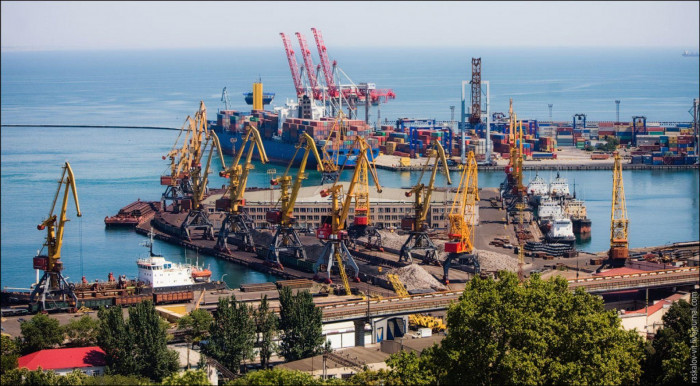
Novorossiysk Port, one of Russia’s most vital maritime hubs located along the Black Sea, has achieved an impressive milestone, surpassing 164 million tonnes in cargo turnover in 2024. This significant achievement not only marks a 2% increase in handling compared to the previous year but also cements the port’s position as the top port in Russia for cargo turnover. The port now handles nearly 19% of Russia’s total seaport cargo, which is a notable increase from the 18% share recorded in 2023.
This record-breaking performance comes at a time when global maritime trade faces various challenges. Yet, Novorossiysk’s consistent growth highlights the port’s resilience and its integral role in Russia’s maritime sector. The port’s performance is largely attributed to several factors, including its strategic location, expansion in infrastructure, and efforts to diversify the types of cargo processed at the facility.
A Closer Look at Cargo Handling
One of the standout factors in Novorossiysk’s 2024 performance is the noticeable increase in the handling of dry cargo, which grew by a remarkable 10%, reaching a total of 54 million tonnes. This is an encouraging sign of the port’s diversification strategy, which has allowed it to become more adaptable to various global market conditions. The handling of liquid bulk cargo, however, experienced a slight decrease of 1.3%, with the port processing 110 million tonnes of this category.

Despite the small decline in liquid bulk cargo, the overall growth in dry cargo handling highlights a successful shift in Novorossiysk’s approach. The port has managed to adapt to changing global trade patterns, positioning itself as a versatile hub capable of accommodating various types of goods, from metals to grains, and providing essential services to multiple industries. This diversification is crucial for maintaining stability in times of fluctuating demand for different types of products.
Strategic Position Among Russia’s Leading Ports
In the broader context of Russia’s national port rankings, Novorossiysk continues to lead the pack in terms of overall cargo turnover. As of 2024, the port has firmly retained its number one position. Following closely behind in second place is Ust-Luga, which handled 135 million tonnes, showing a slight decrease of 0.2% year-on-year. Vostochny Port claimed third place with 87.7 million tonnes, demonstrating a growth of 1.4% over the previous year.
Other significant ports in Russia, such as Primorsk, St. Petersburg, and Vladivostok, also performed well, reflecting Russia’s diverse and growing port network. However, Novorossiysk remains unmatched in terms of cargo turnover, which speaks volumes about the port’s critical role in facilitating international trade, especially within the Black Sea region.
Investing in Future Growth
Looking ahead, Novorossiysk Port is poised for even greater success with a series of key infrastructure projects aimed at boosting its capacity and efficiency. One of the most notable of these initiatives is the development of a state-of-the-art multipurpose sea terminal. The terminal, which will be constructed under a concession scheme, is set to handle up to 12 million tonnes of metal products annually.
This project is particularly significant because it will play a crucial role in ensuring that Russia’s metal exports continue to flow seamlessly, even as regional dynamics evolve. The terminal will replace metal product shipments that were previously routed through Ukrainian ports, giving Russia more control over its key export sector. With an investment of over 50 billion rubles, the project is expected to be completed by 2025, contributing to the port’s long-term sustainability and growth.
Additionally, the port’s management has been working tirelessly to enhance its overall infrastructure, streamline operations, and upgrade its technology to meet the growing demand for cargo handling. This commitment to modernization and growth aligns with Russia’s broader strategy of bolstering its economic resilience and global competitiveness in the maritime industry.
A Key Player in Russia’s Maritime Sector
The remarkable performance of Novorossiysk Port in 2024 underscores its essential role in Russia’s economy. The port not only facilitates trade between Russia and various global markets but also serves as a critical link in the supply chain for industries such as agriculture, metallurgy, and energy. By handling a broad range of cargo, from bulk commodities to high-value goods, Novorossiysk has become a cornerstone of Russia’s maritime infrastructure.
In addition to its impressive cargo turnover, the port’s ongoing investment in infrastructure and strategic initiatives position it as a leader in global maritime trade. Its ability to adapt to changing market demands, maintain a competitive edge, and consistently expand its operations is a testament to the dedication of its management and workforce.
Conclusion: Novorossiysk’s Bright Future
Novorossiysk Port’s record-breaking performance in 2024 sets a high benchmark for Russia’s maritime sector, emphasizing its importance as a central hub for global trade. The port’s ability to diversify its cargo base, maintain a dominant position in the national rankings, and undertake major infrastructure projects highlights its continued growth trajectory.
As Russia looks to further expand its economic and trade relationships, Novorossiysk Port will undoubtedly remain a critical asset. With its cutting-edge infrastructure, strategic location, and focus on sustainability, the port is well-positioned to remain at the forefront of Russia’s maritime industry in the years to come. The continued success of Novorossiysk is not only a victory for the port itself but also a significant milestone for Russia’s economic growth on the global stage.
This growth, fueled by innovation, investment, and diversification, reinforces Novorossiysk Port’s standing as a key player in international maritime logistics, ready to navigate the challenges and opportunities that the future holds.
Trump to Visit Saudi Arabia in Mid-May: A Strategic Move for U.S.-Gulf Relations

