


A Daring Voyage: From Kuwait to Mumbai
Heroic Escape a remarkable story of survival and desperation, three men from Tamil Nadu embarked on a harrowing journey across the Arabian Sea in February 2024. These men, working in Kuwait under dire conditions, faced extreme hardships, including withheld wages, passport confiscation, and claims of abuse by their employers. With no immediate prospects of escape, they took a bold decision to flee, seizing a Kuwaiti fishing boat and setting sail for India, their homeland.
The trio’s journey, which began with the hope of reaching safety, was fraught with peril. With only a GPS device to guide them, they navigated the vast, unpredictable waters of the Arabian Sea. Their destination was Mumbai, a place of safety, yet unknown to the authorities at the time. As they sailed farther from Kuwaiti waters, their lives were held together by sheer willpower and the hope of a better future.
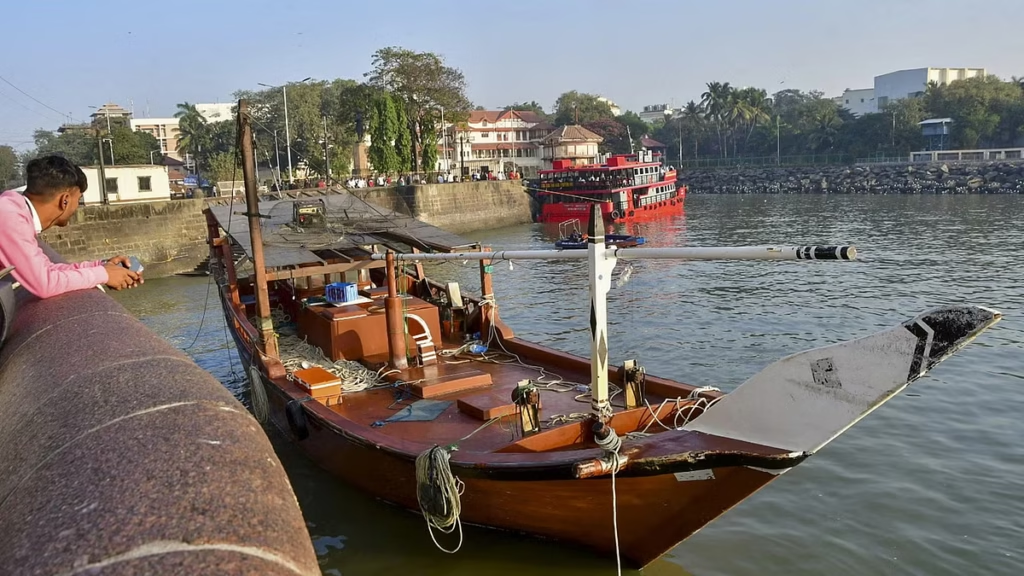
They arrived near the Gateway of India on February 6, 2024. Their presence went unnoticed for some time, until the boat was finally spotted by Mumbai Police, who promptly intervened. The authorities, initially surprised by the boat’s unorthodox entry, intercepted the men, who were later arrested for illegally entering Indian waters. While their method of arrival was illegal, the conditions they fled from illuminated the harsh realities faced by many migrant workers abroad.
Security Concerns: A Wake-Up Call
The Kuwaiti boat’s undetected passage across the Arabian Sea has raised serious concerns about India’s maritime security. The vessel traveled thousands of kilometers without being flagged by either the Indian Navy or Coast Guard. This oversight highlights the vulnerabilities in India’s coastal security measures, an issue that has once again come to the forefront following high-profile incidents like the 26/11 Mumbai attacks, where terrorists used sea routes to infiltrate India.
Maritime experts have raised alarms about the limited surveillance and patrolling in certain areas, especially in international waters. The fact that this boat could travel such a long distance without detection suggests that India’s border security, particularly at sea, needs a thorough review and possible overhaul. The Indian government has been urged to bolster its maritime defenses, ensuring that such lapses do not occur in the future.
Legal Proceedings and Humanitarian Aspects
After being arrested, the three men found themselves caught in a complex web of legal and diplomatic procedures. They were charged with illegal entry into Indian waters, a crime with serious implications. However, the circumstances surrounding their entry revealed a deeper humanitarian issue. Legal experts, human rights organizations, and migrant advocacy groups have taken an active interest in the case, calling attention to the workers’ exploitation in Kuwait.
These workers’ experiences are far from isolated. Many migrant workers in the Gulf countries face similar issues, including non-payment of wages, mistreatment, and an absence of legal recourse. Their desperation led them to take the extreme step of commandeering a foreign vessel to escape their grim reality. While the law must be followed, there is growing recognition that more needs to be done to protect vulnerable migrant workers, especially those in foreign countries where labor laws and protections are often weak or poorly enforced.
This case shines a light on the broader issue of migrant labor and the systemic exploitation that continues to affect millions of workers worldwide. In addition to the legal ramifications, there is a growing call for international efforts to reform labor practices and ensure the safety and dignity of workers, particularly in countries like Kuwait, where many Indians seek employment.
Resolution: Return of the Vessel
After months of investigation and legal proceedings, the Kuwaiti fishing boat was finally returned to its owner, Abdullah Sharahit, in September 2024, nearly seven months after it was seized by Indian authorities. The legal formalities were extensive, but the case came to a resolution when Sharahit, accompanied by his legal representatives, arrived in Mumbai to reclaim his vessel.
The handover of the boat marked the end of a complicated legal process. While the boat’s return was a significant development for Sharahit, it was not the end of the story for the three men who had sought refuge in Mumbai. Their legal situation was still pending, but their escape and the eventual return of the boat underscored the complexities of maritime law, international ownership, and the tensions that can arise between countries over such incidents.
Broader Implications: A Call for Reform
The story of the Kuwaiti boat and the men who navigated it brings several important issues to the forefront: the need for stronger maritime security, the protection of migrant workers, and the implementation of more effective international labor laws. This incident has underscored the vulnerability of both nations and individuals to exploitation, particularly in regions where governance and labor rights protections are lacking.
India’s handling of the case is a reminder of the fine balance between national security and humanitarian considerations. The fact that the men arrived in Indian waters undetected is not only a security concern but also a humanitarian one. In a world where globalization has made borders more porous, it is crucial to ensure that policies and security measures do not inadvertently neglect the protection of human rights.
The Kuwaiti boat incident has also sparked a broader conversation about the security of national borders and the human stories that often go unnoticed in such cases. The discussion calls for a collective international effort to address the plight of migrant workers, reinforce security measures at sea, and ensure that such tragedies are not repeated.
This case is not just about a boat or the men aboard it. It is about the larger issues that impact millions of migrant workers worldwide, and it serves as a reminder of the importance of a global effort to create safer, fairer conditions for workers across the globe.

