

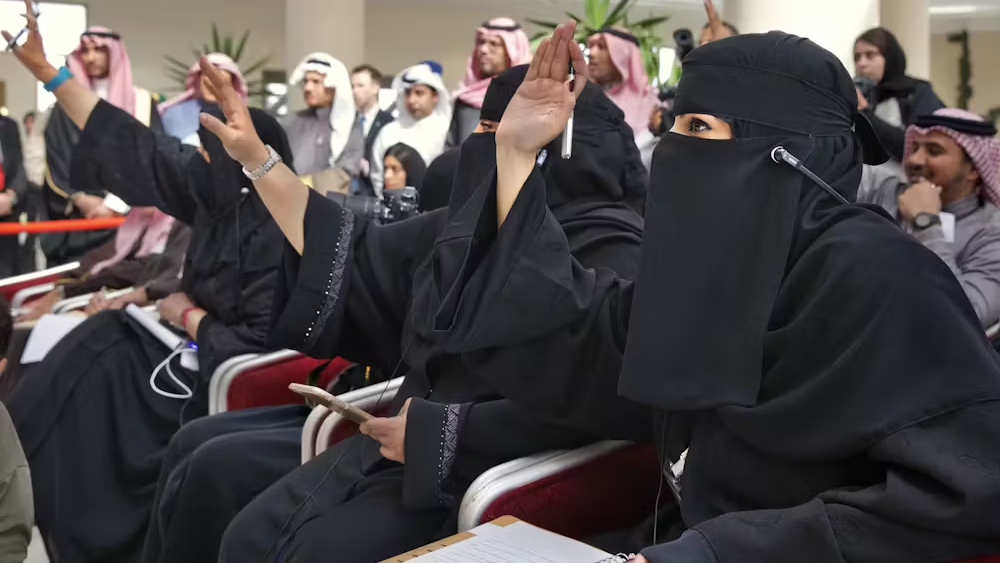
Women’s education in Saudi Arabia has undergone a remarkable transformation in the past two decades. From limited opportunities in the 1990s to significant reforms in recent years, Saudi Arabia is now making bold strides toward promoting gender equality in the education sector. These changes are not just about numbers but also about empowering women with knowledge, skills, and access to fields previously considered off-limits.
This article explores five major developments that highlight the positive and powerful shift in women’s education in Saudi Arabia. It also looks into the remaining challenges and what the future might hold.
More Women Than Men in Universities
In a surprising yet positive trend, women in Saudi Arabia now outnumber men in higher education. According to the Ministry of Education, over 52% of university students are women. This figure reflects how committed Saudi families have become in encouraging their daughters to pursue academic goals.
Fields like medicine, education, and science have seen a large influx of female students. Even in traditionally male-dominated fields such as law, engineering, and business, women are making their presence known.
This shift shows how women’s education in Saudi Arabia is no longer a secondary priority but a central part of the country’s Vision 2030 goals, which aim to build a more diverse and educated workforce.
New Government Scholarships and Global Exposure
Another major breakthrough is the introduction of government-funded scholarships for Saudi women to study abroad. Thousands of women have taken this opportunity to study in the US, UK, Canada, Australia, and other countries.
These scholarships not only improve academic skills but also expose women to global ideas, cultures, and professional environments. When these women return, they often take leadership roles in local universities, ministries, and private sectors.
Saudi Arabia’s leadership recognizes that educating women globally brings international perspectives that benefit the entire nation.
Women Joining STEM and Leadership Programs
Previously, women were rarely found in STEM (Science, Technology, Engineering, and Mathematics) fields. But now, the narrative is changing. Saudi universities and institutions are introducing special initiatives to encourage women to enter technical careers.
For example, Princess Nourah bint Abdulrahman University (PNU), the largest women’s university in the world, now offers full degrees in engineering and computer science. Several other institutions now host coding bootcamps, artificial intelligence programs, and entrepreneurship workshops tailored for female students.
This proves that women’s education in Saudi Arabia is no longer limited to traditional roles, and new doors are being opened every year.
Private Sector Support and Employment Opportunities
Education is not effective without real-world application. Thankfully, many Saudi private companies have started supporting women’s career growth through training and internship programs. Major corporations like Aramco, SABIC, and STC are investing in female education by offering scholarships, internships, and job placements.
This move helps bridge the gap between education and employment. When women are supported beyond the classroom, they can become active economic contributors and decision-makers.
It also encourages more girls to pursue education, knowing that there are practical outcomes waiting for them after graduation.
Cultural Shift and Acceptance of Women’s Education
One of the most powerful and long-term changes is the cultural acceptance of women’s education. Just a generation ago, many families were hesitant to send their daughters to school or universities. Today, not only is this mindset changing, but many parents take pride in their daughters’ educational achievements.
Women are now seen speaking at international forums, becoming professors, starting businesses, and even writing national policies. This cultural shift is essential to ensure that the progress in women’s education becomes permanent and widely accepted.
While challenges like rural access to education and conservative resistance still exist, the overall attitude toward women’s education in Saudi Arabia is improving rapidly.
Challenges That Still Remain
Despite the major strides, certain areas still require attention. Women in rural and underprivileged areas often lack the same access to quality education as those in major cities. Online education and digital learning are helping bridge this gap, but more infrastructure and policy support are needed.
Additionally, while enrollment is high, career placement and wage equality are still major hurdles. Women often find themselves in low-paying or entry-level jobs even after completing advanced degrees.
To truly transform women’s education in Saudi Arabia, these structural challenges must be addressed through policy, funding, and social initiatives.
Future Outlook for Women’s Education in Saudi Arabia
Saudi Arabia’s Vision 2030 remains the key driver of future reforms. The plan clearly outlines increasing women’s participation in the workforce to 30%, improving curriculum standards, and promoting inclusive policies.
In the coming years, we can expect more international collaborations, digital learning platforms, and female-led educational institutions. The focus will likely remain on expanding opportunities in science, research, business, and global innovation sectors.
It is also expected that more efforts will be made to ensure equality in hiring, leadership roles, and policy-making opportunities for educated women.
Conclusion
Women’s education in Saudi Arabia has come a long way and continues to grow stronger. From higher enrollment rates to cultural acceptance and STEM participation, women are now key contributors to the country’s educational and professional ecosystem.
Though challenges remain, the foundation is strong and the outlook is promising. As Saudi Arabia continues to open new doors for its female population, the country is slowly becoming a regional example of how education can empower not just individuals, but the entire society.Do follow Gulf Magazine on Instagram
Also Read – Private and International Schools in Saudi Arabia: 7 Powerful Facts

