

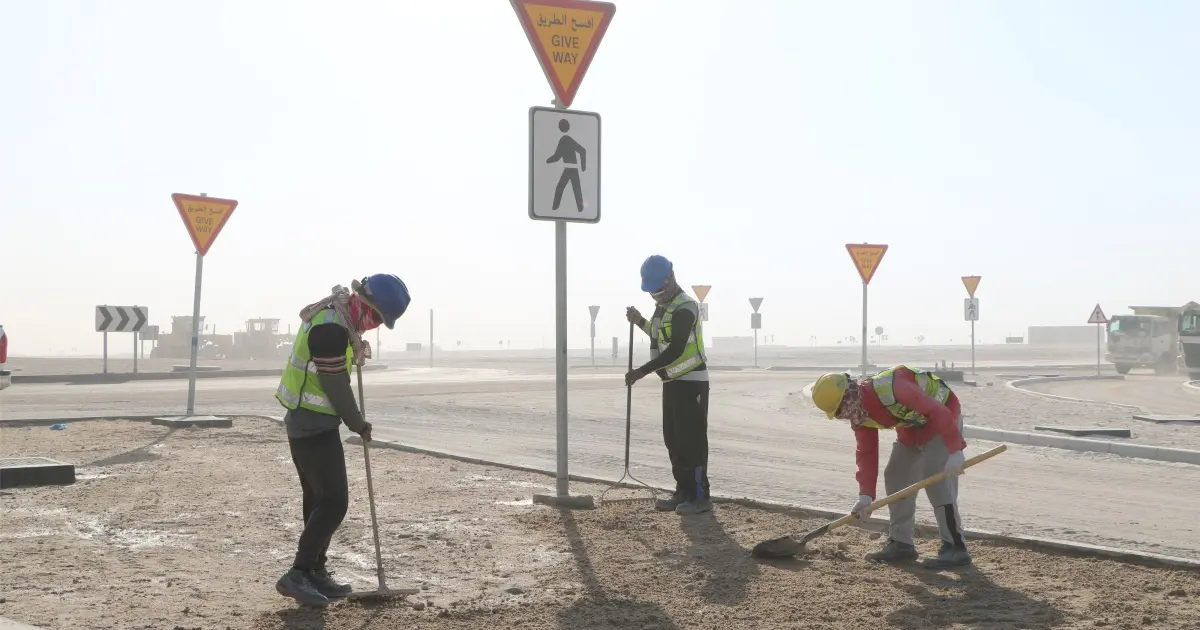
Gulf States worker heat protection has become one of the most urgent issues in today’s world. With climate change driving up temperatures across the Middle East, millions of migrant workers are facing dangerous conditions. From construction sites in Dubai to oil fields in Saudi Arabia, workers often labor outdoors under the scorching sun, where heat can climb above 50°C (122°F).
While Gulf economies rely heavily on foreign workers for construction, services, and infrastructure projects, many of these laborers face inadequate protection from extreme weather. As heatwaves grow more frequent and intense, the health and survival of workers is at stake.
Extreme heat: a growing danger in the Gulf
The Gulf region is no stranger to high temperatures. For decades, workers have endured long hours under the desert sun. However, climate change is now making extreme heat more frequent, more dangerous, and harder to manage.
The World Meteorological Organization has warned that the Middle East could face some of the most severe consequences of global warming. In some parts of the Gulf, wet-bulb temperatures—the measure that combines heat and humidity—are reaching levels close to the limit of human survival.
For workers performing physically demanding tasks such as construction, road maintenance, and cleaning, these conditions can quickly lead to heat exhaustion, dehydration, heatstroke, and even death.
Why migrant workers are most at risk
The Gulf States host more than 30 million migrant workers, primarily from South Asia and Africa. These workers often live in basic accommodations and work long hours outdoors.
Several factors make them more vulnerable to extreme heat:
- Long shifts in outdoor environments with little shade
- Limited rest breaks due to tight project deadlines
- Insufficient hydration if employers do not provide safe drinking water
- Low awareness about the symptoms of heat-related illness
- Fear of losing wages if they refuse to work during peak heat hours
This vulnerability is worsened by the fact that many migrant workers lack proper health insurance or access to quality medical care.
Existing heat protection measures in the Gulf
Some Gulf States have introduced measures to protect workers during summer. For example:
- United Arab Emirates (UAE): Enforces a “midday break” rule, banning outdoor work between 12:30 p.m. and 3:00 p.m. during the hottest summer months
- Qatar: Introduced legislation restricting work in open-air sites during peak hours and requiring employers to provide shaded rest areas
- Saudi Arabia: Bans outdoor work under direct sunlight from 12:00 p.m. to 3:00 p.m. between June and mid-September
While these policies are important, enforcement often remains weak. Reports frequently surface of employers violating the rules, forcing workers to continue under hazardous conditions.
The human cost of weak protection
Behind every statistic is a story. Each year, reports emerge of workers collapsing or even dying on duty because of extreme heat. For example, during the construction boom in Qatar ahead of the FIFA World Cup, rights groups raised concerns about heat-related deaths among workers.
Medical experts confirm that many heat-related illnesses are underreported. Death certificates sometimes cite “cardiac arrest” or “natural causes” instead of heatstroke, masking the true scale of the crisis. This lack of transparency makes it difficult to push for stronger policies.
International pressure and human rights concerns
Global organizations and human rights groups have repeatedly called on Gulf States to improve worker protections. The International Labour Organization (ILO) emphasizes that safe working conditions are a fundamental right, and governments must ensure compliance.
International scrutiny has already prompted some reforms. Qatar, for instance, introduced better heat protection laws under pressure while preparing for global events. However, critics argue that reforms often come late and are not fully enforced.
Climate change will make things worse
The urgency of Gulf States worker heat protection grows every year. Scientists predict that, if global warming continues at its current pace, parts of the Gulf may become uninhabitable for outdoor labor by the end of the century.
Even with midday work bans, the morning and evening hours are becoming hotter than before. Prolonged exposure—even outside peak heat—could still be dangerous.
What stronger protection could look like
To prevent future tragedies, Gulf States could adopt more comprehensive measures such as:
- Extending work ban hours to cover more of the hottest part of the day
- Implementing shorter shifts with mandatory breaks in shaded, cooled rest areas
- Providing free and unlimited access to drinking water at all work sites
- Equipping workers with protective clothing designed for heat reduction
- Training supervisors and workers to recognize and respond to heat stress symptoms
- Strengthening enforcement with regular inspections and penalties for violations
Digital solutions, such as heat-stress monitoring apps and wearable devices, are also being tested in some countries to track workers’ health in real time.
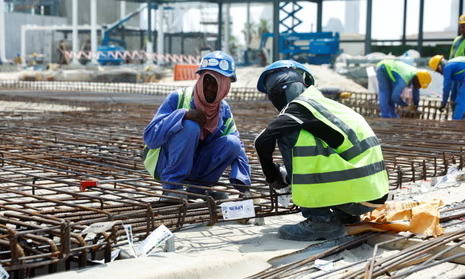
The role of employers
While governments can set laws, employers must play an active role in protecting workers. Construction companies, contractors, and service providers have both a moral and legal responsibility to ensure safe conditions.
Best practices for employers include:
- Creating heat management plans tailored to their work sites
- Adjusting project deadlines to avoid pressuring workers into unsafe shifts
- Offering awareness programs in workers’ native languages
- Recording and reporting all heat-related incidents transparently
Some forward-looking companies in the UAE and Qatar have started experimenting with nighttime shifts or indoor alternatives to minimize exposure.
The workers’ perspective
For many workers, extreme heat is just one of many struggles. Long hours, low pay, cramped accommodations, and separation from families add to their hardships. Still, most continue working because their families depend on their income.
Workers have shared stories of fainting on site, feeling dizzy, or struggling to breathe in the heat. Many fear reporting health issues, worried that they may lose their jobs or be sent home. This culture of silence makes it even more important for authorities and employers to take responsibility.
Gulf States at a crossroads
The Gulf region faces a difficult balance: sustaining economic growth while protecting the people who make that growth possible. With mega projects such as NEOM in Saudi Arabia and Expo-driven construction in the UAE, demand for migrant labor remains high.
But without stronger Gulf States worker heat protection, these projects risk being built on the suffering—and in some cases, the lives—of vulnerable workers.
As the climate crisis accelerates, the Gulf has an opportunity to lead by example. By investing in worker safety and showing genuine commitment to human rights, the region could set a global standard for labor protection under extreme conditions.
Conclusion
The issue of Gulf States worker heat protection is not just about regulations—it is about human dignity. The men and women who build skyscrapers, roads, and stadiums in blistering heat deserve more than just wages. They deserve safety, respect, and a chance to return home alive and healthy.
Protecting workers from extreme heat requires immediate action from governments, employers, and international partners. Without stronger enforcement and innovative solutions, the human cost will continue to rise.
The Gulf has the wealth, resources, and technology to lead in protecting vulnerable workers. What remains to be seen is whether the political will can match the urgency of the crisis.
Read More: Why Meditation Spaces in Offices Are Transforming Workplaces

