

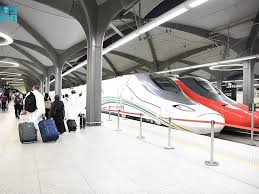
Saudi Arabia’s Haramain High-Speed Rail (HHR) is more than just a transportation project—it’s a transformative infrastructure initiative that connects the Kingdom’s most significant cities and serves millions of pilgrims annually. Spanning 453 kilometers, this rail line links Mecca, Medina, Jeddah, and King Abdullah Economic City, offering a modern, efficient, and sustainable travel option.
What Is the Haramain High-Speed Rail?
The Haramain High-Speed Rail is an electrified intercity rail network designed to facilitate rapid travel between the holy cities of Mecca and Medina, with key stops in Jeddah and King Abdullah Economic City. Officially opened to the public on October 11, 2018, the railway operates at speeds up to 300 km/h, making it one of the fastest trains in the Middle East and West Asia.
Key Features and Specifications
- Length: 453 kilometers (281.5 miles)
- Speed: Maximum operational speed of 300 km/h
- Stations: Five main stations—Mecca, Jeddah (Al-Sulimaniyah), King Abdulaziz International Airport, King Abdullah Economic City (KAEC), and Medina
- Train Composition: Each train comprises 417 seats, including 113 in Business Class and 304 in Economy Class, along with a dining area located in the fifth coach for added comfort .
- Capacity: Designed to accommodate up to 20,000 passengers per hour at peak times
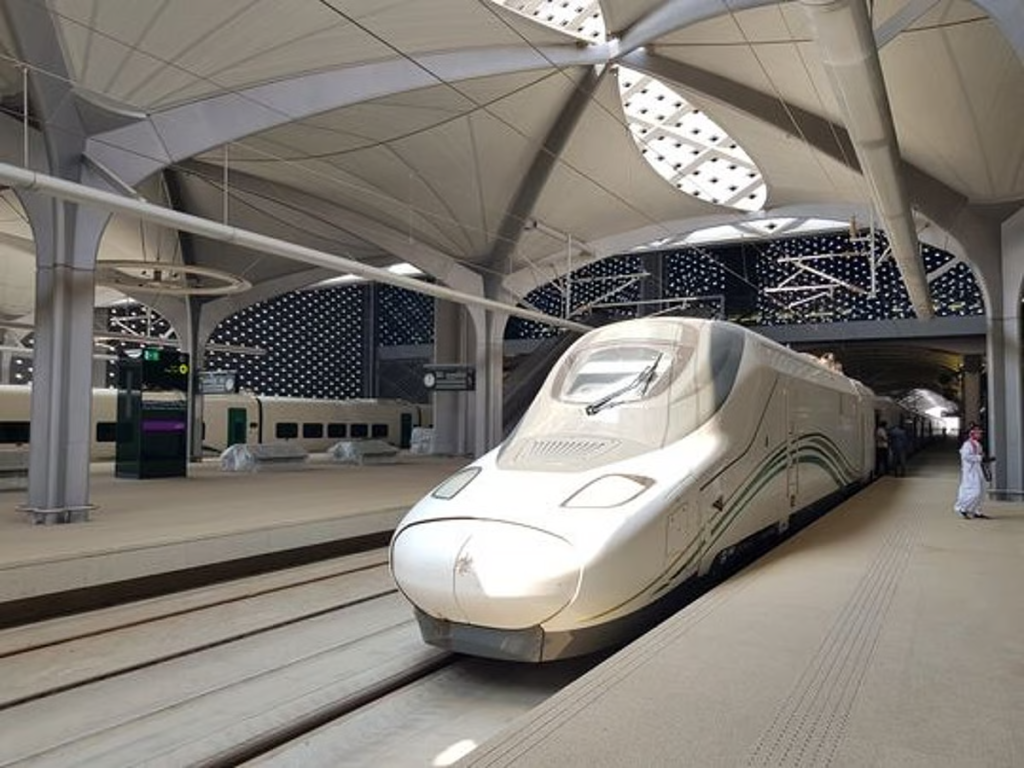
The Route and Stations
1. Mecca Station
Located in the Al Rasaifah district, Mecca Station is the southern terminus of the Haramain High-Speed Rail. It’s strategically situated near Masjid al-Haram, making it highly accessible for pilgrims. The station is equipped with modern amenities, including prayer rooms, food courts, and shopping areas.
2. Jeddah Station (Al-Sulimaniyah)
Serving as a central hub, Jeddah Station connects travelers to the bustling city and its surrounding areas. The station is designed to handle high volumes of passengers and offers various services to ensure a comfortable journey.
3. King Abdulaziz International Airport Station
This station provides seamless connectivity for travelers flying in or out of Jeddah. It’s integrated with the airport, allowing passengers to transition effortlessly between air and rail travel.
4. King Abdullah Economic City (KAEC) Station
Situated in Rabigh, KAEC Station serves as a gateway to the King Abdullah Economic City, a significant development aimed at boosting economic growth in the region.
5. Medina Station
The northern terminus of the rail line, Medina Station, is located in the Al Hadra district. It’s designed to accommodate pilgrims visiting the Prophet’s Mosque and offers various facilities to enhance the travel experience.
Travel Times and Frequency
The Haramain High-Speed Rail significantly reduces travel times between the major cities:
- Mecca to Medina: Approximately 2 hours and 20 minutes
- Mecca to Jeddah: Around 30 minutes
- Jeddah to Medina: Approximately 1 hour and 30 minutes
Trains operate frequently throughout the day, with services running every 30 minutes during peak hours to accommodate the high demand, especially during the Hajj and Umrah seasons.
Economic and Environmental Impact
The Haramain High-Speed Rail is a cornerstone of Saudi Arabia’s Vision 2030, aiming to diversify the economy and reduce dependence on oil revenues. The railway has:
- Boosted Tourism: By facilitating easier access to holy sites, it has encouraged more pilgrims and tourists to visit.
- Reduced Road Congestion: By providing an alternative to road travel, it has alleviated traffic congestion, particularly during peak pilgrimage seasons.
- Promoted Sustainability: Operating on electricity, the rail line contributes to reducing carbon emissions compared to conventional road transport.
Challenges and Developments
While the Haramain High-Speed Rail has been a significant achievement, it has faced challenges:
- Construction Delays: Initially slated for completion in 2012, the project faced several delays, with the final completion occurring in 2018.
- Station Fire: In September 2019, a fire broke out at the Al-Sulimaniyah station in Jeddah, leading to temporary disruptions. However, services were quickly restored, and a bypass line was constructed to prevent future interruptions
Despite these challenges, the railway has continued to operate efficiently, serving millions of passengers annually.
Future Prospects
Looking ahead, the Haramain High-Speed Rail is set to play a pivotal role in Saudi Arabia’s transportation landscape:
- Expansion Plans: There are discussions about extending the rail network to other regions, further enhancing connectivity within the Kingdom.
- Technological Upgrades: Plans to incorporate advanced technologies, such as high-speed trains with greater capacities and speeds, are underway to meet growing demand.
- Integration with Other Transport Modes: Efforts are being made to integrate the rail system with other modes of transport, including buses and taxis, to provide a seamless travel experience for passengers.
Conclusion
The Haramain High-Speed Rail stands as a testament to Saudi Arabia’s commitment to modernizing its infrastructure and enhancing the travel experience for both residents and pilgrims. By connecting key cities and reducing travel times, it has not only facilitated religious journeys but also contributed to the Kingdom’s economic and environmental goals. As the railway continues to evolve, it promises to remain a vital component of Saudi Arabia’s transportation network.
Do follow on: Instagarm
Read more: AP Dhillon Rocks Dubai With Punjabi Beats and Global Vision

