


A Tradition Woven With Care
Omani hand-woven textiles are not just fabrics; they are living stories. Every thread carries history, every color holds meaning, and every pattern reflects the spirit of Oman. What makes these textiles truly special is the deep connection between the weaver and their heritage. Unlike machine-made fabrics, hand-woven textiles are created with patience and soul, making each piece unique. For generations, Omani families have preserved weaving skills, passing them down from mothers to daughters, fathers to sons. This continuity has kept the art alive, while also giving every fabric a touch of authenticity that modern manufacturing simply cannot replicate.
The Rich Symbolism in Every Design
When you look closely at an Omani textile, you will notice more than just threads. You will see symbols and stories. Patterns often represent nature, daily life, and cultural values. For example, geometric shapes may signify strength, while floral designs capture the beauty of Omani landscapes. Even the choice of colors is intentional red for vitality, black for power, green for growth, and white for peace. This attention to detail transforms a simple cloth into a visual language, one that speaks of pride, tradition, and belonging.
A Celebration of Natural Materials
One of the defining features of Omani textiles is the use of natural fibers. Traditionally, cotton and wool were the main materials, often sourced locally. These fibers are not just durable but also breathable, making them suitable for Oman’s climate. Natural dyes, extracted from plants, roots, and minerals, add richness to the fabrics. Unlike synthetic colors, these dyes age gracefully, deepening in tone over the years instead of fading. Wearing or owning such a textile feels like having a piece of nature wrapped around you, soft yet strong, delicate yet lasting.
Skill Passed From Generation to Generation
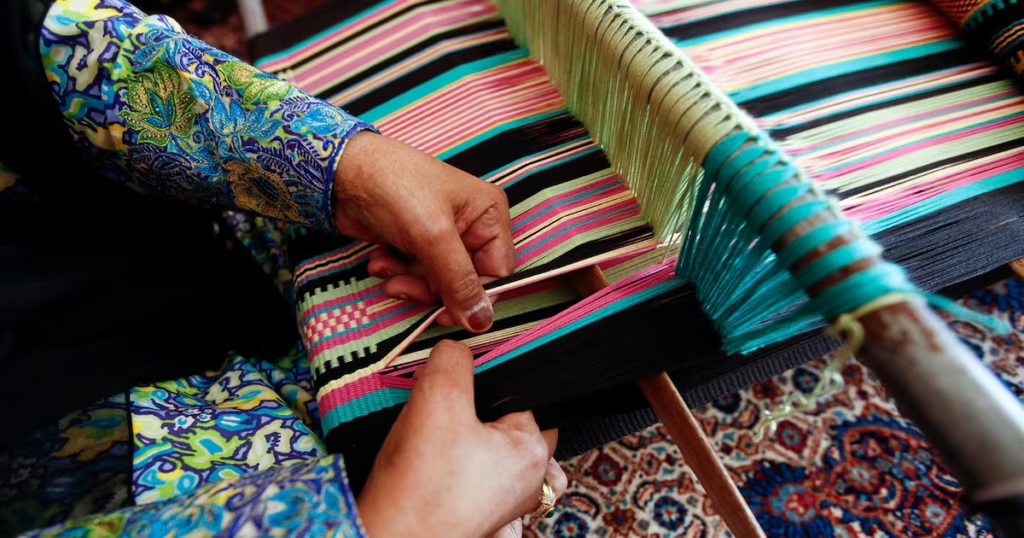
Weaving is not an art that can be mastered overnight. It takes years of learning, observing, and practicing. Young weavers begin by assisting their elders preparing threads, setting up looms, or learning how to combine colors. Over time, they inherit not only techniques but also values such as patience, precision, and respect for tradition. This process of mentorship ensures that every generation of Omani weavers carries forward the legacy of those who came before. It is this blend of skill, tradition, and human connection that gives Omani textiles their soul.
Distinctive Regional Styles
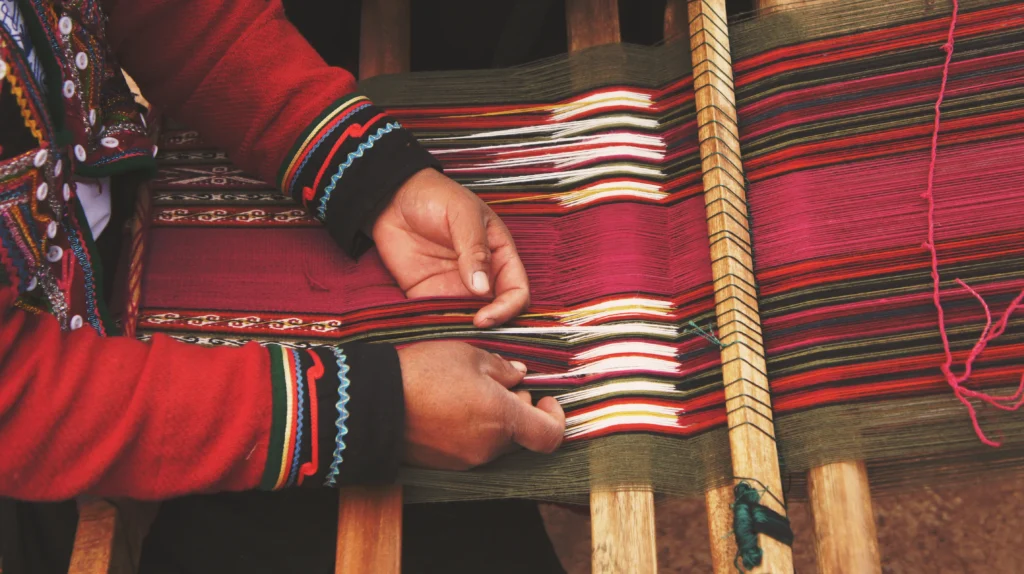
Oman is a land of diverse landscapes, from mountains to deserts to coastal villages, and this diversity is reflected in its textiles. Each region has its own weaving traditions and designs. In some areas, bold stripes dominate, while in others, intricate geometric patterns shine. The northern parts of Oman are known for heavier woolen weaves, suitable for cooler climates, whereas coastal regions favor lighter fabrics ideal for warmer weather. These regional variations add richness to Omani textile culture, ensuring that no two pieces ever look the same.
Versatility in Everyday Life
What makes Omani textiles even more remarkable is their versatility. They are not just decorative items but also practical pieces of daily life. From traditional clothing such as dishdashas and abayas to household items like rugs, blankets, and cushions, woven fabrics serve multiple purposes. They are also used during weddings, celebrations, and cultural festivals, adding an air of elegance and tradition to special occasions. This ability to blend beauty with utility makes Omani hand-woven textiles an integral part of daily living.
Textiles as Identity and Pride
To wear or own an Omani hand-woven textile is to embrace identity. These fabrics are often associated with cultural pride and national heritage. Many Omani people treasure these textiles as family heirlooms, passing them down through generations as symbols of belonging. They are not just garments or decorations but carriers of history, memory, and love. In modern times, when fast fashion dominates, Omani textiles remind us that true value lies in craftsmanship and meaning, not mass production.
The Art of Time and Patience
Hand-weaving is a slow process. It requires steady hands, a sharp eye, and an unhurried mind. Every mistake means redoing hours of work, and every success is the result of discipline and care. This patience is part of what makes Omani textiles so special. Each finished piece is not only a product of skill but also a testament to the time and dedication invested in it. In a world obsessed with speed, these textiles teach us to appreciate slowness, care, and artistry.
Modern Adaptations of a Timeless Craft
While deeply rooted in tradition, Omani hand-woven textiles have also embraced modernity. Today, many designers are reimagining traditional patterns for contemporary fashion. Scarves, handbags, and even shoes are being made with hand-woven fabrics, attracting both locals and international admirers. This fusion of old and new ensures that the craft remains relevant while also reaching new generations. The textiles thus serve as a bridge between Oman’s history and its future, preserving heritage while adapting to change.
Women at the Heart of the Craft
Although weaving is practiced by both men and women, Omani women have played a particularly central role in preserving this tradition. For many women, weaving has been both an artistic expression and a source of livelihood. Working from their homes or small workshops, they contribute not just to family income but also to the continuation of cultural identity. Their dedication adds another layer of meaning to Omani textiles every thread represents not only history but also resilience, strength, and creativity.
A Source of Economic Empowerment
Beyond culture, Omani textiles also play an important role in local economies. Hand-woven products are sold in markets, souqs, and shops, attracting both domestic buyers and international tourists. The craft provides income to artisans and helps small communities thrive. With global interest in sustainable and handmade products on the rise, Omani textiles stand out as ethical and environmentally friendly options. Choosing such products means supporting artisans and preserving traditions, while also embracing responsible consumerism.
Global Recognition and Appreciation
Omani textiles have slowly gained international recognition. Their distinct beauty, combined with cultural depth, makes them attractive to collectors, designers, and museums around the world. When people from different countries admire these textiles, they are not just appreciating fabrics; they are appreciating Oman’s heritage. This recognition brings pride to Omani artisans and inspires younger generations to continue weaving, knowing that their work resonates far beyond their homeland.
Sustainable Craftsmanship in a Modern World
In an era when sustainability has become a global concern, Omani hand-woven textiles stand out as naturally eco-friendly. The use of natural fibers, plant-based dyes, and traditional methods ensures minimal environmental impact. Unlike mass-produced textiles that contribute to waste and pollution, Omani fabrics are durable and timeless, designed to last for decades. Choosing such textiles is not just a matter of beauty but also an act of environmental responsibility. This makes them especially relevant in today’s world, where sustainability is both a necessity and a value.
Preserving Heritage for Future Generations
The future of Omani hand-woven textiles depends on both artisans and admirers. Young Omanis are encouraged to learn weaving techniques, while cultural institutions promote awareness of traditional crafts. Workshops, exhibitions, and educational programs ensure that weaving is not seen as old-fashioned but as a vital part of cultural identity. By supporting and celebrating this craft, Oman is investing in its future while honoring its past. These efforts guarantee that future generations will continue to feel the pride of wearing and weaving Omani textiles.
A Living Legacy
What truly makes Omani hand-woven textiles special is that they are more than objects they are living legacies. Every fabric is part of a larger story, connecting people to their ancestors, their land, and their values. They represent patience in a rushed world, authenticity in a market of imitations, and beauty in simplicity. To hold one of these textiles is to touch history, to feel culture, and to experience art in its purest form.
Inspiring the World Through Weaving
The story of Omani textiles is not just for Omanis. It is a universal reminder of the value of tradition, craftsmanship, and human connection. In every corner of the world, people are rediscovering the importance of handmade goods, and Omani weavers serve as an inspiration. Their dedication shows that true artistry lies not in speed or quantity but in meaning and heart. Through their fabrics, Oman shares a message of pride, resilience, and creativity with the world.
Conclusion: The Heartbeat of Omani Culture
Omani hand-woven textiles are special because they are more than just fabric. They are art, history, identity, and economy woven into threads. They tell stories of families, communities, and traditions that have stood the test of time. They show us the beauty of patience, the power of heritage, and the importance of sustainability. In a world where so much is temporary, Omani textiles remain timeless woven with love, cherished with pride, and celebrated with joy.
Do follow Gulf Magazine on Instagram.
Also Read – Exploring Oman’s Modern Urban Centers: A Journey of Progress

