

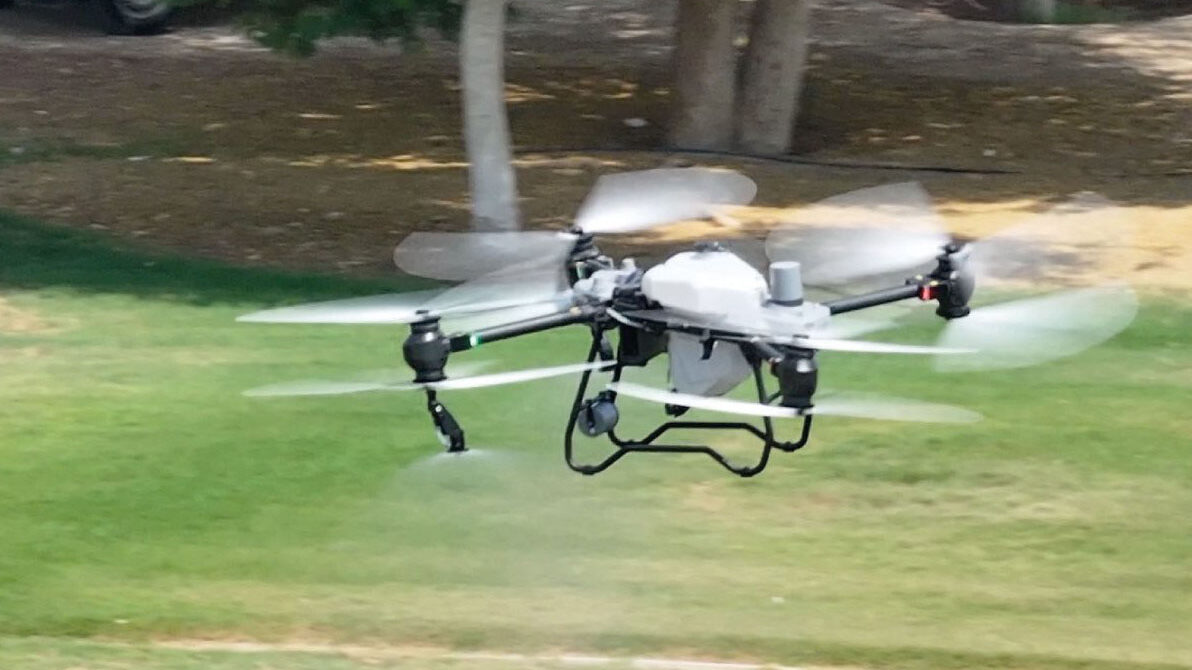
Ashghal, the Public Works Authority, in collaboration with the Ministry of Municipality, has unveiled an innovative drone-based pesticide application initiative. This forward-looking program is designed to enhance pest control, safeguard public health, and demonstrate Qatar’s commitment to adopting advanced technology for municipal services. The use of drones in pesticide application marks a transformative step merging efficiency, precision, and safety in a way that traditional methods struggle to match.
Embracing Technology for Smarter Pest Control
Municipal pest control has long relied on ground crews or vehicle-mounted sprayers. While effective to an extent, those methods carry limitations: uneven coverage, risk to operators, difficulty accessing remote or hard-to-reach areas, and greater environmental drift. By contrast, drones offer precise and controlled application of pesticides. They can hover over open spaces, navigate narrow corridors, and deliver the treatment exactly where it is needed. The result is minimized waste, lower exposure to non-target areas, and greatly enhanced effectiveness.
The decision by Ashghal and the Ministry of Municipality to adopt drone spraying signals not only a technical upgrade, but a cultural one: embracing an ethos of proactive innovation. It sends a message that public health, environmental stewardship, and operational excellence can go hand in hand.
How the Drone Pesticide System Works
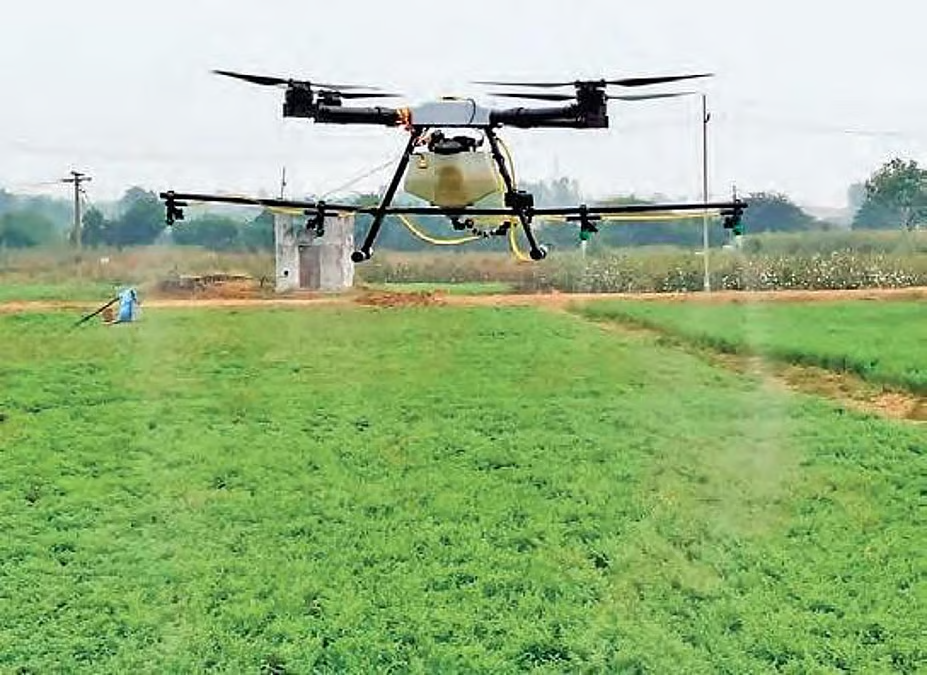
The drone units selected for this program are specially configured for agricultural and municipal pesticide work. They carry payload tanks, atomizing nozzles, sensors, flight computers, and GPS systems. A typical mission involves:
- Mapping & Planning: Teams use geospatial data and surveys of targeted zones—parks, greenbelts, stormwater basins, and other public areas. Software plans flight paths, altitudes, speed, and spray patterns to maximize coverage with minimal overlap.
- Loading & Calibration: The pesticide agent is loaded into the drone’s tank and calibrated to the correct dosage per square meter. This ensures the chemical is neither under-applied (ineffective) nor over-applied (wasteful or harmful).
- Automated Flight & Execution: Once launched, the drone flies autonomously or semi-autonomously, following the programmed route. Onboard sensors adjust nozzle output dynamically, adapting to wind, altitude, or fluctuations in speed.
- Monitoring & Data Capture: Cameras, LiDAR, or multispectral sensors can record data about coverage, vegetation stress, and environmental conditions. Operators monitor the flight from a ground station, able to intervene if needed.
- Post-Mission Analysis & Maintenance: Data is reviewed after each flight. Maintenance is performed on nozzles, batteries, and software. Logs track pesticide usage, flight hours, and performance metrics.
By integrating these steps, the drone pesticide system ensures an end-to-end, data-driven approach that is far more refined than conventional methods.
Key Benefits for Public Health and Environment
The positive impacts of this drone program are multiple, and they ripple across public health, sustainability, and operational capacity:
Enhanced Safety for Human Operators
In traditional spraying, operators may be exposed to chemicals, especially in tight spaces, trenches, or areas with limited ventilation. Drones keep human operators at a distance, reducing their risk of inhalation, dermal contact, or accidental spills. The human role shifts more toward remote monitoring and management, which is safer and more dignified.
Better Precision, Less Waste
The drones allow exact control over where and how much pesticide is applied. This reduces overspray into non-target zones such as water bodies, sidewalks, and residential areas. Lower chemical waste preserves costs and decreases environmental burden.
Access to Challenging Locations
Some areas—such as green belts beside waterways, steep embankments, or narrow corridors are difficult or hazardous to reach with ground vehicles. Drones can easily access these, ensuring comprehensive coverage where pests might otherwise be neglected.
Reduced Environmental Drift
Wind, thermal gradients, and terrain often cause pesticide drift in traditional spraying, meaning chemicals end up in unintended areas. Drone flights, flown at optimized altitudes and with real-time sensor corrections, greatly minimize drift and collateral effects on beneficial organisms and ecosystems.
Rapid Deployment & Response
In response to pest outbreaks or seasonal surges, drones can be deployed swiftly, with minimal setup time. Their mobility enables rapid treatment across multiple zones in a single day or night, increasing the responsiveness of municipal services.
Data-Driven Insights & Transparency
Because each flight records precise geolocation, dosage, time stamps, and sensor readings, authorities gain detailed records of coverage and efficacy. This transparency builds public trust, facilitates regulatory compliance, and supports continuous improvement.
Challenges and How They Are Overcome
No novel technology is without hurdles. Ashghal and the Ministry recognized several potential challenges—and addressed them proactively:
Regulatory & Safety Compliance
Operating drones, especially over public areas, demands strict adherence to aviation and safety regulations. Authorities crafted flight corridors, altitude limits, and buffer zones. Public notifications and coordination with civil aviation ensure flights occur with awareness and minimal risk.
Operator Training & Skill Development
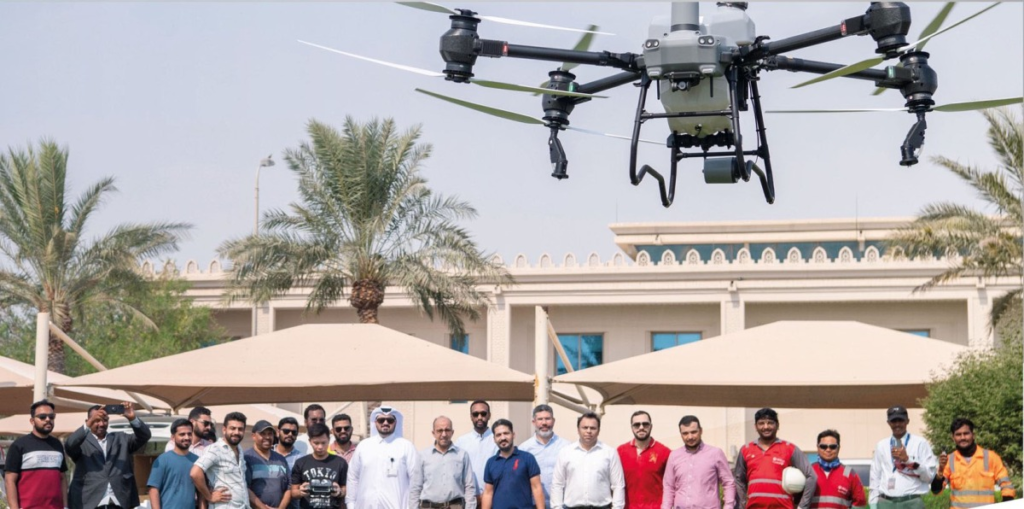
Piloting and supervising pesticide drones require new skill sets: UAV operation, GIS mapping, chemical calibration, troubleshooting. Intensive training programs and certification pathways have been established to empower municipal staff with confidence and competence.
Equipment Maintenance & Reliability
Drones must endure dust, heat, wear, and chemical stress. Robust maintenance protocols, spare parts inventories, and redundant systems have been put in place. Drones are subjected to pre- and post-flight checks, and regular servicing ensures longevity.
Chemical Compatibility & Calibration
Not all pesticides are suitable for aerial atomization. The formulation, viscosity, and droplet size must match the nozzles’ capabilities. Specialists work with agricultural and environmental agencies to select compatible chemicals and calibrate the systems properly.
Public Acceptance & Communication
Some citizens may worry about drones overhead, chemical spraying, or privacy. Transparent communication campaigns public briefings, signage near treated zones, FAQs help address concerns. Demonstration flights and open dialogue invite community trust and cooperation.
Real-World Impact and Early Outcomes
Within the months since launch, the program has already shown tangible benefits:
- Significant reduction in pest prevalence in treated public spaces: greener lawns, fewer infestation hotspots, healthier vegetation.
- More uniform treatment in parks, promenades, and stormwater detention basins, particularly in areas previously underserved by ground crews.
- Lower total chemical consumption per square meter, translating into cost savings for municipal budgets.
- Fewer complaints related to chemical drift or nuisance operators in neighborhoods, thanks to precise targeting and buffer protocols.
- Positive public feedback: residents noticing better maintenance of green areas and fewer insects in recreational zones.
These early results are encouraging and suggest that with scale, the impact will be magnified.
Integrating with Broader Smart Infrastructure
The drone pesticide program is not an isolated innovation; it fits into a broader smart city and smart municipality vision. Several integrations are underway:
- Linking with municipal GIS systems and asset maps, so pesticide missions align with drainage systems, green area boundaries, and public infrastructure.
- Coordinating with weather and climate forecasting systems to schedule flights in favorable wind and humidity conditions.
- Connecting to public health surveillance systems: for example, zones with mosquito-borne disease risk can be prioritized based on real-time epidemiological data.
- Storing data on cloud platforms accessible to municipal planners, environmental scientists, and even public dashboards, enhancing accountability.
This holistic approach ensures that drone spraying becomes part of a larger ecosystem of resilient, anticipatory municipal services.
Humanizing the Innovation
Beyond technology and metrics, this program has a deeply human face. Consider Ahmed, a field technician who for years trudged through parks carrying heavy sprayers. His eyes would sting, his clothes wet, and every narrow corner posed a danger. Now his daily tasks have shifted: he helps program missions from a shaded control center, monitors flights on screens, inspects drones, and imagines new routes to maximize coverage.
Then there’s Fatima, a mother of two living near a park. She and her family used to avoid evening walks during mosquito season. But now, after the drone treatments, she notices fewer insects and more comfortable strolls for her children. The green space feels safer again.
And Omar, the municipal supervisor, who once had to schedule crews, handle chemical inventories, and deal with citizen complaints about drift. Now he reviews precise data dashboards, adjusts mission schedules, and sees visible improvement across neighborhoods. His pride is palpable: he’s ushering in a modern era of municipal services.
These human stories are central. Technology is only meaningful when it tangibly uplifts everyday lives.
Vision for Expansion and Long-Term Goals
Ashghal and the Ministry aim to scale this initiative in several directions:
- Geographical Expansion: Extend drone pesticide coverage to more parks, sports fields, cemeteries, irrigation canals, and urban fringe zones.
- Diversified Applications: Incorporate drone-based fertilization, weed control, and even monitoring of vegetation health, making drones multi-purpose agents.
- Collaborative Partnerships: Engage universities, research institutes, and private drone firms for innovation, optimization, and shared learning.
- Sustainability Focus: Move toward zoologically friendly or bio-pesticide formulations, integrating with ecological balance strategies.
- Full Automation Pipeline: Strive toward fully autonomous missions automated dispatch, route planning, execution, data upload, and machine learning feedback loops.
- Community Engagement: Expand public education, stakeholder consultations, and participatory feedback loops so citizens feel ownership and confidence in the system.
Over time, this program could serve as a model for other municipalities in the region and beyond.
Why This Matters for Qatar
Qatar faces unique challenges: arid climate, urban growth, sensitive water resources, and high expectations for public amenities. In this context:
- Pest control is not just aesthetic it intersects with disease control, tourism, public comfort, and property values.
- Water bodies in urban zones must be protected from chemical contamination, making precision essential.
- The public expects high standards of maintenance in parks, promenades, and communal green spaces, which reflect the country’s global image.
- Technological leadership is part of Qatar’s national vision: projects like this reinforce its reputation as a pioneer in smart infrastructure and sustainability.
Thus, the adoption of drone pesticide application is not a niche experiment it is a strategic investment aligned with broader developmental goals.
A Call to Citizens, Stakeholders, and Experts
For this program to succeed optimally, collaboration matters:
- Citizens should stay informed, observe safety signage, and share feedback about mosquito hotspots or concerns.
- Environmental NGOs and experts can help monitor non-target impacts, advise on pesticide selection, and validate ecological balance.
- Academic institutions can study flight logs, plant health data, and optimize algorithms or sensor systems.
- Private sector innovators and drone firms can partner to deliver improved hardware, machine learning models, or new chemical payload systems.
Open dialogue fosters continuous improvement and ensures that the program remains responsive to public values and ecological integrity.
Conclusion
The Ashghal–Ministry of Municipality drone pesticide initiative exemplifies how technology, when deployed responsibly, can elevate public service, protect health, and honor the environment. This is not about replacing human effort it is about amplifying human intent: a more precise, safer, smarter way to live with nature in urban settings.
Already, preliminary results suggest fewer pests, safer public spaces, cost savings, and stronger citizen trust. As the program scales and refines, it has the potential to transform municipal services not just in Qatar—but as an inspirational model abroad.
Behind every drone flight is a human story: technicians relieved from dangerous chores, families enjoying mosquito-free evenings, municipal leaders empowered with data, and communities that see technology as a tool for shared well-being.
Do follow Gulf Magazine on Instagram.
Also Read – Bold Infrastructure Leap: Qatar Awards $305M Road Contracts to Transform Doha

