

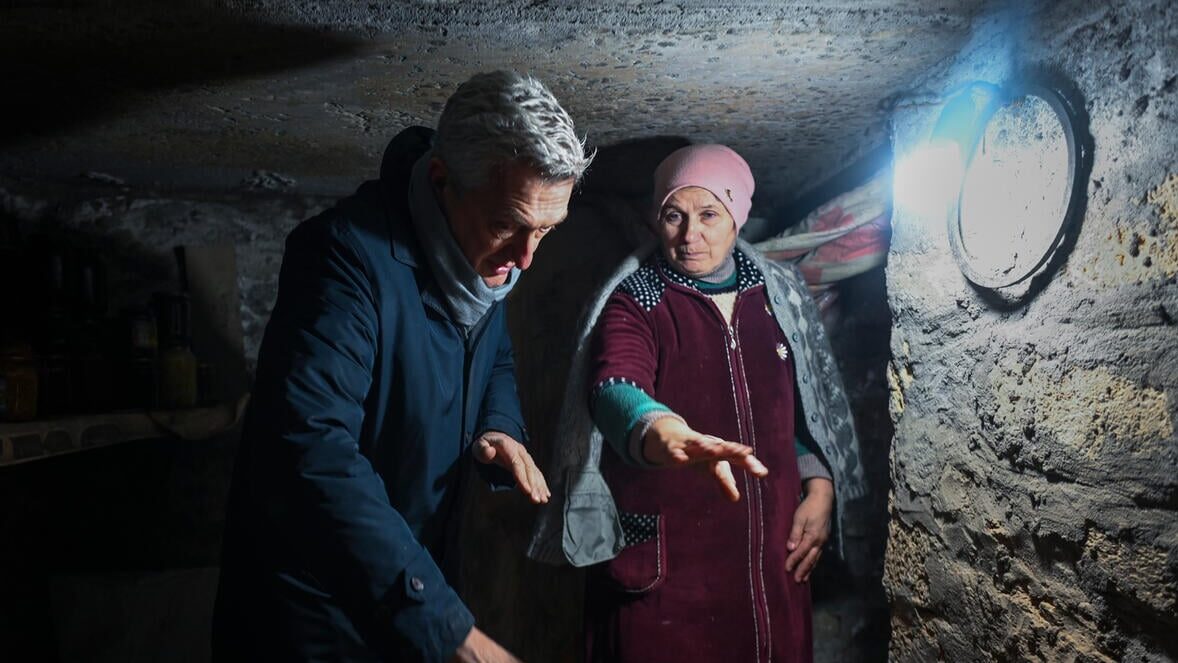
When Filippo Grandi, the Chief of UNHCR, arrived in the State of Kuwait, he did more than fulfil a diplomatic schedule. He came with heart, resolve and a message that echoes far beyond official chambers. He met with the country’s leadership, philanthropists, private sector partners and civil society actors, and in every encounter he brought attention to the millions of men, women and children displaced by conflict, climate shocks, persecution and poverty.
The tone was one of partnership, not just charity; of shared responsibility, not distant obligation. Grandi expressed deep gratitude for Kuwait’s strong humanitarian tradition and urged the world to step up, not just in funds, but in mindset, solidarity and action.
Setting the Scene: Displacement on a Rising Tide
Global forced displacement has now reached record proportions with hundreds of millions of people on the move or unable to return home. Grandi’s visit comes at a time when humanitarian needs are growing, yet resources are stretched, political will is tested, and many displaced lives remain on the margins.
In Kuwait, Grandi emphasised that displacement is not just a problem for “other countries” or “other people.” It is a human reality; lives disrupted, families uprooted, dignity challenged, and yet hope persists. He reminded all partners that each displaced person carries a story, a dream, a future, and that alone calls for compassion and action.
A Celebration of Kuwait’s Humanitarian Leadership
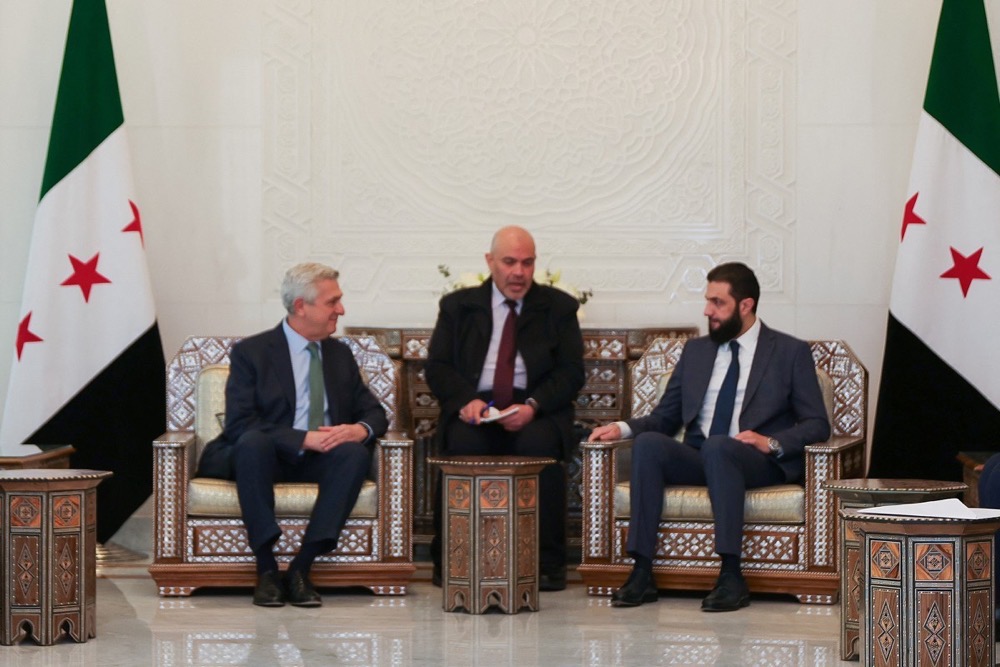
During his visit, Grandi engaged with Kuwait’s highest officials and key institutions. He met His Highness the Amir, His Highness the Crown Prince and His Highness the Prime Minister, as well as ministers, business leaders and philanthropists.
He praised Kuwait’s steadfast commitment to global humanitarian efforts through both governmental and private sector channels. Kuwait’s role as a generous and principled partner was highlighted, not just in reactive emergency relief, but in strategic, long term support for displaced people, host communities and infrastructure in fragile regions.
These conversations were more than ceremonial; they signalled deep intention. They reflected an understanding that refugee and displacement crises cannot be solved by one actor alone, but require a concerted, inclusive, global effort.
Strategic Agreements: Turning Words into Action
One of the most tangible outcomes of the visit was the signing of grant agreements that channelled immediate resources to displaced populations and their host communities.
In partnership with the Kuwait Fund for Arab Economic Development (KFAED), two agreements were signed: one focused on eastern Sudan, assisting over 300,000 people with essentials such as education, clean water and healthcare; the other aimed at supporting some 50,000 Sudanese refugees in eastern Chad, with durable shelters, solar powered lighting and clean water systems.
These initiatives go beyond short term relief: they invest in infrastructure, dignity and longer term stability. They reflect an emerging paradigm where displaced persons are not passive aid recipients but active participants in rebuilding their lives, with dignity and opportunity.
Why This Matters: From Crisis to Opportunity
Often the image of displacement evokes crisis, need and urgent suffering, and rightly so. But Grandi reframed the narrative not as endless tragedy, but as a call to collective human responsibility and inventive hope.
- Human dignity matters – Every displaced person is human first, with aspirations, talents and hopes. Recognising that changes our response from pity to respect.
- Shared burden, shared future – Countries like Kuwait show that rich and resourceful nations can champion solutions, but everyone has a role: governments, business, philanthropy, civil society, refugees themselves.
- Investing in solutions, not just relief – Infrastructure for water, solar power, healthcare and education creates long term stability for displaced and host communities alike. These are not temporary fixes.
- Solidarity as strength – In a world that can appear divided and distracted, binding ourselves in compassion and action builds resilience for all of us.
Engaging the Private Sector and Philanthropy
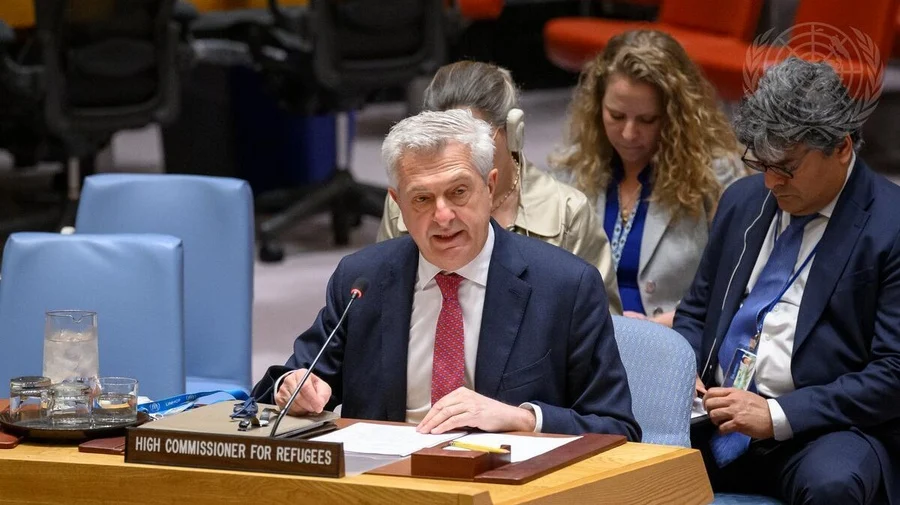
One of the most encouraging dimensions of Grandi’s visit was the focus on non governmental partners: charitable organisations, private companies and philanthropists. He emphasised that the humanitarian challenge is not the domain of governments alone.
Businesses and philanthropists can bring innovation, agility and localised impact. Charity groups know how to connect with communities. By aligning efforts, scaling success and sharing expertise, these partnerships amplify impact.
Grandi urged that private sector engagement should be sustained, not episodic. He called for shifting from isolated grants to systemic collaboration where humanitarian action is integrated into business strategy, community development and regional planning.
Transforming Host Communities into Partners
Another significant theme was the recognition of host communities. Displaced people do not exist in isolation; they often live among people who themselves may have very limited means. When host communities are supported, the humanitarian model shifts from “us and them” to “us together.”
The grant for eastern Sudan, for example, went to displaced people and host communities, focusing on education, clean water and healthcare access across both groups. This inclusive approach lessens tensions, promotes cohesion, and builds pathways for belonging and contribution.
By treating host community integration as a strategic priority, we move from temporary settlements toward sustainable neighbourhoods, civic participation and economic inclusion.
The Call for Greater Global Support
Despite the promising steps, Grandi’s message was clear: the global humanitarian system is under strain and cannot deliver without a major scale up. He warned of serious funding gaps, growing needs and the risk of a “humanitarian roller coaster” where funding spikes during headlines, then fades even as crises persist.
He urged states which often respond generously in emergencies to cement long term commitment and predictable funding. He emphasised that the world must stop thinking in episodic crises and start planning for long term displacement, integrating refugees and displaced persons into national development frameworks.
He reminded us that displacement is not a short term event; it’s often multi year, multi generation, multi dimensional. The solutions must match that reality.
A Human Face to Statistics
Behind the numbers are children missing school; mothers waiting for clean water; young people with dreams, sidelined by uncertainty; whole families uprooted. Grandi brought that living reality into every engagement.
He spoke of resilience, of strength, of the power of human agency. He highlighted how refugees and displaced persons are not passive victims; they are teachers, engineers, artisans, caregivers. They want to rebuild, contribute, belong. When we support them, we all gain.
His meetings were not framed as “them needing our charity” but as “partners in human progress.”
Reflections: What This Visit Signals for the Future
This visit by the UNHCR chief to Kuwait is more than a diplomatic stopover. It signals three powerful shifts in the global refugee and displacement agenda:
- From reactive to proactive: Moving from crisis management to strategic, preventive, resilient planning.
- From isolated actors to inclusive ecosystems: Governments, business, civil society, refugees themselves, all in one circle of responsibility.
- From temporary relief to durable solutions: Investing in infrastructure, education, livelihoods, integration, not just tent cities and emergency kits.
If these shifts take root, the world could move from managing displacement to transforming it into opportunity for the displaced, for host societies, for global humanity.
What We Can Do And Why We Should Care
This agenda is not for distant professionals alone. Each of us has a role. We can:
- Understand and humanise the lives behind displacement statistics, read stories, meet refugees in our communities, change the narrative from “burden” to “bridge”.
- Advocate for sustained funding, inclusive policy and meaningful integration in our countries and globally.
- Support local philanthropy, social enterprises and small organisations working with displaced people, not just when a headline blasts through, but every day.
- Encourage business engagement: demand that firms have social impact strategies, inclusive hiring, refugee integration and humanitarian partnerships.
- Offer our time, talent and voice: mentor, volunteer, employ, partner with displaced individuals and host community initiatives.
Caring for people who have lost homes, security or stability is not charity. It is an investment in justice, in humanity, in collective flourishing.
A Vision of Hope
The visit of Filippo Grandi to Kuwait holds a hopeful message: in a world facing fractured politics, climate upheaval, mass displacement and uncertainty, there are still places, voices and partnerships that stand for humanity. Kuwait’s leadership, UNHCR’s persistent advocacy, the private sector mobilising, communities opening their arms, all of this speaks to a vision of hope.
A vision where displaced persons are welcomed, supported and enabled to rebuild; where host communities are strengthened; where solidarity is not occasional but structural; where displacement does not mean “out of sight, out of mind,” but becomes part of the human story of resilience.
If we honour that vision, if we listen to the displaced, invest in the infrastructure, build inclusive partnerships, then we unlock a future where mobility, refuge and belonging are not problems to be solved but opportunities to be embraced.
Conclusion: A Call to Act
The journey ahead is not easy. Displacement numbers keep rising. Crises are multiply overlapping: conflict, climate, economy, pandemic. Funding remains uncertain. Political will can be fragile.
But the message of this visit is powerful: We are not powerless. We can act. We can partner. We can build.
When human beings with nothing but hope are met by compassion with action, when generosity meets structure, when displaced persons become actors in their futures, then we transform not just their lives, but our shared world.
Let this visit be a catalyst. Let the partnerships forged in Kuwait ripple outward. Let the displaced feel not just our sympathy, but our solidarity. Together, we can turn displacement from tragedy into possibility and create a global community in which no one is invisible, and everyone belongs.
Do follow Gulf Magazine on Instagram.
Also Read – Kuwait Education Minister Launches Major Review of Schoolbook Printing Practices

