

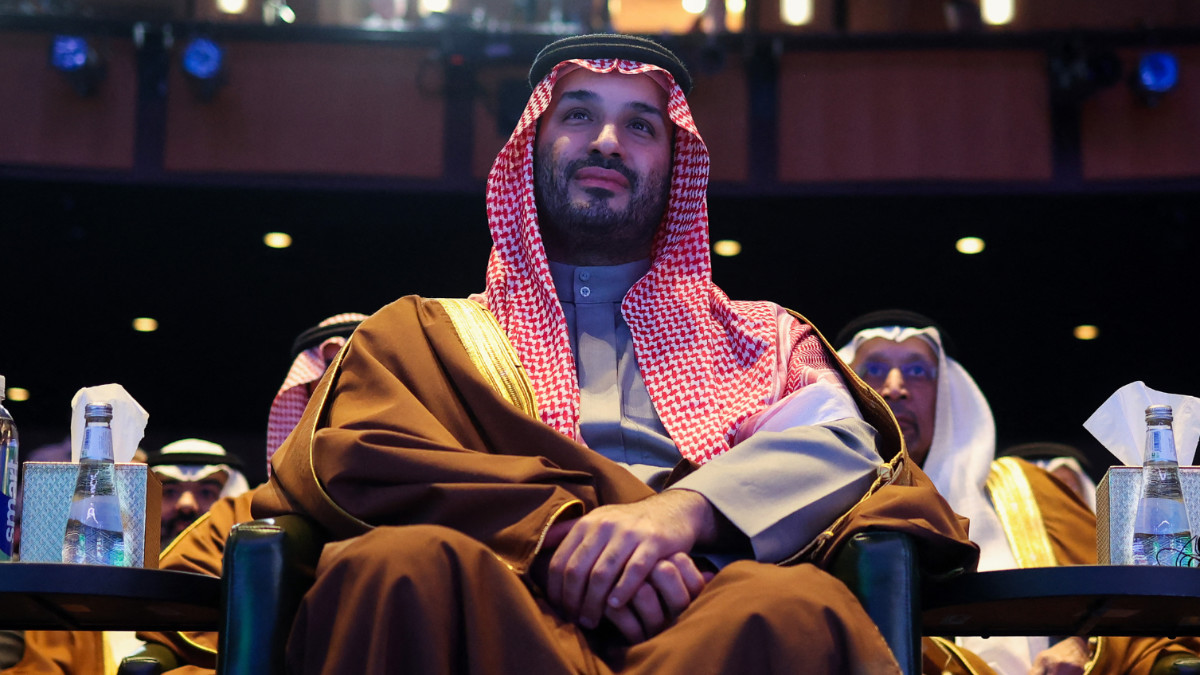
When Crown Prince Mohammed bin Salman (MBS) visited Washington, the political and economic pulse of the world seemed to shift slightly in favor of Saudi Arabia. While the United States expected strategic clarity, Saudi Arabia walked away with something more valuable: renewed global attention, strengthened geopolitical leverage, and a reaffirmation of its path toward modern transformation. The visit was not a ceremonial exchange but a carefully calculated move aligned with Saudi Arabia’s long-term vision. In many ways, it was a diplomatic moment where Saudi Arabia gained more forward momentum than the U.S., making the visit a defining chapter in MBS’s global strategy.
A Visit That Redefined Perception
The Washington visit came at a time when global power dynamics were becoming increasingly fluid. The U.S. expected reassurance from its long-standing Middle East partner. However, Saudi Arabia used the platform to demonstrate confidence, independence, and an evolving global position that no longer fits traditional molds. MBS presented Saudi Arabia as a nation ready to engage the world on equal footing, not as a state dependent on historical alliances.
This shift in perception alone was one of the visit’s biggest gains. Saudi Arabia’s leadership communicated clarity: it is ready to operate as a major global player with diversified partnerships and long-range ambitions.
Saudi Arabia’s Strategic Advantage
Rebranding on the Global Stage
For years, Washington has been a space where Saudi Arabia’s image was often shaped by U.S. narratives. This time, MBS took control of the conversation. By engaging directly with policymakers, business leaders, and influencers, he strengthened Saudi Arabia’s brand as a nation transforming rapidly through economic diversification, social openness, and technological ambition.
The world saw a bold and determined crown prince communicating future-focused ideas, attracting attention from industries far beyond oil and energy. This helped Saudi Arabia advance one of its most critical goals: presenting itself as a destination for global innovation and investment.
Balanced Diplomacy and Stronger Bargaining Power
Saudi Arabia’s approach during the visit showcased balanced diplomacy. Instead of aligning exclusively with American interests, MBS positioned the Kingdom as a global mediator, maintaining relationships with the East and the West. This enhanced Saudi bargaining power, making it a bridge-builder and a key voice in regional stability.
By not appearing desperate for U.S. approval, Saudi Arabia created leverage. The Washington visit made it clear that partnerships with Riyadh now require respect, mutual benefit, and recognition of Saudi Arabia’s growing role in global economic transformation.
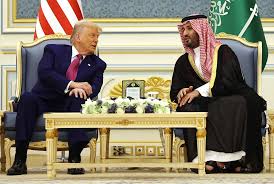
Strengthening Economic Ambitions Through U.S. Engagement
Securing Support for Vision 2030 Projects
Vision 2030 is the blueprint guiding Saudi Arabia’s future. During the visit, MBS met several business leaders and investment groups exploring roles in Saudi megaprojects such as NEOM, Qiddiya, Red Sea Global, and Riyadh’s sweeping urban transformations. Fresh interest and renewed confidence from American investors placed Saudi Arabia in a stronger economic position.
The Kingdom’s goal is clear: attract global talent, technology, and capital to support its shift from an oil-based economy to a diversified one. The Washington visit helped reinforce the message that Saudi Arabia is open, ready, and moving fast.
Technology and Innovation Partnerships
Another major gain was progress in the technology sector. With artificial intelligence, space technology, cybersecurity, renewable energy, and biotech emerging at the center of global competition, Saudi Arabia used the visit to position itself as a rising technology hub. For the U.S., cooperation meant keeping influence in the Middle East. For Saudi Arabia, the benefits were deeper: it accelerated its transformation into a knowledge-driven economy.
Saudi Arabia’s Growing Global Role
Regional Power and Stability
The visit also reinforced Saudi Arabia’s position as the leading power in the Middle East. While Washington seeks stable partners, Saudi Arabia presented itself not just as a partner but as the region’s decision-maker, capable of influencing diplomatic outcomes, economic integration, and energy markets.
The U.S. gained dialogue. Saudi Arabia gained recognition of its leadership.
Energy Markets and Long-Term Planning
Energy remains a core factor in U.S.–Saudi relations. However, Saudi Arabia has expanded its influence far beyond oil production and pricing. The Kingdom now has long-term strategies for renewable energy, hydrogen, and carbon-neutral technologies.
During the visit, Saudi Arabia highlighted its role as a stable and responsible energy leader. The gain here was reputational as much as economic. It allowed Saudi Arabia to present itself as a nation not stuck in old energy frameworks but leading the global transition.
Geopolitical Leverage: A Significant Win
A Shift in the Power Equation
Historically, U.S. visits by Middle Eastern leaders emphasized dependence. Yet MBS’s Washington trip took a different tone. Saudi Arabia signaled independence through its global relationships with China, Europe, India, and Russia. That flexibility gave the Kingdom strategic leverage in discussions with the United States.
For the U.S., cooperation with Saudi Arabia remains essential. For Saudi Arabia, cooperation is beneficial but no longer exclusive. This shift was one of the most important outcomes of the visit. It demonstrated that the Kingdom’s future will not be dictated by any single global power.
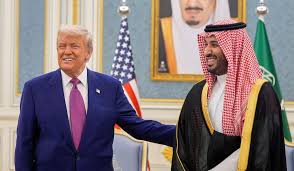
Security Collaboration, But on New Terms
Security has long been a sensitive area in U.S.–Saudi relations. During this visit, the discussions moved toward more equal terms. Saudi Arabia made clear that security cooperation must align with its regional priorities and national strategy. Riyadh is no longer looking for protection alone; it wants strategic partnership, advanced technology transfers, and regional security frameworks that respect Saudi autonomy.
The Human Side of Diplomacy
MBS’s Personal Engagement Style
A humanized warmth accompanied this visit. MBS’s meetings were marked by clarity, confidence, and directness. Unlike past diplomatic tours where the narrative was shaped externally, this time he spoke about modernization, youth empowerment, women’s roles in society, entertainment growth, and cultural expansion — all key components of Saudi Arabia’s new identity.
American audiences, including business leaders and analysts, responded to this openness. It painted a picture of a country no longer confined by old perceptions but driven by ambition, innovation, and reform.
A Youth-Centered Narrative
Saudi Arabia is one of the youngest nations in the world. MBS’s messaging focused heavily on opportunities for young people, job creation, education reform, and technological skills. By putting youth at the center of his narrative, he reshaped international perception of the Kingdom as a nation preparing for a dynamic future.
This human-focused communication helped the world understand Saudi Arabia not as an oil-dependent state but as a country with aspirations as bold as any developed nation.
What the U.S. Gained — And Why It Was Less
To be clear, the United States did gain from the visit: diplomatic reassurance, potential cooperation on technology, and continued energy dialogue. However, these gains reinforced existing interests rather than creating new strategic advantages.
Saudi Arabia, on the other hand, walked away with:
New opportunities
Increased global recognition
Stronger investment prospects
Greater geopolitical leverage
Improved national branding
A more powerful position in global diplomacy
It was not an uneven negotiation but one where Saudi Arabia simply had more to win — and did.
Why Saudi Arabia’s Gains Matter for the Future
Shaping a Multipolar World
The world is moving toward multipolarity, where influence is shared among several powers. Saudi Arabia used this visit to position itself firmly within that new global architecture. The Kingdom’s relationships now span continents, industries, and political spheres, giving it more room to maneuver than ever before.
Building a Modern Saudi Identity
Through this visit, Saudi Arabia strengthened its global image as a progressive, forward-leaning nation undergoing significant social and economic transformation. This rebranding effort supports tourism, investment, cultural partnerships, and technological collaboration.
Expanding Its Global Economic Footprint
Foreign investors now see Saudi Arabia as one of the fastest-growing markets. From infrastructure to technology and renewable energy, the Kingdom is becoming a global center for future industries. The Washington visit amplified this momentum, attracting interest from American companies that see massive opportunity in the Kingdom’s rapid development.
Conclusion
MBS’s visit to Washington was more than a diplomatic engagement. It was a strategic showcase of confidence, ambition, and national transformation. Saudi Arabia gained renewed global attention, strengthened partnerships on its own terms, and advanced its economic and political agenda. While both nations benefited from the visit, Saudi Arabia emerged with a clearer strategic advantage, a stronger global position, and amplified momentum behind its Vision 2030 goals.
The message was unmistakable: Saudi Arabia is no longer defined by its past but by the future it is building. In Washington, MBS demonstrated that the Kingdom is ready to shape global conversations, lead regional transformation, and engage the world as an equal perhaps even as a rising powerhouse.
Do follow Gulf Magazine on Instagram.
Also Read – Saudi Arabia and US Sign ‘Strategic Artificial Intelligence Partnership’

