

Saudi Arabia is accelerating its push toward becoming a global industrial powerhouse, and one of the most exciting developments on this journey is the country’s potential partnership with Stellantis, one of the world’s biggest automotive groups. As the Kingdom looks to diversify its economy and step into high-value industries, local vehicle manufacturing could become a major milestone that supports its long-term vision for growth and economic strength.
The discussion between Saudi authorities and Stellantis has sparked strong interest across the automotive sector. It signals not only an economic shift but also a new chapter in the Kingdom’s ambition to create jobs, empower local talent, and position itself as a global manufacturing hub.
Saudi Arabia’s Big Move Toward Industrial Diversification
Saudi Arabia’s economy has been undergoing one of the most significant transformations in the region. Vision 2030 has placed manufacturing, technology, and innovation at the centre of the country’s future. Moving from oil-dependence to diversified growth is not a simple journey, but strategic partnerships with global giants like Stellantis could help drive that change faster and more effectively.
The Kingdom’s focus is clear. It wants industries that generate value, empower young talent, and contribute to long-term national sustainability. Vehicle manufacturing checks all these boxes. It offers skilled jobs, encourages research and development, and brings new technology directly into the country.
Why Stellantis Matters in This Partnership
Stellantis is not just another automobile company. It ranks among the world’s top automotive groups, behind brands millions recognise. When a global automotive name like Stellantis explores the possibility of building vehicles in Saudi Arabia, it signals trust, confidence, and belief in the Kingdom’s future.
This potential partnership shows that Saudi Arabia is now seen as a competitive option for global manufacturing. It represents a shift in how global companies view the Middle East, not just as a market but as a production destination.
Building a Saudi-Based Automotive Ecosystem
Strengthening Local Manufacturing
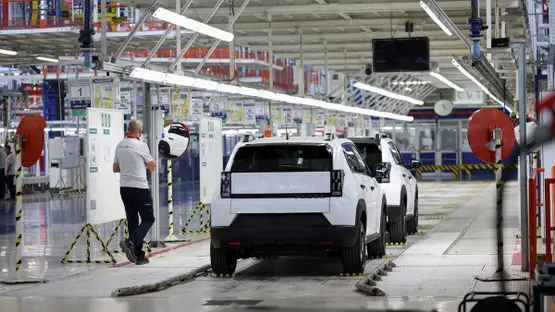
If the project moves forward, Saudi Arabia could soon witness the growth of an entire automotive ecosystem. This includes factories, suppliers, logistics centres, testing facilities, and specialised training programs. Local production would not only assemble cars but also encourage component manufacturing, engineering services, and advanced technology development.
Creating More Opportunities for Saudi Talent
One of the biggest advantages of local manufacturing is the creation of opportunities for young Saudis. With the largest youth population in the region, Saudi Arabia is focusing on industries that offer long-term career paths rooted in technology and innovation. Automotive manufacturing perfectly aligns with that goal.
Engineers, technicians, designers, analysts, quality specialists, logistics professionals, and plant operators could all benefit from this shift. With Stellantis involved, training programs and international skill-sharing opportunities would further elevate local expertise.
Supporting Local Suppliers
A strong vehicle manufacturing industry needs hundreds of supporting suppliers. This could trigger the growth of small and medium enterprises across the Kingdom. Local businesses could supply metals, plastics, interior materials, electrical components, logistics solutions, and digital services.
The ripple effect would touch many industries and encourage the creation of more Saudi-owned companies.
A Boost to the Kingdom’s Economic Vision
Strengthening Non-Oil Revenue Streams
Vehicle manufacturing fits perfectly with Saudi Arabia’s goal of boosting non-oil revenues. It creates long-term value, generates exports, and strengthens the country’s industrial base. As Saudi Arabia prepares for a future less dependent on oil, industries like this become the pillars of its next economic era.
Attracting International Investments
A partnership with Stellantis could open the door for even more large companies to explore opportunities in the Kingdom. Automotive manufacturing is often seen as a sign of advanced industrial capability, and once a country establishes it, global investors tend to pay more attention. This could lead to new collaborations, new industries, and additional foreign direct investment.
Driving Innovation and Technology Inside the Kingdom
Stellantis is deeply involved in research on electric vehicles, advanced mobility solutions, and cleaner technologies. Their presence in Saudi Arabia could accelerate the country’s shift toward sustainable transport solutions.
As the world moves away from traditional combustion engines, having a global manufacturer engaged in future-oriented technology strengthens the Kingdom’s innovation ecosystem.
Why Saudi Arabia is Ready for Vehicle Manufacturing
Strategic Location
The Kingdom’s geographical position gives it unique advantages. With access to Asia, Africa, and Europe, Saudi Arabia sits at a crossroads where global trade flows meet. This makes the country an ideal distribution hub for export-oriented production.
Growing Industrial Infrastructure
Saudi Arabia has invested billions in industrial zones, logistics hubs, smart cities, and advanced ports. Projects like NEOM, KAEC, and other industrial cities provide world-class infrastructure capable of hosting major automotive plants.
Strong Government Support
Large-scale manufacturing requires sustained government support, and Saudi Arabia has shown consistent commitment. Financial incentives, land allocation, industrial subsidies, and training programs all contribute to making the Kingdom a competitive option for automotive production.

The Rise of Local Demand for Modern Vehicles
Saudi Arabia is one of the largest automotive markets in the Middle East. With a rapidly growing population, a young demographic, and increasing urban mobility, domestic vehicle demand is strong. Local manufacturing could help meet this demand more efficiently while also giving consumers access to competitively priced models.
Electric vehicle demand is also rising. As charging stations expand and sustainability becomes a national priority, establishing EV production locally could help meet future mobility needs.
How This Partnership Could Transform the Auto Industry in the Region
Becoming a Manufacturing Leader in the Middle East
If Saudi Arabia becomes home to a major Stellantis facility, it would instantly position the country as one of the region’s leaders in automotive production. Other countries in the Middle East might rely on imports, but Saudi Arabia could produce, assemble, and even export vehicles to neighbouring markets.
Shifting the Region’s Industrial Map
Countries across the region have historically invested in service-based economies. With Saudi Arabia now pushing for manufacturing, it could reshape the regional industrial landscape. Automotive expertise, training programs, and technology centres could attract talent from across the region, further establishing Saudi Arabia as a central industrial leader.
Potential Challenges and How Saudi Arabia Plans to Overcome Them
Workforce Training
Building a successful automotive sector requires a skilled workforce. This means that large-scale training programs will be essential. Saudi Arabia is already investing heavily in technical institutes, engineering universities, and partnerships with global education providers. A collaboration with Stellantis would further accelerate this training push.
Supply Chain Development
A strong supply chain does not appear overnight. Saudi Arabia will need to support local supplier growth with incentives, financing, and long-term planning. However, the Kingdom’s strong economic position and clear industrial strategy give it an advantage that many emerging markets don’t have.
Global Competition
The automotive industry is highly competitive, with countries like China, India, Turkey, and Thailand offering low-cost production. Saudi Arabia aims to compete through advanced technologies, strategic location, and strong government support rather than low labour costs.
A Milestone That Could Redefine the Kingdom’s Future
The ongoing discussions between Saudi Arabia and Stellantis are not just about building cars. They are about shaping the future of the Kingdom, diversifying its economy, empowering youth, and building an industrial foundation that will last for decades.
This partnership, if finalised, could become one of the most transformative steps in Saudi Arabia’s economic journey. It would open doors to innovation, create new careers for thousands of young people, strengthen international partnerships, and place the Kingdom at the centre of a rapidly changing global automotive landscape.
Conclusion
Saudi Arabia’s interest in local vehicle manufacturing with Stellantis marks a major turning point. It signals ambition, confidence, and readiness for a future where the Kingdom stands as a global player in manufacturing and technology. As discussions progress, the world is watching closely, and the potential impact of this partnership could be felt for generations.
The journey toward becoming a modern industrial powerhouse is unfolding step by step, and this collaboration could be one of the strongest steps yet.
Do follow Gulf Magazine on Instagram.
Also Read – Modern, Digital-First Shopping: New Centrepoint, Max Stores Open at U Walk Riyadh

