


Riyadh’s skyline glittered with ambition as business leaders, ministers, and entrepreneurs from Moscow and the Kingdom gathered for the Saudi–Russian Investment and Business Forum. What began as trade talks and sectoral panels quickly showed signs of something larger: a practical blueprint for a Eurasian–Middle East axis that blends energy, infrastructure, technology, and people-to-people ties and gives real stories of challenge, hustle and success a platform to be heard.
A meeting with a purpose
On December 1, 2025, Riyadh hosted the Saudi–Russian Investment and Business Forum, bringing together senior ministers and hundreds of business representatives to explore deeper cooperation across many sectors.
The forum was framed not as a one-off summit but as a working platform an event to fast-track joint projects in clean energy, mining, construction, food security, transport, and digital services. Panels and exhibition stands showed practical project ideas, technology demonstrations, and partners ready to move from concept to contract.
Why this matters: building an axis, not just deals
For both Russia and Saudi Arabia, the moment is strategic. Each side brings strengths the other needs: Russia’s industrial base, mining know-how, and wider Eurasian links; Saudi Arabia’s capital, project pipelines under Vision 2030, and a drive to diversify its economy beyond oil. Together they can create supply chains and infrastructure corridors that shorten distances between markets stretching from the Mediterranean and the Caucasus to the Arabian Peninsula and beyond.
Beyond economics, the forum signaled political will to make cooperation resilient and routine. That is shown by agreements announced on the sidelines including a reciprocal visa-waiver pact that promises easier movement for businesspeople and tourists, and memoranda covering climate cooperation and joint investments. These steps aim to move relations toward everyday activity: flights, trade missions, joint ventures, and shared projects.
Real people, real stories — lifestyle, struggle and success
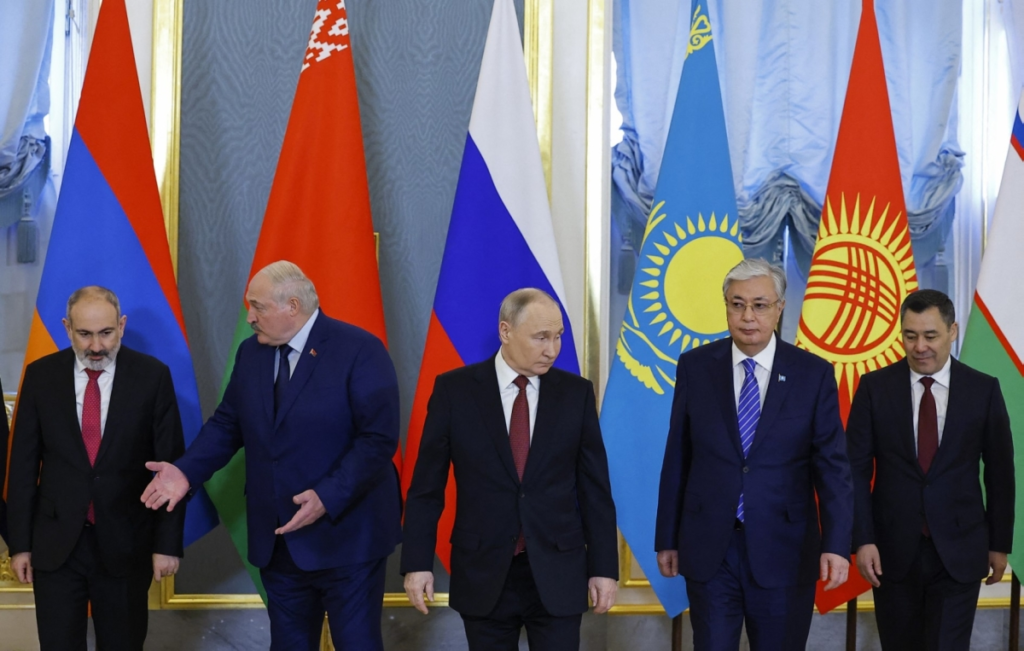
A forum like this is often presented as high-level deals, but its true heartbeat is the people who turn opportunity into results. Consider three composite but realistic profiles that reflect the kinds of journeys spotlighted at the forum:
Hana, the Saudi project manager: Hana led a Vision 2030 urban redevelopment team who struggled to find affordable, high-quality manufactured building components. At the forum she met a Russian manufacturer of prefabricated modular solutions. After months of negotiation she secured a pilot shipment for a public-housing project. The result: faster construction, lower cost, jobs for local workers, and recognition for her team’s persistence.
Ibrahim, the Russian agritech entrepreneur: Ibrahim built a small business that uses cold-climate greenhouse techniques to increase yield in remote regions. He traveled to Riyadh looking for capital and partners for expansion into the Middle East’s arid zones. Post-forum, he secured letters of interest from two Saudi investors who saw the long-term benefit of food security and export potential.
Layla, the logistics start-up founder: Layla runs a digital brokerage that matches freight capacity with shippers across Eurasia. Faced with thin margins and regulatory hurdles, she used the forum to connect with customs officials and state-owned port operators. Within weeks she formalized a pilot corridor linking a Russian port to Red Sea transshipment, reducing transit time and opening new revenue.
These stories are small-scale examples of the forum’s practical impact: bridging everyday problems with cross-border capability. They also humanize the larger geopolitical narrative — showing that policy matters most when it feeds entrepreneurs, teams, and families. (These are illustrative profiles representative of participants at the forum.)
Sectors to watch: where cooperation can deliver quickest gains
Energy and climate projects
Energy remains a glue between the two countries. While oil diplomacy continues through OPEC+ mechanisms, cooperation is widening into liquefied natural gas, low-emissions projects, and even discussions about nuclear and renewables. Saudi officials highlighted an OPEC+ production mechanism intended to reward investments in capacity a development that lends a planning horizon to international partners and investors.
Mining and raw materials
Russia’s vast mineral resources and Saudi Arabia’s investments can form a value chain that supports both nations’ industrial ambitions. Joint mining ventures and downstream processing facilities can lock in supply for critical inputs and create jobs in both countries. News coverage of the forum emphasized mining and industrial cooperation as priority sectors.
Construction, infrastructure, and urban tech
Saudi Arabia’s massive construction pipeline from NEOM to city-scale regeneration projects needs engineering, prefabrication, smart-city tech, and project management. Russian firms showcased relevant high-tech solutions at the exhibition, positioning themselves as long-term partners in urban transformation.
Food security and agriculture
The forum’s agenda included food security, a pressing concern for the Middle East. Russian agro-technology and Saudi investment can reduce dependence on imports while boosting local production through greenhouse tech, irrigation solutions, and cold-chain logistics.
ICT and digital services
Digital trade corridors, fintech cooperation, and shared R&D in AI and cloud services were on display. Start-ups from both sides looked for pilots to scale cross-border digital platforms, particularly for logistics, health tech, and public services.
What was signed, and what to watch next
The forum produced several memoranda of understanding across climate action, investment, and visa facilitation including reports of a reciprocal 90-day visa-waiver agreement designed to encourage people-to-people travel and business visits. Such a visa agreement, if implemented fully, lowers friction and accelerates short-cycle collaboration.
Officials emphasized that the forum is the working arm of the Saudi–Russian Joint Intergovernmental Commission, and that follow-up technical committees will translate MOUs into executable project plans. The test will be in delivery: pilot projects, bankable investment frameworks, and functioning supply chains that produce measurable benefits in jobs, GDP contribution, and export flows.
Risks, skeptics, and realistic outcomes
No new axis is immune to political noise, sanctions risk, and global market volatility. Skeptics point out that sustained cooperation requires transparent contracting, currency and payment solutions (especially for transactions impacted by sanctions and banking limits), and clear dispute-resolution mechanisms. For Saudi and Russian firms, risk mitigation means using neutral arbitration venues, diversifying payment corridors, and phasing projects to show early wins.
Yet the forum’s concrete acts — signed MOUs, trade delegations, exhibition partnerships, and visa facilitation — make it more than rhetoric. Practical cooperation in infrastructure, energy, and technology is more resilient when it creates economic interdependence that benefits ordinary firms and workers.
Why this is inspiring: vision meets grind
At the forum, the political leaders set the tone, but the inspiring work happens in quieter moments: a mid-level engineer explaining a retrofit that saves energy; a logistics manager designing a new route to shave off days of transit; an entrepreneur pitching a prototype to a skeptical but curious investor. The forum offered a place where those conversations could scale.
The headline narratives — a new economic axis, visa-free travel, and large MOUs — matter for geopolitics and markets. But the real human story is that people who once faced barriers to trade and travel can now find partners, capital, and markets that reward persistence. That is the practical, everyday victory that will translate the forum’s buzz into lasting change.
What to watch next
- Implementation timelines for the visa-waiver and the memoranda of understanding. If pilot visas and simplified travel channels roll out in the coming months, expect a visible uptick in business delegations.
- First cross-border project awards in mining, construction, and agritech these will test whether discussion moves to delivery.
- Private investment flows and joint-venture announcements that demonstrate real capital commitment, not just letters of intent.
Closing: an axis built brick by brick
The Saudi–Russian Business Forum in Riyadh was not merely a photo op; it was a working marketplace of ideas, contracts, and relationships. Its real value will be judged by how well those ideas translate into projects that employ people, modernize industry, and link markets across Eurasia and the Middle East. For entrepreneurs like Hana, Ibrahim, and Layla — for the engineers, managers, and small firms — the forum offered opportunities to turn struggle into achievement.
If the next months bring practical pilots, visible infrastructure progress, and easier people-to-people travel, this gathering may well be remembered as a turning point: not because it reshaped diplomacy overnight, but because it made it easier for ordinary businesses and dreamers to find partners and to build, together, a more interconnected future.
Do Follow Gulf Magazine on Instagram
Read More:- Oman’s Bold Visa-Free Move Unlocks Exciting Travel Freedom for Filipinos 2025

