

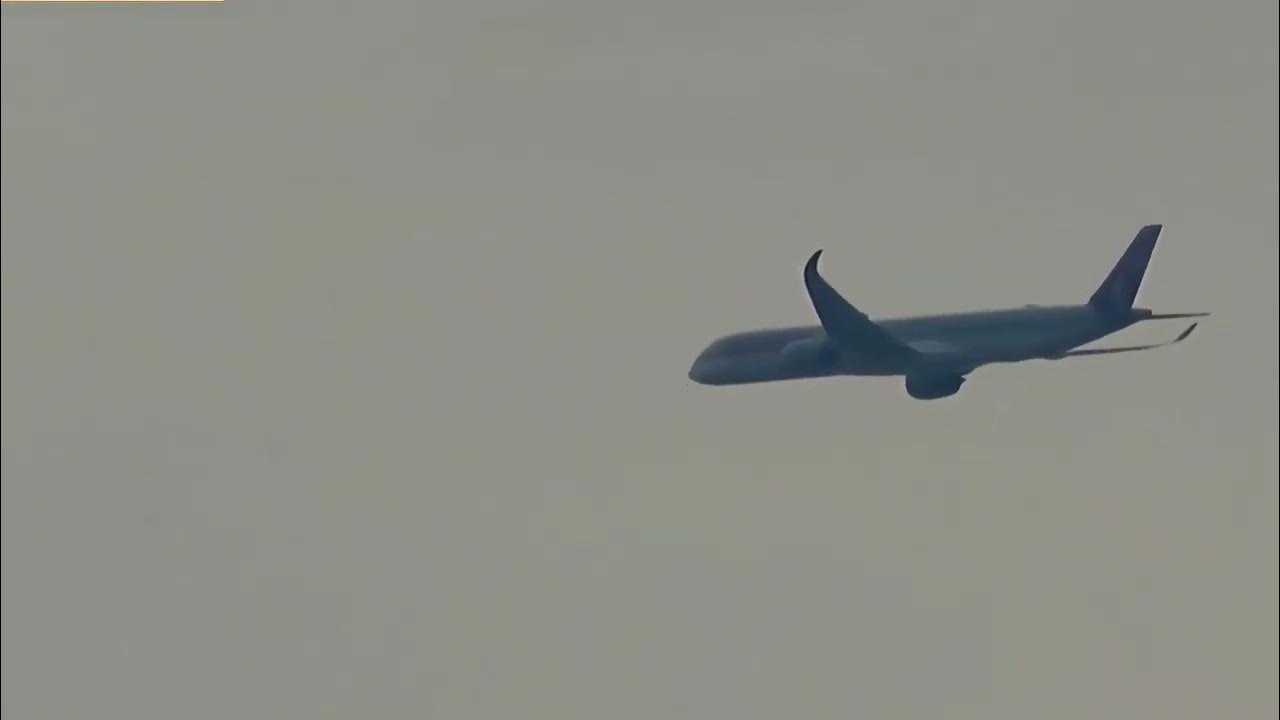
For passengers on board a Qatar Airways flight, what began as a routine journey turned into a moment that would stay with them long after landing. As the aircraft approached the runway, subtle signs suggested something was not quite right. The descent felt different, the cabin unusually quiet, and attentive eyes glanced toward the windows and overhead panels. Within minutes, a potential accident was avoided through decisive action, professional skill, and calm coordination.
This was not a story of chaos or panic, but one of human resilience and training working exactly as intended. A narrow escape during landing reminded everyone on board how much depends on preparation, teamwork, and trust in the people guiding the aircraft safely to the ground.
What Happened During the Final Approach
An Unexpected Challenge Near the Runway
As the aircraft began its final approach, pilots encountered conditions that demanded immediate attention. Whether it was a sudden shift in wind, a technical alert, or reduced visibility, the landing phase quickly became more complex than expected. Landing is already one of the most delicate stages of any flight, requiring precise speed, alignment, and timing.
Passengers sensed the tension not through alarms or announcements, but through the subtle changes that seasoned travelers recognize. The aircraft adjusted its angle, engines responded, and the usual smooth descent briefly gave way to a controlled but firmer maneuver.
Split-Second Decisions in the Cockpit
Inside the cockpit, the flight crew relied on training drilled into them over years. Procedures were followed calmly, checklists confirmed, and communication between pilots remained clear and focused. In such moments, there is no room for hesitation or guesswork. Every decision must be deliberate, every action precise.
The pilots chose safety over routine, executing corrective maneuvers that ensured the aircraft remained under full control. Their experience transformed a potentially dangerous situation into a controlled outcome, proving once again why aviation places such emphasis on preparation and professionalism.
The Role of Crew in Keeping Passengers Calm
Cabin Crew as the Quiet Reassurance
While pilots worked at the front, cabin crew played an equally vital role. Trained to read the cabin’s mood, they moved with calm purpose, offering reassuring smiles and steady presence. Even without detailed explanations, their composure sent a powerful message to passengers: everything was being handled.
For many travelers, it was this quiet confidence that made the difference. Fear often grows in uncertainty, but calm behavior can prevent panic from taking hold.
Communication Without Alarm
Announcements, when made, were measured and clear. Passengers were advised to remain seated and follow instructions, without alarming language. This balance of transparency and reassurance is critical in moments like these. It allows travelers to feel informed without feeling overwhelmed.
A Safe Touchdown and Collective Relief
When the Wheels Finally Met the Ground
As the aircraft touched down safely, a wave of relief swept through the cabin. Some passengers exhaled deeply, others clasped hands, and a few offered spontaneous applause. It was not celebration in the usual sense, but gratitude for a situation that ended safely.
Moments earlier filled with tension were replaced by quiet reflection. For many, it was a reminder of how fragile travel can feel, and how much trust is placed in the hands of unseen professionals.
Gratitude Toward the Crew
Passengers disembarked with words of thanks, nods of respect, and, in some cases, emotional expressions of relief. The crew, trained to remain composed, accepted these gestures with humility. For them, ensuring safety is not heroism but duty, even when the stakes feel incredibly high.
Understanding Why Landings Are So Critical
The Most Demanding Phase of Flight
Aviation experts often note that takeoff and landing are the most demanding phases of a flight. During landing, pilots must manage speed, altitude, alignment, and environmental factors simultaneously. Any unexpected change can require immediate adjustment.
This incident highlights how even modern aircraft, equipped with advanced systems, still rely heavily on human judgment and skill.
Training That Prepares for the Unexpected
Pilots and crew undergo rigorous simulations designed to prepare them for rare but critical scenarios. These simulations are not just technical drills, but psychological preparation for high-pressure moments. When a real-life challenge arises, muscle memory and practiced teamwork take over.
Qatar Airways’ Commitment to Safety
A Culture Built on Precision and Care
Qatar Airways has long emphasized safety as a core value, investing heavily in training, maintenance, and operational excellence. Incidents like this, while unsettling, demonstrate how safety systems and human expertise work together to prevent accidents.
The airline’s approach focuses not just on preventing problems, but on managing them effectively when they arise.
Continuous Improvement After Close Calls
Even when an incident ends safely, it does not end the conversation. Such events are carefully reviewed, procedures analyzed, and lessons reinforced. This continuous cycle of learning is a cornerstone of aviation safety worldwide.
Passenger Reflections After the Incident
Fear, Perspective, and Thankfulness
For some passengers, the experience reshaped their perspective on air travel. Initial fear gave way to appreciation for the complexity of flying and the professionalism behind it. Many expressed renewed respect for pilots and crew who operate under immense responsibility every day.
Stories Shared Beyond the Airport
After leaving the terminal, passengers shared their stories with family and friends, not as tales of disaster, but as reminders of how preparedness can turn danger into safety. These human stories often resonate more deeply than technical explanations.
Lessons From a Narrow Escape
Trust in Training and Teamwork
This incident serves as a powerful reminder that aviation safety is built on layers of protection, with trained humans at its core. Technology supports decisions, but people make them.
Calm Can Change Outcomes
Perhaps the most human lesson of all is the power of calm. From the cockpit to the cabin, composure prevented fear from escalating and allowed everyone to focus on what mattered most: a safe landing.
A Safe Ending to a Scary Moment
In the end, the Qatar Airways flight landed safely, its passengers walking away with shaken nerves but intact trust. What could have been a tragic headline became a story of professionalism, preparation, and human strength under pressure.
Do follow Gulf Magazine on Instagram.
Also Read – Saudi Arabia Builds the World’s Cheapest Data Centres with Bold Digital Vision

