

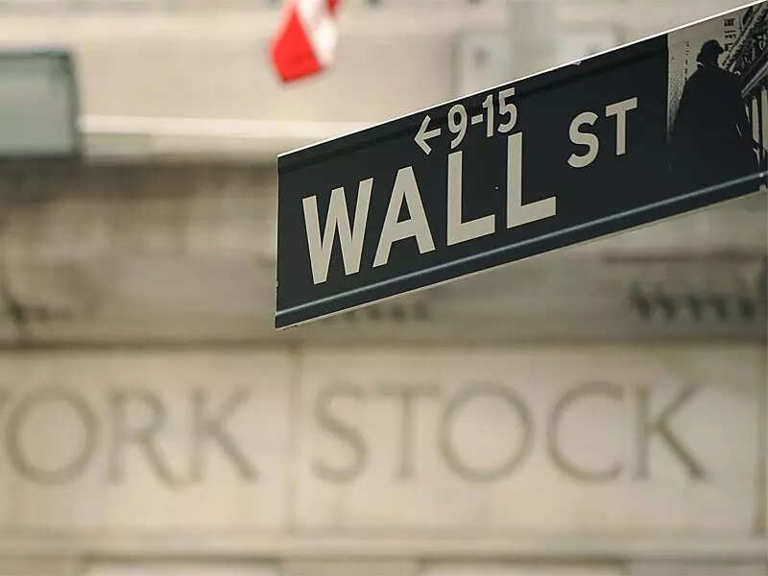
Investors across the world are facing rising AI stock market volatility, as excitement around artificial intelligence clashes with fears about slowing growth, inflation, and corporate earnings. Markets have surged on AI optimism over the past year, but uncertainty is now returning. This week, attention is focused on retail giant Walmart and a series of critical economic reports that could shape the direction of stocks in the months ahead.
Analysts describe the current situation as an “AI whack-a-mole” environment. Each time investors believe they understand the market’s direction, a new factor appears — inflation, interest rates, corporate profits, geopolitical tensions, or regulatory concerns — forcing them to rethink their strategies.
The result is a nervous market where technology stocks swing sharply, traditional sectors show mixed performance, and investors struggle to separate real growth from hype.
Why AI stock market volatility is rising now
Artificial intelligence has been the biggest driver of stock gains since late 2022. Companies involved in chips, cloud computing, data centers, and software saw huge inflows of capital. However, expectations have become extremely high, leaving little room for disappointment.
Several factors are now increasing uncertainty:
- Questions about how quickly AI profits will materialize
- Rising interest rates making growth stocks less attractive
- Concerns about a slowing global economy
- High valuations in technology companies
- Political and regulatory risks
Even strong earnings reports are no longer enough to reassure investors. Markets now react sharply to small changes in guidance or macroeconomic signals.
Walmart earnings: A key test for the real economy

While AI companies dominate headlines, many analysts say retail earnings provide a clearer picture of everyday economic health. That is why results from Walmart are being watched so closely.
As one of the world’s largest retailers, Walmart serves millions of middle- and lower-income consumers. Its sales trends reveal whether households are confident or struggling.
Investors will be looking for answers to several questions:
- Are shoppers trading down to cheaper products?
- Is food inflation still squeezing budgets?
- Are discretionary purchases weakening?
- Is online growth continuing?
If Walmart reports cautious outlooks, it could signal that consumer spending — the backbone of many economies — is slowing.
The consumer squeeze and its market impact
Over the past two years, consumers have faced rising prices for essentials such as food, housing, and energy. Even as inflation has cooled, many households still feel pressure.
Retailers across the spectrum report changing shopping behavior:
- More private-label purchases
- Smaller basket sizes
- Increased demand for discounts
- Reduced spending on non-essential items
For stock markets, weaker consumer demand can ripple through multiple sectors — manufacturing, transport, services, and technology.
If Walmart signals a slowdown, investors may interpret it as a warning that economic growth could weaken, which would affect corporate profits broadly.
Economic data: Inflation and interest rates in focus
Beyond corporate earnings, several major economic reports are due this week. These include inflation readings, employment figures, and consumer spending data.
Such reports directly influence policy decisions by the Federal Reserve, whose interest rate moves shape global financial conditions.
Key indicators investors are watching:
Inflation trends
If inflation remains stubbornly high, central banks may keep interest rates elevated for longer. Higher rates reduce borrowing and investment, slowing growth and hurting stock valuations.
Employment strength
Strong job growth supports consumer spending but can also fuel inflation. Weak employment signals economic slowdown.
Retail sales
Retail figures provide a direct measure of consumer health and demand.
Because markets are already jittery, even small surprises in these reports could trigger sharp movements.
AI giants under scrutiny
Technology companies at the center of the AI boom have seen enormous gains, but they now face tougher questions from investors. Firms such as Nvidia, Microsoft, and Alphabet are spending billions on infrastructure to support AI development.
While revenue growth has been strong, concerns remain about:
- Profit margins amid heavy investment
- Competition among tech giants
- Regulatory pressures
- Energy and infrastructure costs
- Long-term sustainability of AI demand
Markets are shifting from pure enthusiasm to a more cautious evaluation of fundamentals.
“Whack-a-mole” investing explained
The phrase “AI whack-a-mole” captures the unpredictable nature of today’s market. When one risk appears under control, another suddenly emerges.
Examples from recent months include:
- Optimism about AI profits → overshadowed by interest rate fears
- Strong tech earnings → dampened by inflation concerns
- Falling inflation → offset by geopolitical tensions
- Positive economic data → triggering fears of tighter policy
This constant shift makes long-term planning difficult for investors and increases short-term volatility.
Global ripple effects
Although the AI boom is centered in the United States, its impact is global. Stock markets in Europe, Asia, and emerging economies often move in response to U.S. data and technology trends.
Countries heavily dependent on exports, manufacturing, or technology supply chains are particularly sensitive.
For example:
- Semiconductor producers depend on AI chip demand
- Commodity exporters react to growth expectations
- Emerging markets respond to U.S. interest rate changes
As a result, AI stock market volatility can spread quickly across regions.
What retail investors should understand
For individual investors, the current environment can feel confusing. News headlines often swing between optimism and pessimism within days.
Financial advisors suggest focusing on fundamentals rather than short-term noise:
Diversification is critical
Relying too heavily on a single sector — especially high-growth tech — increases risk.
Long-term perspective matters
Short-term volatility is common during periods of economic transition.
Avoid emotional decisions
Panic selling or chasing trends often leads to poor outcomes.
Monitor real economic indicators
Corporate profits and consumer health ultimately drive markets more than hype.
AI still offers long-term promise
Despite recent uncertainty, most experts agree that artificial intelligence will remain a powerful economic force. Productivity gains, automation, and new products could transform industries over the next decade.
Potential long-term benefits include:
- Faster innovation in healthcare and science
- Improved business efficiency
- New digital services and tools
- Growth in cloud computing and data industries
However, the path to these gains may be uneven, with periods of rapid expansion followed by corrections.
The role of interest rates in tech valuations
Technology companies typically rely on future earnings expectations rather than current profits. When interest rates rise, those future earnings are discounted more heavily, reducing present valuations.
This dynamic explains why AI stocks can fall sharply even when their business outlook remains strong.
If economic data suggests rates will stay high:
- Growth stocks may underperform
- Value stocks may gain relative strength
- Bond yields could rise
- Borrowing costs will remain elevated
Conversely, signs of easing policy could reignite tech rallies.
Institutional investors remain cautious
Large asset managers are increasingly balancing their portfolios between growth opportunities and defensive assets. Many funds have reduced exposure to the most expensive AI stocks while maintaining positions in companies with strong cash flow.
Defensive sectors gaining attention include:
- Consumer staples
- Healthcare
- Utilities
- Energy
These industries tend to perform better during economic slowdowns.
Geopolitical tensions add another layer
Beyond economic and corporate factors, global politics also influences markets. Trade disputes, conflicts, and regulatory actions can disrupt supply chains and investor confidence.
Technology companies are particularly vulnerable because:
- AI development depends on advanced semiconductors
- Data regulations vary across countries
- Export controls affect chip sales
- Security concerns shape policy decisions
Such risks contribute to unpredictable market movements.
What to watch in the coming weeks
Analysts say several developments will determine whether volatility continues or stabilizes:
- Walmart’s earnings outlook
- Inflation data trends
- Central bank policy signals
- AI company guidance and spending plans
- Consumer confidence indicators
If these factors align positively, markets could regain stability. If not, swings may intensify.
A turning point or temporary turbulence?
Some experts believe the current phase represents a healthy correction after excessive optimism. Others warn it could signal deeper economic challenges ahead.
The truth likely lies somewhere in between. Markets often experience turbulence when new technologies reshape expectations and traditional economic cycles interact with innovation waves.
AI may ultimately deliver enormous value, but investors must navigate uncertainty along the way.
Conclusion: Navigating AI stock market volatility
The coming days will be crucial as investors confront AI stock market volatility driven by corporate earnings, economic data, and policy expectations. Results from Walmart will provide insight into consumer strength, while inflation and employment reports will influence interest rate outlooks.
For now, markets remain caught between optimism about technological transformation and concern about economic realities. This tension is unlikely to disappear quickly.
Investors who remain informed, diversified, and patient are best positioned to weather the uncertainty. As history shows, periods of volatility often precede the next phase of growth — but timing that transition is never easy.
Do Follow Gulf Magazine on Instagram
Read More:- Saudi: Fourmaux Fights Back Strong After Surprising Rally Penalty 2025

