


Saudi Arabia is making one of the most ambitious bets in its modern history, and it is not solely about oil, tourism, or megacities. At the heart of Vision 2030 lies a quieter but transformative revolution: the reinvention of public schools. Long viewed as functional but traditional, Saudi Arabia’s public education system is now being reshaped into a future-ready model designed to compete globally while staying rooted in national values.
This shift reflects a deep understanding by policymakers that economic diversification depends on people, not just projects. By focusing on classrooms, teachers, and students, the Kingdom is investing in long-term human capital that will shape society for decades to come.
Why Public Schools Matter More Than Ever
Public schools educate the vast majority of Saudi children. Any meaningful national transformation must therefore begin in these classrooms. The government’s renewed focus on public education signals a recognition that equal access to quality schooling is essential for social mobility, innovation, and economic resilience.
Rather than replacing public schools with private alternatives, Saudi Arabia is doubling down on strengthening the public system. The aim is not only to raise academic outcomes but also to nurture creativity, critical thinking, and adaptability among students who will soon enter a rapidly changing workforce.
Vision 2030 and the Education Reset
Vision 2030 acts as the backbone of Saudi Arabia’s education reform. The strategy places education at the center of national development, linking school outcomes directly to employment, productivity, and global competitiveness.
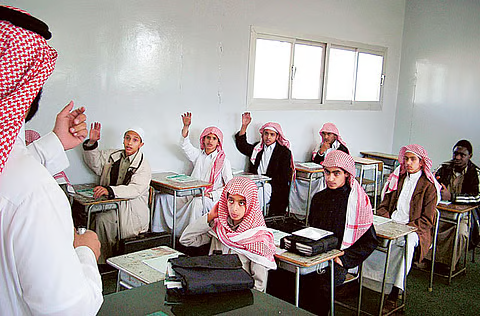
Public schools are being redesigned to align learning with real-world needs. This means moving away from rote memorization and toward applied knowledge, problem-solving, and interdisciplinary learning. Students are increasingly encouraged to ask questions, collaborate, and engage with ideas beyond textbooks.
Modern Curricula for a Modern Economy
One of the most visible changes inside Saudi public schools is the overhaul of curricula. Subjects such as science, mathematics, and technology are being strengthened, while digital literacy and coding are becoming increasingly mainstream.
English-language instruction has also gained prominence, reflecting the Kingdom’s growing engagement with global markets and institutions. At the same time, national identity, Arabic language, and Islamic studies remain central, ensuring that modernization does not come at the cost of cultural continuity.
This balanced approach aims to produce graduates who are globally competent yet locally grounded.
Teachers at the Center of Change
No education reform succeeds without empowered teachers. Saudi Arabia’s strategy places educators at the heart of transformation, recognizing them not just as instructors but as mentors and change agents.
Public school teachers are now receiving enhanced training, professional development opportunities, and performance-based evaluations. New teaching methods emphasize student engagement, classroom interaction, and continuous feedback rather than one-way instruction.
By elevating the teaching profession, the Kingdom is sending a clear message that quality education begins with motivated and skilled educators.
Digital Classrooms and Smart Learning
Technology is playing a pivotal role in reshaping Saudi public schools. Smart boards, digital textbooks, and online learning platforms are becoming standard features in many classrooms.
These tools are not meant to replace teachers but to enhance learning experiences. Students can access interactive content, track their progress, and learn at their own pace. Digital platforms also allow schools to respond quickly during disruptions, ensuring continuity of learning under any circumstances.
This digital push prepares students for a future where technology literacy is no longer optional but essential.
Expanding Opportunities Beyond Academics
Saudi Arabia’s education reforms go beyond test scores. Public schools are increasingly offering extracurricular programs in sports, arts, robotics, and entrepreneurship.
These activities help students discover talents, build confidence, and develop soft skills such as teamwork and leadership. The emphasis on holistic development reflects a broader understanding of success, one that values emotional intelligence and creativity alongside academic achievement.
For many families, this marks a welcome shift toward a more balanced and enriching school experience.
Bridging the Skills Gap Early
A major driver behind the Kingdom’s bold education bet is the need to address future workforce demands. By strengthening public schools, Saudi Arabia aims to reduce the skills gap that often emerges later in higher education or employment.
Career awareness programs are being introduced earlier, helping students understand the relevance of what they learn in school. Exposure to science labs, innovation hubs, and vocational pathways allows young learners to envision diverse career options from an early age.
This early alignment between education and employment supports the broader economic transformation underway.
Equity, Access, and Regional Development
Public school reform also plays a critical role in promoting equity across the Kingdom. Investments are being made not only in major cities but also in smaller towns and rural areas.
Improved infrastructure, digital connectivity, and standardized quality benchmarks aim to ensure that a child’s location does not determine the quality of education they receive. This inclusive approach strengthens national cohesion and supports balanced regional development.
Education, in this context, becomes a unifying force that connects diverse communities under a shared vision for the future.
Challenges Along the Way
Transforming a national public school system is not without challenges. Adapting to new teaching methods, integrating technology effectively, and managing change at scale require time and patience.
Some educators and parents initially struggle with the pace of reform, while students must adjust to higher expectations and more active learning styles. However, the willingness to acknowledge these challenges and refine policies reflects a maturing reform process rather than a rigid one.
Progress, not perfection, remains the guiding principle.
Public Confidence and Parental Trust
As reforms take root, public perception of Saudi public schools is gradually evolving. More parents are expressing confidence in government schools as viable, high-quality options for their children.
This renewed trust is essential. When families believe in public education, it creates a virtuous cycle of engagement, accountability, and continuous improvement. Schools become community hubs rather than mere institutions.
The emotional shift toward pride in public schooling may prove as impactful as policy changes themselves.
Preparing a Generation for a New Saudi Arabia
At its core, Saudi Arabia’s bold bet on public schools is about preparing a generation to lead a transformed nation. These students will shape industries, govern institutions, and represent the Kingdom on the global stage.
By investing early in their education, the country is laying the foundation for sustainable growth, innovation, and social stability. The classroom becomes the starting point of national ambition.
This long-term perspective sets Saudi Arabia apart from short-term reform models.
A Quiet Revolution with Lasting Impact
While megaprojects often capture headlines, the transformation inside Saudi public schools may ultimately be one of the Kingdom’s most enduring achievements. It is a revolution that unfolds daily, lesson by lesson, student by student.
By humanizing education reform and placing learners at the center, Saudi Arabia is redefining what public schools can achieve. The bet is bold, the journey complex, but the potential rewards are profound.
In shaping minds today, the Kingdom is shaping its future tomorrow.
Do follow Gulf Magazine on Instagram.
Also Read – Qatar Airways Launches New Flights to Hail, Saudi Arabia

