

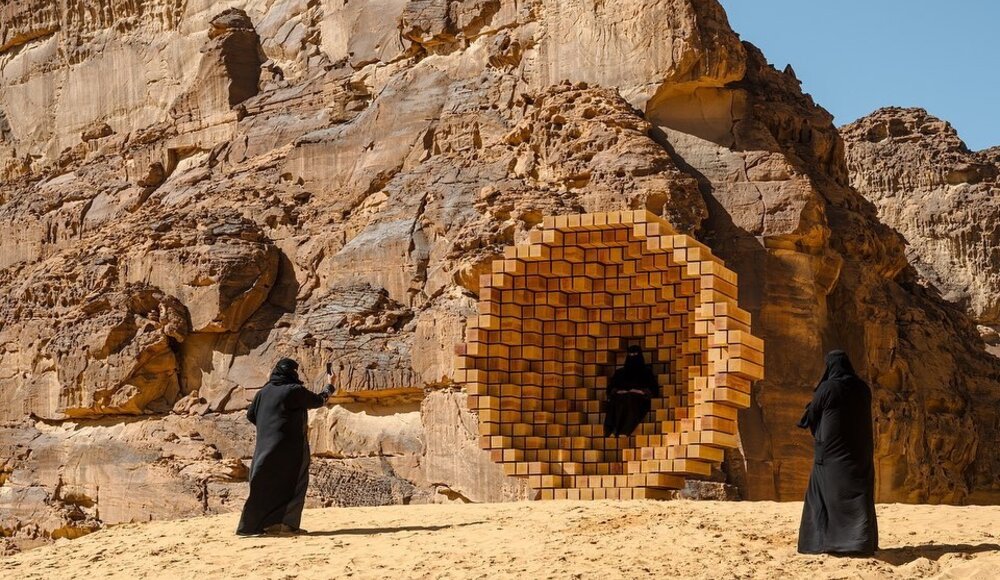
Oasis Farm Exhibit Saudi Arabia is stepping into the global art and culture scene in a groundbreaking way. For the very first time, the Kingdom is presenting a national pavilion at the prestigious Triennale Milano International Exhibition in Italy, a globally recognized art and design event held every three years. This year’s 24th edition, running from May 13 to November 9, 2025, features Saudi Arabia’s immersive pavilion titled “Maghras: A Farm for Experimentation.”
The Saudi pavilion takes inspiration from Al-Ahsa, the world’s largest natural oasis located in the Eastern Province of Saudi Arabia. Known for its lush palm groves and deep agricultural roots, Al-Ahsa plays a central role in the Kingdom’s farming history. It is a UNESCO World Heritage Site and is home to over 2.5 million palm trees. The pavilion pays homage to this rich heritage while reimagining the oasis as a site for artistic exploration, experimentation, and storytelling.
What Is ‘Maghras’?
The word “Maghras” refers to a traditional Saudi farming term—specifically, a cultivated patch of land defined by four palm trees planted in a square. In Al-Ahsa, these small farms are not just places of agriculture; they are spaces where family, heritage, and sustainability meet. This concept was central to the creative design of the Saudi pavilion, which replicates the form and spirit of these farming spaces in a contemporary artistic setting.
This farm-like setting has been transformed into an interactive exhibit that invites visitors to see, hear, and feel the rhythms of oasis life. The exhibit includes sensory installations, audio recordings, interactive maps, illustrations, and artistic displays that reflect the traditional and modern facets of Al-Ahsa farming culture.
Behind the Vision
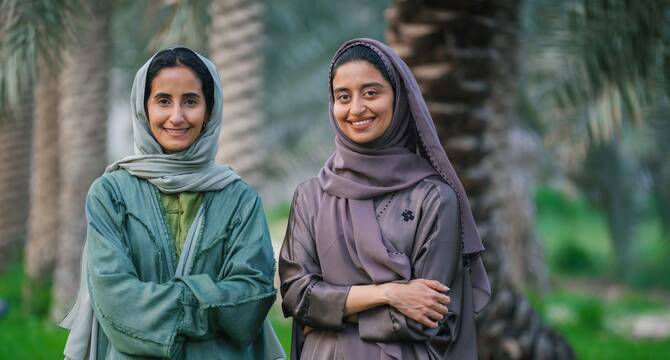
The Saudi participation is led by the Architecture and Design Commission under the Kingdom’s Ministry of Culture. The pavilion is curated by Lulu Almana and Sara Al-Omran, two Saudi cultural experts, in collaboration with Alejandro Stein, a creative director based in the United States.
The curators wanted to highlight how Al-Ahsa is not just a physical oasis, but also a cultural and emotional space that carries deep meanings for generations of Saudis. Much of the concept was inspired by Noura AlMousa, the late founder of Al-Sbakh Farm in Al-Ahsa. Her dedication to preserving farming traditions and crafts shaped the foundation for this artistic project.
“Her spirit feels very present because she really cared about craft and culture,” said co-curator Sara Al-Omran. “We’re continuing the lineage of the matriarch.”
Art Meets Agriculture
Three Saudi artists were selected to contribute original works to the pavilion, each bringing their unique perspectives and creative methods:
- Leen Ajlan, a London-based designer originally from Jeddah, combines modern design with Saudi visual traditions.
- Mohammed Alfaraj, a contemporary artist from Al-Ahsa, brings firsthand knowledge of the region’s farming history and social structure.
- Tara Aldughaither, founder of the audio platform Sawtasura, focuses on female voices and sound heritage in the region.
Through their contributions, the exhibit becomes a multi-sensory narrative of Al-Ahsa, blending video installations, agricultural data, traditional songs, family histories, and even soil samples. Visitors can walk through and interact with parts of the exhibit, which reflect the changing climate, shifting identities, and agricultural innovations in the region.
From Past to Future
This pavilion is not only about history. It is also forward-looking. The creators see “Maghras” as a living laboratory where innovation and tradition can coexist. The exhibit draws attention to the challenges that face farming communities in desert climates—such as water scarcity, modernization, and cultural preservation—and explores how design and storytelling can help find new solutions.
The team behind the exhibit has also announced plans to turn their research and creative work into a published book later this year. The publication will include interviews, field notes, farm maps, traditional planting patterns, and archival images from Al-Ahsa. It aims to serve as an educational and cultural resource for future generations.
Personal Stories at the Heart
What makes the exhibit truly powerful is the personal connection that the curators and artists have with Al-Ahsa.
“My grandfather used to tell me stories about Al-Ahsa like it was a mythical place,” said Al-Omran. “I grew up in Alkhobar but visited our family farm in Al-Ahsa every week. Many of my childhood memories are there—running around the groves, watching frogs and rabbits, learning the names of trees, and seeing how food grows season by season.”
These deeply personal memories are now part of a much larger story being told on a global platform. The Saudi pavilion turns local heritage into a universal conversation about belonging, nature, and sustainable futures.
Global Recognition for Saudi Creativity
Saudi Arabia’s participation in the Triennale marks a significant cultural milestone. It signals the Kingdom’s growing engagement with international art, design, and architecture communities. It also highlights the diversity of voices coming from Saudi Arabia—especially from younger generations who are blending tradition with innovation.
By showcasing a unique aspect of Saudi heritage through a contemporary lens, the “Maghras” pavilion has already begun to capture international attention. Visitors from around the world are learning that Saudi Arabia is not just a land of deserts and skyscrapers—it is also home to lush oases, deep-rooted cultures, and bold creative visions.
Conclusion
The “Maghras: A Farm for Experimentation” pavilion is more than an exhibit; it is a celebration of place, memory, and potential. By bringing the essence of Al-Ahsa to Milan, Saudi Arabia has made a strong statement about its cultural richness and its ambitions on the world stage.
As the Triennale Milano continues through the rest of the year, thousands more visitors will have the chance to experience the magic of the oasis, explore the meaning of sustainable design, and witness the creativity flourishing from the heart of the Kingdom.
Saudi Minister’s Surprise Visit to Delhi Follows India’s Cross-Border Strikes

