

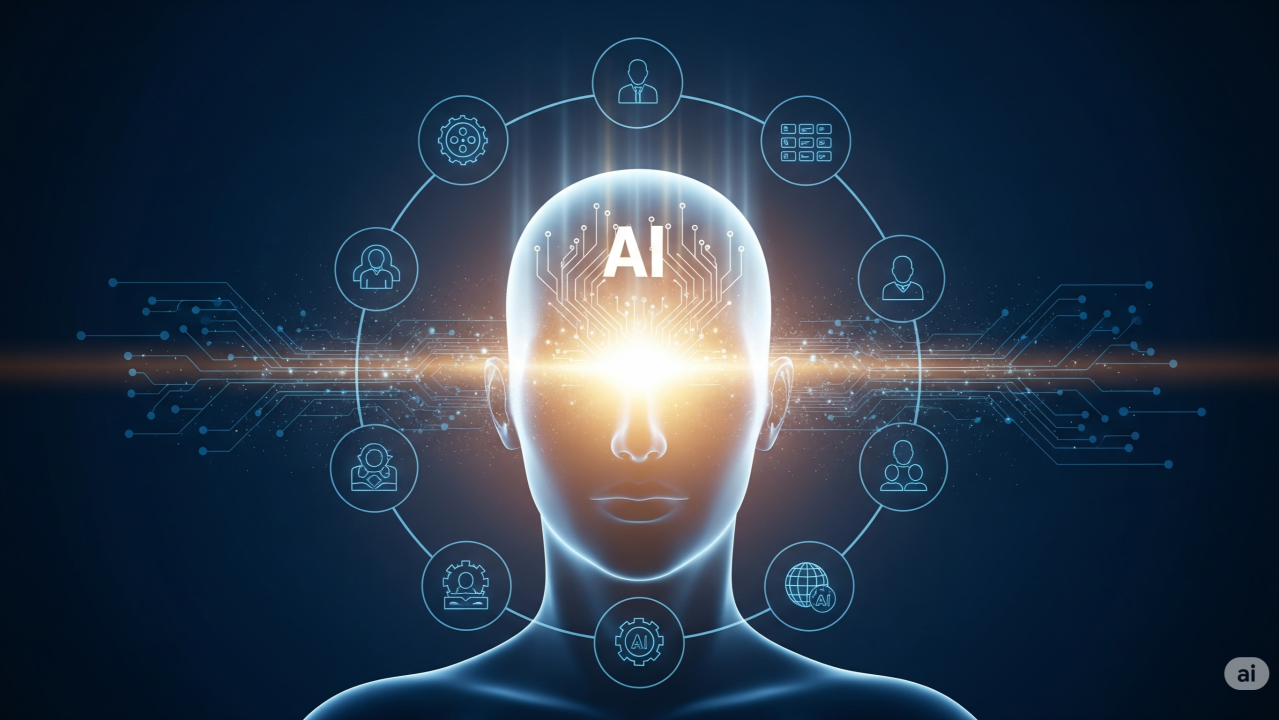
Artificial intelligence empowers human talent in ways that were once only imagined in science fiction. From classrooms to hospitals, from offices to creative studios, AI is no longer just a tool for automation — it has become a partner that enhances human ability. Experts say the real power of AI lies not in replacing people, but in helping them do more, learn faster, and solve problems better.
As businesses and governments invest heavily in digital transformation, the conversation around AI is shifting. Instead of asking whether machines will take jobs, leaders are increasingly asking how AI can unlock human potential. This shift is reshaping industries, redefining skills, and opening new opportunities for workers worldwide.
Artificial Intelligence Empowers Human Talent in the Workplace
One of the clearest examples of how artificial intelligence empowers human talent is in modern workplaces. AI tools can analyze data, automate routine tasks, and provide insights in seconds — tasks that once took hours or days.
This allows employees to focus on higher-value work such as strategy, creativity, and decision-making.
For example, in offices:
- AI handles repetitive data entry
- Chatbots manage basic customer queries
- Software analyzes performance metrics
- Scheduling tools optimize meeting times
Instead of replacing workers, these systems free them from monotonous tasks.
“AI is like a super-efficient assistant,” many industry experts explain. “It handles the routine so humans can focus on what truly matters.”
Employees who once spent most of their time on paperwork can now dedicate energy to innovation, collaboration, and problem-solving — areas where human intelligence remains unmatched.
Boosting Creativity Rather Than Replacing It
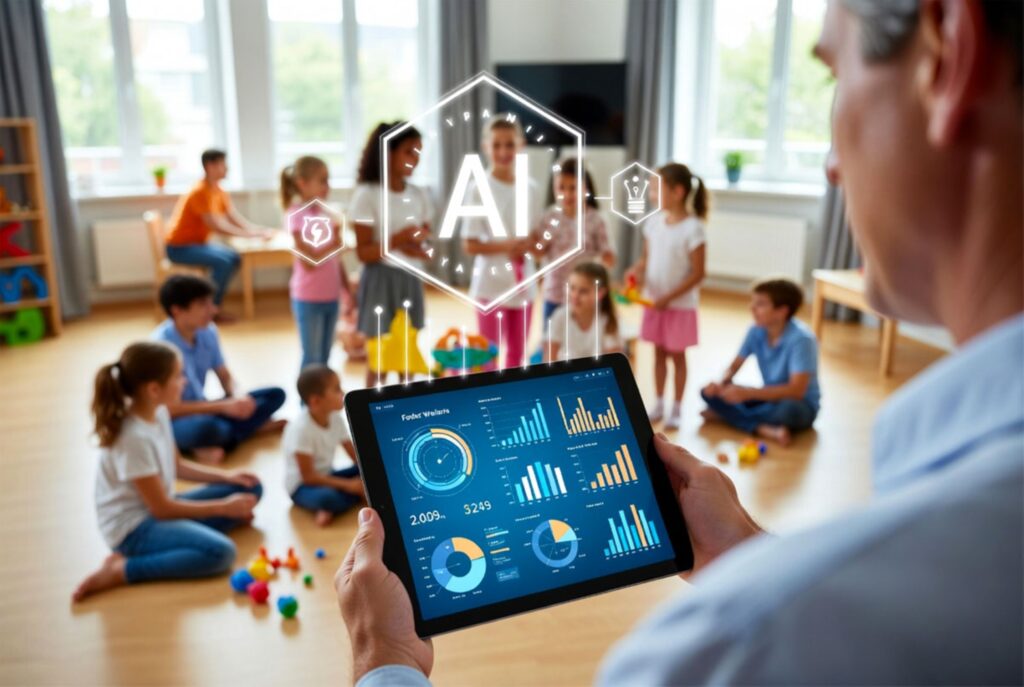
A common fear is that AI will eliminate creative jobs. In reality, artificial intelligence empowers human talent by expanding creative possibilities.
Designers, writers, filmmakers, and musicians are using AI to:
- Generate ideas quickly
- Explore new styles
- Edit and refine work efficiently
- Test multiple concepts at once
Rather than replacing creativity, AI acts as a creative partner.
For instance, a designer can produce dozens of visual concepts in minutes and then use human judgment to choose the best one. A writer can brainstorm outlines faster. A filmmaker can pre-visualize scenes before production begins.
The human role shifts from manual creation to creative direction — deciding what to make, why it matters, and how it connects with people.
Transforming Education and Learning
Education is another area where artificial intelligence empowers human talent dramatically. AI-powered platforms can personalize learning for each student, adapting lessons to their pace, strengths, and weaknesses.
Students who struggle with certain subjects receive extra support, while advanced learners can move ahead without waiting for the rest of the class.
Key benefits in education include:
- Personalized study plans
- Instant feedback on assignments
- Interactive tutoring systems
- Language translation tools
- Accessibility for students with disabilities
Teachers also benefit. AI can grade assignments, track progress, and identify learning gaps, allowing educators to focus on teaching and mentoring rather than administrative work.
Experts believe this could reduce dropout rates and improve learning outcomes globally.
Revolutionizing Healthcare Through Human-AI Collaboration
Healthcare professionals are among the biggest beneficiaries of AI support. Doctors, nurses, and researchers face enormous workloads and must make critical decisions quickly.
Artificial intelligence empowers human talent by assisting with diagnosis, treatment planning, and patient monitoring.
AI systems can:
- Analyze medical images
- Detect patterns in patient data
- Predict disease risks
- Recommend treatment options
- Monitor patients remotely
However, the final decision remains with human doctors.
AI does not replace medical expertise — it enhances it. A physician can combine machine analysis with experience, empathy, and ethical judgment to deliver better care.
In rural or underserved areas, AI tools can even help bridge the shortage of specialists by providing decision support to local healthcare workers.
Enhancing Productivity Across Industries
From manufacturing to agriculture, AI is improving efficiency while enabling workers to perform more complex tasks.
In factories, smart machines handle repetitive production steps while technicians supervise, maintain systems, and solve technical challenges. In agriculture, AI analyzes weather patterns, soil conditions, and crop health, helping farmers make informed decisions.
This shift moves workers from manual labor toward skilled roles such as system management, analysis, and innovation.
Experts say the future workforce will not be defined by physical strength or routine knowledge but by adaptability, digital literacy, and problem-solving ability.
Creating New Jobs and Career Paths
Despite concerns about job losses, history shows that technological revolutions often create more jobs than they eliminate — though different kinds of jobs.
Artificial intelligence empowers human talent by generating entirely new roles, including:
- AI trainers and data specialists
- Robotics technicians
- Digital ethicists
- Cybersecurity experts
- Human-AI interaction designers
- AI policy analysts
These jobs did not exist a decade ago.
Moreover, many traditional professions are evolving rather than disappearing. Accountants now use AI for analysis instead of manual calculations. Journalists use AI for research and data processing. Engineers use AI to simulate designs before building them.
The key challenge is reskilling — helping workers transition into these new roles.
Improving Decision-Making with Data
Modern organizations generate enormous amounts of data. Without AI, much of this information would remain unused.
Artificial intelligence empowers human talent by turning raw data into actionable insights.
Leaders can now:
- Forecast market trends
- Identify risks early
- Optimize supply chains
- Understand customer behavior
- Evaluate performance accurately
This leads to smarter decisions and better outcomes.
However, experts stress that data alone is not enough. Human judgment is still essential to interpret results, consider ethical implications, and make strategic choices.
Supporting Small Businesses and Entrepreneurs
AI is no longer limited to large corporations. Affordable cloud-based tools are giving small businesses access to capabilities that were once available only to major companies.
Entrepreneurs can use AI to:
- Automate marketing campaigns
- Analyze customer preferences
- Manage inventory
- Provide 24/7 customer support
- Create content and designs
This levels the playing field and encourages innovation.
A small startup can now compete globally with limited resources, relying on AI to handle operations while founders focus on growth and strategy.
Addressing Concerns and Ethical Challenges
While artificial intelligence empowers human talent, experts acknowledge legitimate concerns.
These include:
- Job displacement in certain sectors
- Privacy issues related to data collection
- Bias in AI systems
- Overdependence on technology
- Security risks
Responsible development and regulation are essential to ensure AI benefits society as a whole.
Experts emphasize the importance of:
- Transparent algorithms
- Ethical guidelines
- Workforce retraining programs
- Human oversight
- Inclusive access to technology
Without these safeguards, AI could widen social inequalities rather than reduce them.
The Importance of Human Skills in the AI Era
Ironically, as machines become more capable, uniquely human skills become more valuable.
These include:
- Critical thinking
- Emotional intelligence
- Creativity
- Leadership
- Communication
- Ethical reasoning
Artificial intelligence empowers human talent by handling technical tasks, allowing people to focus on these human strengths.
Employers increasingly seek individuals who can collaborate with AI systems rather than compete against them.
Preparing the Next Generation
Education systems worldwide are beginning to adapt to the AI-driven future. Schools and universities are introducing digital skills, coding, data literacy, and interdisciplinary learning.
However, experts warn that technical skills alone are not enough.
Students must also learn:
- Adaptability
- Lifelong learning habits
- Collaboration skills
- Problem-solving approaches
- Ethical awareness
The goal is to prepare individuals not just for current jobs but for careers that may not yet exist.
Global Impact and Economic Growth
Countries that embrace AI effectively could experience significant economic benefits. Increased productivity, innovation, and efficiency can drive growth across sectors.
Artificial intelligence empowers human talent at a national level by enabling:
- Smarter governance
- Improved public services
- Efficient infrastructure management
- Advanced scientific research
- Better disaster response systems
Developing nations, in particular, have an opportunity to leapfrog traditional development stages by adopting digital technologies directly.
However, unequal access to technology could create a global digital divide, making international cooperation essential.
Human-AI Collaboration: The Future Model
Most experts agree that the future is not “humans versus machines” but “humans with machines.”
In this model:
- AI handles speed and scale
- Humans provide context and values
- Machines analyze data
- People interpret meaning
- AI suggests options
- Humans make final decisions
This partnership combines the strengths of both.
Organizations that successfully integrate AI while empowering employees are likely to outperform those that rely solely on automation.
Stories of Transformation
Across the world, real examples demonstrate how artificial intelligence empowers human talent.
Teachers use AI to help struggling students succeed. Doctors detect diseases earlier. Farmers increase crop yields. Engineers design safer buildings. Artists explore new creative forms.
Even individuals without technical backgrounds can benefit. Language translation tools allow people to communicate across cultures. Accessibility technologies help people with disabilities participate more fully in society.
These transformations show that AI’s greatest value lies in expanding human capability, not replacing it.
Looking Ahead
The rapid pace of AI development means its impact will continue to grow. Future systems may become even more intuitive, collaborative, and accessible.
Experts predict advances in:
- Natural language interaction
- Robotics assistance
- Personalized medicine
- Smart cities
- Climate solutions
- Scientific discovery
However, the direction AI takes will depend on human choices — policies, ethics, education, and investment.
If guided responsibly, AI could help address some of humanity’s biggest challenges, from healthcare access to environmental sustainability.
Conclusion
Artificial intelligence empowers human talent by transforming how people work, learn, create, and solve problems. Rather than diminishing human value, AI has the potential to amplify it — freeing individuals from routine tasks and enabling them to focus on innovation, empathy, and complex thinking.
The key to success lies in collaboration, not competition. When humans and machines work together, the result is greater than either could achieve alone.
As one expert summarized, “AI is not about building smarter machines. It is about helping people become smarter, more capable, and more creative.”
In the coming years, societies that embrace this perspective — investing in skills, ethics, and inclusive access — will be best positioned to harness the full potential of AI.
Do follow Gulf Magazine on Instagram
Also Read – Morimoto Doha: 7 Amazing Reasons Why It’s Worth Every Riyal

