

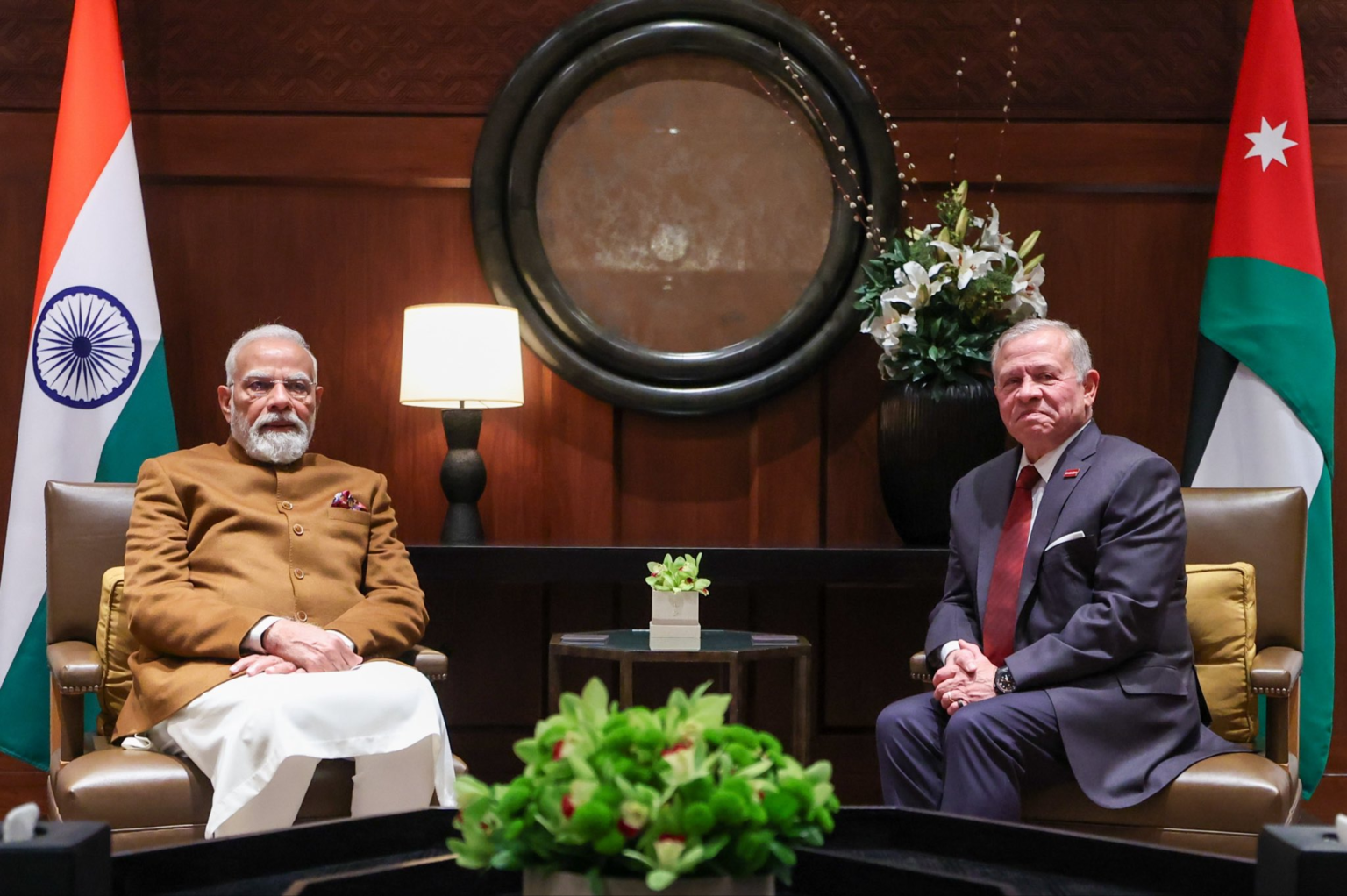
As the Indian Prime Minister concluded a landmark visit to Jordan, the atmosphere between the two nations reflected warmth, mutual respect, and renewed ambition. The visit was more than a diplomatic engagement. It became a human story of trust, shared values, and a forward-looking vision that connects South Asia and the Middle East more closely than ever before.
A Visit Rooted in Shared History and Mutual Respect
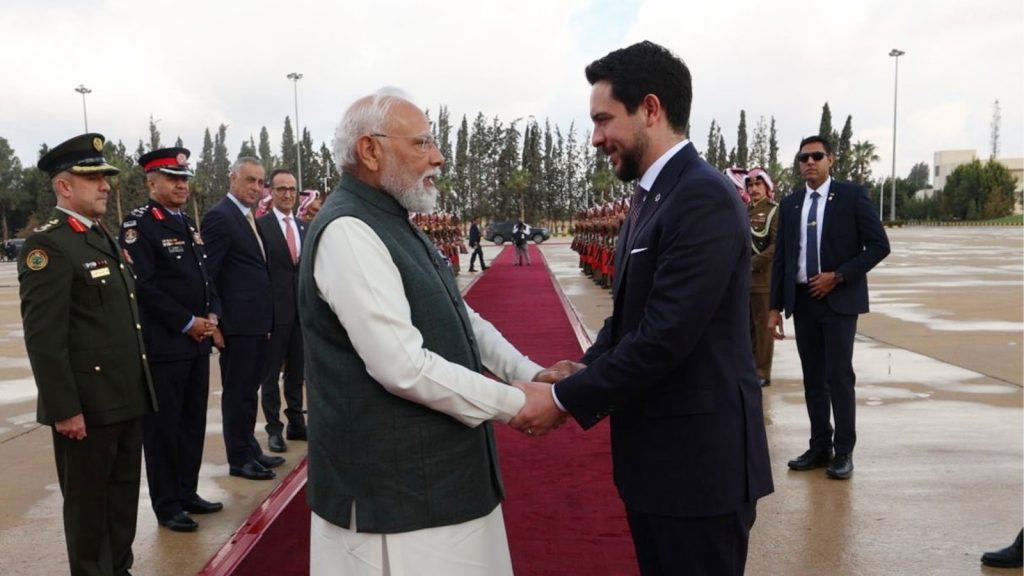
India and Jordan have enjoyed friendly relations for decades, built on respect, dialogue, and consistent engagement. The Prime Minister’s visit symbolized continuity as well as renewal, acknowledging the strong foundation already in place while setting the tone for a more ambitious future.
Jordan has long been viewed in India as a voice of moderation and stability in a complex region. India, in turn, is regarded in Jordan as a reliable partner with growing global influence. This mutual perception shaped discussions that were open, constructive, and focused on practical outcomes.
Leadership-Level Dialogue Sets the Tone
At the heart of the visit were high-level talks between the Indian Prime Minister and Jordanian leadership. These conversations went beyond formal protocol, reflecting personal rapport and a clear understanding of regional and global challenges.
Both sides emphasized dialogue as the most effective tool for addressing uncertainty, conflict, and economic disruption. The leaders acknowledged that cooperation between like-minded nations can serve as a stabilizing force not just bilaterally, but across regions.
Strengthening Political and Diplomatic Cooperation
Political cooperation emerged as a central pillar of the renewed partnership. India and Jordan reaffirmed their commitment to regular diplomatic consultations, coordination in multilateral forums, and support for peaceful conflict resolution.
Jordan’s role in promoting regional stability and India’s growing diplomatic footprint were seen as complementary strengths. By aligning perspectives on global issues, the two nations signaled their intent to work together more closely on international platforms.
Commitment to Peace and Regional Stability
Both countries reiterated their support for dialogue-driven solutions in the Middle East and beyond. Jordan’s long-standing advocacy for peace and India’s consistent emphasis on sovereignty and diplomacy found common ground.
This shared outlook reinforces the idea that India and Jordan can act as responsible voices promoting moderation, understanding, and stability in times of global uncertainty.
Expanding Economic and Trade Relations
Economic cooperation featured prominently in the discussions, with both sides recognizing untapped potential. Trade between India and Jordan has grown steadily, but leaders agreed that it could expand significantly with focused efforts and supportive policies.
India’s diverse manufacturing base and Jordan’s strategic location were identified as natural advantages that can drive stronger commercial ties. The visit emphasized the need to move from intent to implementation.
New Opportunities for Investment and Business
Jordan expressed interest in attracting Indian investment in key sectors, while Indian businesses see Jordan as a gateway to regional markets. Discussions highlighted opportunities in pharmaceuticals, information technology, textiles, fertilizers, and food processing.
Both governments agreed to encourage business delegations, simplify procedures, and create platforms that allow entrepreneurs to connect more easily. The focus was on creating win-win outcomes that generate jobs and economic resilience.
Cooperation in Energy and Infrastructure
Energy security and infrastructure development were also key themes. Jordan’s efforts to diversify energy sources and India’s experience in renewable energy opened avenues for collaboration.
Solar and wind energy projects, as well as knowledge sharing in energy efficiency, were discussed as areas where cooperation could deliver long-term benefits while supporting sustainability goals.
Deepening Security and Defense Collaboration
Security cooperation formed another important dimension of the visit. In a world facing evolving threats, India and Jordan agreed on the importance of coordination, intelligence sharing, and capacity building.
Both nations emphasized that security cooperation is not about confrontation but about safeguarding people, institutions, and economic progress.
Joint Efforts Against Extremism
India and Jordan share concerns about extremism and radicalization. Their discussions reflected a shared belief that addressing these challenges requires not only security measures but also education, dialogue, and inclusive development.
By exchanging experiences and best practices, the two countries aim to strengthen their ability to counter threats while upholding values of tolerance and coexistence.
Cultural and People-to-People Connections
Beyond strategic and economic discussions, the visit placed strong emphasis on human connections. Cultural ties, education exchanges, and tourism were highlighted as powerful tools to bring societies closer.
India’s rich cultural heritage resonates strongly in Jordan, while Jordan’s history and hospitality attract growing interest among Indian travelers. Both sides agreed that stronger people-to-people ties give real meaning to diplomatic agreements.
Education, Tourism, and Cultural Exchange
Opportunities for student exchanges, academic cooperation, and joint research were discussed as ways to invest in future generations. Tourism promotion was also identified as a priority, with both countries aiming to showcase their heritage and natural beauty to each other’s citizens.
Cultural festivals, art exchanges, and media collaboration were seen as ways to deepen understanding and appreciation between the two societies.
Cooperation in Health, Science, and Technology
Health and innovation emerged as forward-looking areas of cooperation. India’s strengths in pharmaceuticals and medical services complement Jordan’s healthcare infrastructure and regional outreach.
Both sides expressed interest in collaboration in research, digital health, and capacity building, recognizing that innovation can play a transformative role in national development.
Shared Vision for Innovation-Led Growth
Science and technology cooperation was discussed as a means to empower youth, create skilled jobs, and address shared challenges. Digital solutions, startups, and knowledge sharing were highlighted as future growth drivers.
This focus reflects a broader vision of partnership that looks beyond immediate gains and invests in long-term progress.
A Human-Centered Partnership for the Future
What stood out during the Prime Minister’s visit was the emphasis on human impact. Leaders from both sides spoke about cooperation not as an abstract concept, but as a tool to improve lives, create opportunities, and strengthen communities.
The tone of the discussions reflected empathy and understanding, recognizing that diplomacy ultimately serves people, not just governments.
Trust as the Foundation of Cooperation
Trust, built over years of consistent engagement, emerged as the cornerstone of the India-Jordan relationship. This trust allows both countries to explore new areas of cooperation with confidence and openness.
As the visit concluded, it left behind a sense of optimism and momentum, with both sides committed to turning dialogue into tangible outcomes.
Looking Ahead With Confidence and Optimism
The conclusion of the Indian Prime Minister’s visit to Jordan marks not an end, but a beginning. Agreements to strengthen cooperation reflect a shared determination to navigate global challenges together and seize emerging opportunities.
India and Jordan now look ahead with confidence, guided by shared values, mutual respect, and a clear understanding that collaboration is the key to sustainable growth and stability. The visit has set the stage for a stronger, deeper, and more human-centered partnership that promises benefits for both nations in the years to come.
Do follow Gulf Magazine on Instagram.
Also Read – Saudi Gemstones and Jewelry Sector Set to Attract $186 Million in New Investments

