

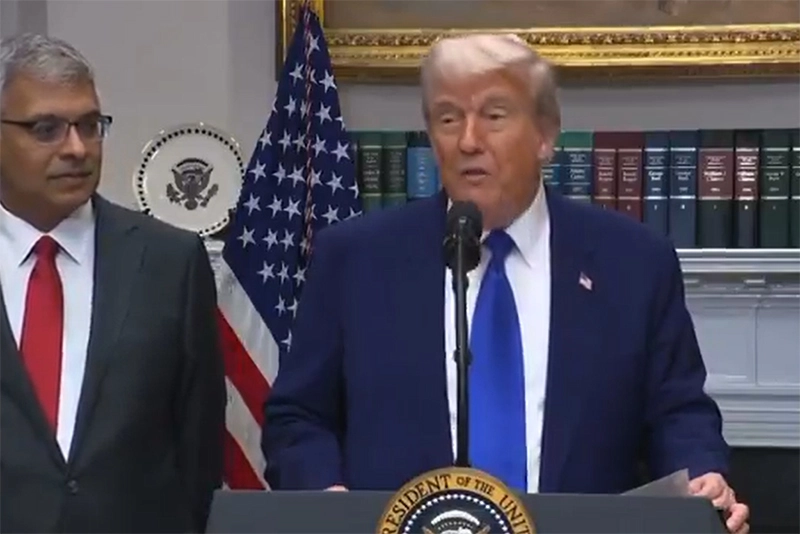
Pakistan Ceasefire a recent address during his visit to Saudi Arabia, U.S. President Donald Trump asserted that his administration played a pivotal role in brokering a “historic ceasefire” between India and Pakistan. Speaking at the U.S.-Saudi Investment Forum in Riyadh, Trump claimed, “Just days ago, my administration successfully brokered a historic ceasefire to stop the escalating violence between India and Pakistan.” He elaborated on his approach, stating, “I used trade to a large extent to do it… I said, ‘Fellas, come on, let’s make a deal. Let’s do some trading. Let’s not trade nuclear missiles. Let’s trade the things that you make so beautifully.'”
Trump’s comments seemed to underline his signature approach to diplomacy—leveraging economic incentives to achieve peace. The notion that trade, rather than traditional diplomatic channels or military negotiations, could ease tensions between two nuclear-armed nations raised eyebrows in the international community. His remarks, while optimistic, have drawn attention to the complexities surrounding the ongoing conflict between India and Pakistan, which has a long history of territorial disputes, most notably over the region of Kashmir.
The timing of Trump’s comments was also noteworthy, coming shortly after several days of intense military engagements between the two countries along their disputed border. Trump’s assertion of a ceasefire brokered by the U.S. reflects his administration’s broader approach to global conflicts, often using economic leverage as a primary tool of influence.
India’s Firm Rebuttal
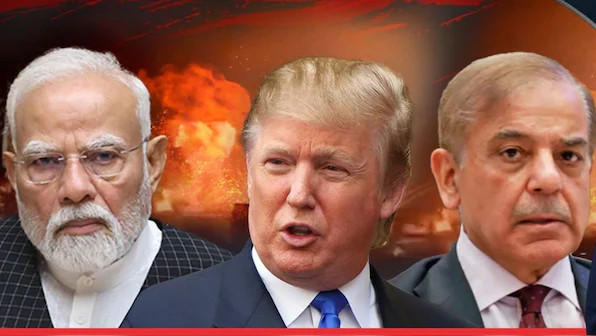
India, however, swiftly refuted Trump’s claims. The Ministry of External Affairs emphasized that no discussions regarding trade incentives or U.S. mediation had occurred during the ceasefire negotiations. Spokesperson Randhir Jaiswal was firm in stating, “Top leaders in New Delhi and Washington were in touch last week following the Indian military’s intense standoff with Pakistan, but there was no conversation on trade.”
This official denial from India underscores the country’s long-standing policy of dealing directly with Pakistan on bilateral matters, particularly those involving national security and regional peace. India has consistently rejected third-party mediation in the Kashmir dispute, a stance that has shaped its diplomatic approach to Pakistan for decades. The Indian government’s refusal to acknowledge U.S. involvement in brokering the ceasefire suggests that New Delhi remains committed to its position of resolving its issues with Pakistan independently, without outside interference.
The Indian rebuttal also reflects the complexity of the situation. While the international community, including the United Nations, has hailed the ceasefire as a significant step toward reducing tensions, India’s perspective remains clear: peace in the region must be achieved through direct dialogue, not through external pressure or intervention.
The Ceasefire Context
The ceasefire, which was announced on May 10, 2025, followed several days of escalating violence between Indian and Pakistani forces along their contested border. The violence was sparked by an attack on Hindu pilgrims traveling in Indian-administered Kashmir, which led to several casualties. The skirmishes marked a sharp escalation in an already fragile situation, drawing widespread international concern about the potential for a broader conflict between the two nuclear-armed nations.
In the face of mounting pressure, both India and Pakistan engaged in back-channel communications, which ultimately led to the ceasefire agreement. The ceasefire itself was significant not just for halting hostilities, but also for the potential it holds in restoring some semblance of peace to the region. Diplomatic interventions played a key role in de-escalating the conflict. U.S. officials, including Secretary of State Marco Rubio and Vice President J.D. Vance, facilitated communications between the two sides, emphasizing the need for dialogue and the importance of stability in the region. Their involvement, however, is not without controversy, particularly in light of the differing narratives coming from Washington and New Delhi.
International Reactions
The ceasefire between India and Pakistan was met with widespread support from the international community. The United Nations Secretary-General issued a statement praising the ceasefire as a “positive step” toward ending the ongoing hostilities and easing regional tensions. Global powers, including Russia and China, also expressed hope that the agreement could lead to a broader diplomatic solution to the Kashmir conflict, a longstanding point of contention between the two nations.
Saudi Arabia, which hosted the U.S.-Saudi Investment Forum where Trump made his remarks, also expressed optimism regarding the ceasefire. The Kingdom’s diplomatic engagement in regional peace efforts has been notable, and many experts suggest that Saudi Arabia’s position as a key U.S. ally could further strengthen the international push for stability in South Asia. Saudi officials have long maintained that peace in the region is critical for broader Middle Eastern security, given the close ties between South Asia and the Gulf region.
Despite these positive international reactions, the ceasefire remains fragile. The long-term sustainability of the agreement will depend on continued diplomatic efforts from all parties involved, especially India and Pakistan. While the ceasefire has brought immediate relief to those living in the conflict zones, the underlying issues between the two countries—primarily the Kashmir dispute—remain unresolved.
Trump’s Continued Assertions
Despite India’s rebuttal, President Trump remains steadfast in his claims regarding the U.S. role in facilitating the ceasefire. He continued to emphasize the importance of trade as a diplomatic tool, suggesting that India and Pakistan could eventually “have a nice dinner together” as a result of his administration’s efforts. Trump’s repeated assertions of U.S. involvement, even in the face of India’s denials, have sparked debate about the role of the U.S. in South Asian diplomacy.
Critics of Trump’s approach argue that his rhetoric often oversimplifies the complexities of international relations, particularly in a region as volatile as South Asia. Trump’s casual references to “trade deals” and his suggestion that peace could be achieved through economic incentives may undermine the deeper political and historical issues at play. These critics suggest that while economic ties may help improve relations over time, the road to peace in the region will require more than just trade agreements.
On the other hand, Trump’s supporters point to the ceasefire itself as proof that his approach is working. They argue that by applying pressure through trade and diplomatic channels, the U.S. was able to create the conditions necessary for peace, even if that peace is temporary.
Conclusion
While the ceasefire between India and Pakistan marks a significant de-escalation in regional tensions, the diplomatic narrative surrounding its facilitation remains contested. India’s firm stance against third-party mediation and its emphasis on bilateral talks contrasts with President Trump’s insistence on his administration’s role in brokering peace. As the region continues to navigate its complex geopolitical dynamics, the future of the ceasefire remains uncertain. The outcome will likely depend on whether both countries can maintain their commitment to peace and find a long-term solution to the Kashmir dispute.
In the meantime, the world watches closely, hoping that this moment of respite will lead to a lasting and meaningful resolution to one of the most enduring conflicts in the world.
The Maverick Behind Makaan: Tahir Sultan’s Journey of Cultural Alchemy

