

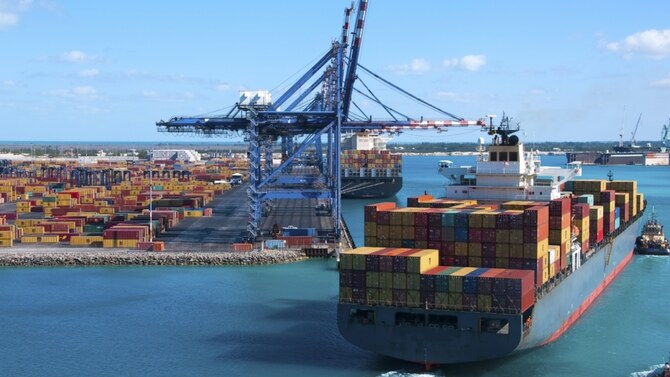
Dubai port trade record has been officially set, marking a historic achievement for the UAE and the wider Gulf Cooperation Council (GCC) region. With the city’s strategic ports reporting the highest-ever trade volume in GCC history, Dubai is cementing its position as a global trade and logistics powerhouse.
The recent statistics highlight the scale of the UAE’s maritime infrastructure, which has consistently demonstrated resilience and growth despite global economic fluctuations. Analysts say this milestone not only strengthens Dubai’s status as a regional hub but also reflects the broader ambitions of the UAE in trade, logistics, and economic diversification.
Record-Breaking Trade Volumes
According to Dubai’s Department of Ports and Trade Statistics, total cargo throughput across the emirate’s ports exceeded 90 million tons in 2025, surpassing the previous GCC record held by a neighboring country. This remarkable performance was driven by a combination of container shipments, bulk cargo, and high-value industrial imports and exports.
Key drivers of this record include:
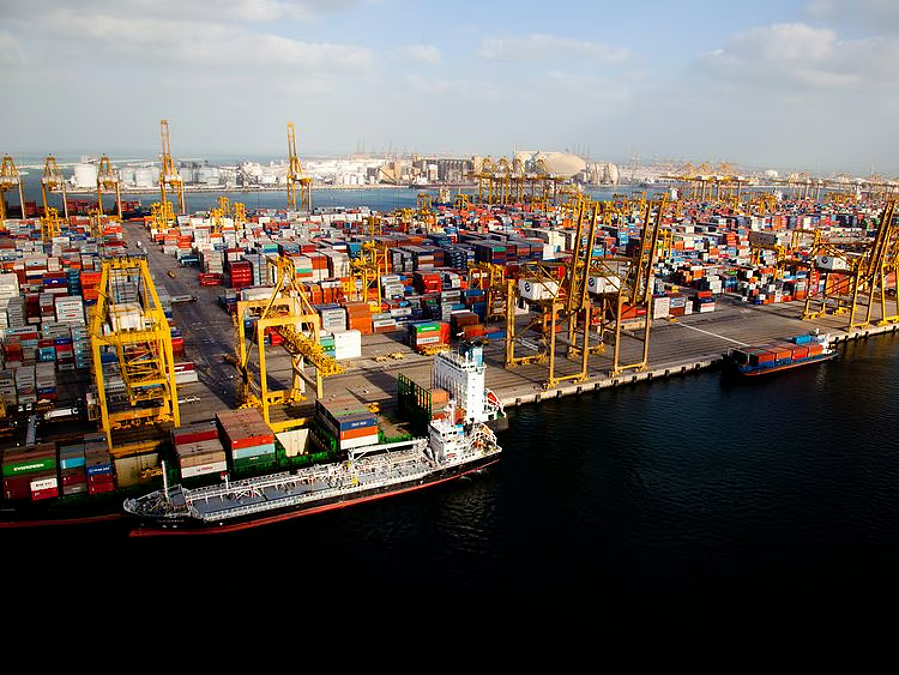
- Expansion of Jebel Ali Port, the largest man-made harbor in the region.
- Investment in cutting-edge port technologies, including automated container handling.
- Strategic partnerships with international shipping lines to streamline logistics operations.
Dubai’s ports are handling a mix of containerized goods, dry bulk, and liquid cargo, enabling diverse sectors, from manufacturing to retail, to thrive across the UAE and beyond.
Strategic Initiatives Behind the Record
Dubai’s leadership has invested heavily in modernizing its maritime infrastructure, emphasizing efficiency, sustainability, and global connectivity. Notable initiatives include:
- Port automation programs: Introducing AI-powered cranes and automated stacking systems to boost efficiency.
- Green shipping initiatives: Expanding renewable energy usage and reducing carbon emissions in port operations.
- Global trade alliances: Strengthening ties with major international ports to facilitate faster trade routes.
“These strategies have not only accelerated cargo handling but also positioned Dubai as the most advanced maritime hub in the GCC,” said a senior logistics official.
Impact on the GCC and Global Trade
Dubai port trade record is not just a local achievement—it has regional and global implications. As the largest contributor to GCC port trade, Dubai sets benchmarks for efficiency, safety, and sustainability.
- Economic diversification: The surge in port activity supports UAE’s shift away from oil dependency toward logistics, trade, and manufacturing.
- Job creation: Expansion of ports has generated thousands of new jobs across logistics, maritime, and ancillary industries.
- Regional competitiveness: Dubai’s ports are now attracting more international shipping lines, consolidating the UAE’s competitive edge over other GCC nations.
Trade experts argue that this record also enhances Dubai’s status as a transshipment hub, connecting markets in Asia, Europe, and Africa with unmatched efficiency.
Jebel Ali: The Jewel of Dubai Ports
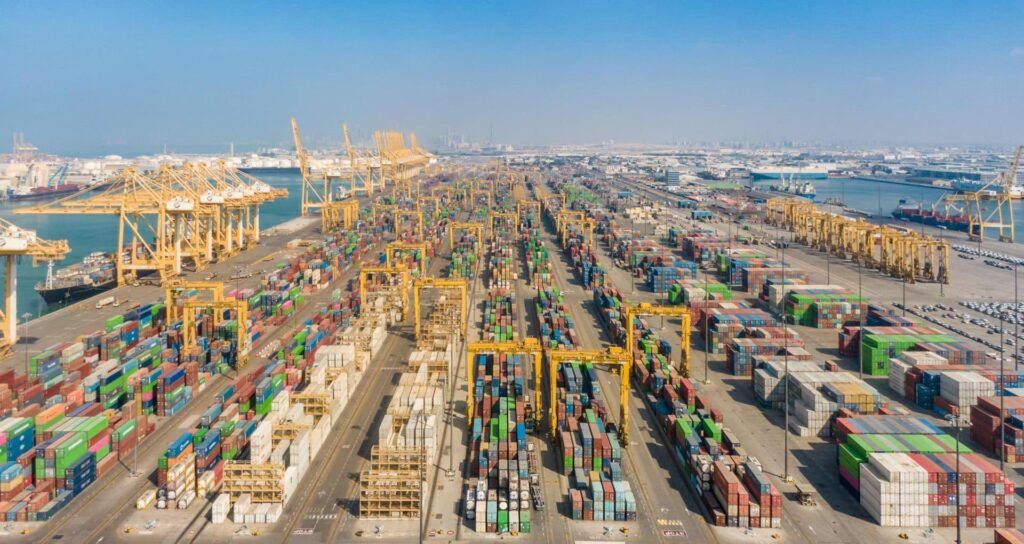
At the heart of this record lies Jebel Ali Port, ranked among the top 10 busiest ports in the world. With 67 berths and state-of-the-art container handling systems, it has become the engine driving Dubai’s maritime success.
Key highlights of Jebel Ali’s performance include:
- Handling over 14 million TEUs (twenty-foot equivalent units) annually, an all-time high for the GCC.
- Hosting advanced logistics parks that facilitate storage, processing, and redistribution of goods across the Middle East.
- Integration with Dubai Industrial City and Dubai South to streamline import-export operations.
Its strategic location near the Persian Gulf allows Dubai to serve as a gateway for regional and global trade, reinforcing the city’s reputation as a logistics epicenter.
Technological Advancements Fuel Growth
Dubai port trade record has been achieved in part due to the rapid adoption of technology across the maritime sector. Automation, AI, and digital tracking have transformed port operations, making them faster and more reliable.
Some notable innovations include:
- AI-powered cargo management systems that optimize loading and unloading schedules.
- Blockchain-enabled trade documentation to reduce paperwork and enhance transparency.
- Automated guided vehicles (AGVs) that transport containers efficiently across port terminals.
By embracing innovation, Dubai not only improves operational efficiency but also ensures that trade flows remain uninterrupted even during global disruptions.
Sustainability and Green Initiatives
Dubai’s ports are also leading the way in sustainable maritime practices, which have become crucial for attracting international businesses and investors. Measures include:
- Solar and wind energy integration across port facilities.
- Low-emission port vehicles to minimize carbon footprint.
- Advanced waste and water management systems to support eco-friendly operations.
These efforts align with the UAE’s broader Green Economy for Sustainable Development Strategy, positioning Dubai as a leader in environmentally responsible trade.
Benefits to the UAE Economy
The implications of this Dubai port trade record extend far beyond maritime logistics. Key economic benefits include:
- Boosting GDP: The increased trade volume contributes significantly to UAE’s non-oil GDP.
- Strengthening supply chains: Faster and more reliable port operations support manufacturing, retail, and e-commerce sectors.
- Attracting foreign investment: High trade efficiency and strategic connectivity make Dubai a prime location for international businesses.
Experts forecast that Dubai’s ports will continue to expand, maintaining growth rates of 5–7% annually, further consolidating the UAE’s economic influence in the region.
Dubai as a Global Logistics Hub
Dubai port trade record underscores the city’s role as a global logistics and trade hub. Its ports serve as critical links between Asia, Europe, and Africa, enabling efficient movement of goods across continents.
Factors contributing to this position include:
- Strategic geographic location at the crossroads of major maritime routes.
- Advanced infrastructure with deep-water berths to accommodate the largest cargo ships.
- Seamless integration with road, rail, and air transport networks for multi-modal logistics.
The combination of these factors ensures that Dubai remains competitive on the world stage, attracting both trade and tourism-related commerce.
Looking Ahead: Future Growth Prospects
Dubai’s port authorities have set ambitious targets to further expand trade capacity over the next decade. Plans include:
- Extending Jebel Ali and other major ports to handle mega-ships.
- Integrating smart technologies for predictive analytics in cargo management.
- Expanding free zones and logistics corridors to support regional trade.
These initiatives aim to increase trade volume by 20% by 2030, reinforcing Dubai’s leadership in global maritime commerce.
Conclusion
Dubai port trade record is more than just a numerical achievement; it represents a strategic triumph for the UAE, reflecting its commitment to innovation, sustainability, and global competitiveness.
This historic milestone solidifies Dubai’s position as the premier maritime hub in the GCC, offering unmatched efficiency, connectivity, and economic impact. With ongoing investments in technology, sustainability, and infrastructure, Dubai’s ports are poised to continue setting benchmarks for the world’s shipping and trade industries.
By combining visionary leadership with cutting-edge infrastructure, Dubai is not only breaking records but also shaping the future of global trade.
Do Follow Gulf Magazine on Instagram
Also read: Saleeg: 7 Amazing Facts About Saudi’s Comfort Dish

