

Qatar’s education system is undergoing a remarkable transformation. Once dominated by traditional chalk and talk methods, classrooms across the country are now buzzing with digital energy. At the heart of this revolution is Ed Tech an innovative blend of education and technology that’s reshaping how teachers teach and students learn.
From smart boards to AI driven platforms, the rise of EdTech in Qatar isn’t just a trend. It’s a long term shift powered by the country’s vision for a knowledge based economy, where innovation and learning go hand in hand.
Let’s explore how EdTech is creating a smarter, more engaging, and future ready classroom experience in Qatar.
A Digital Leap Toward Future Ready Learning
Qatar has been proactive in integrating technology into its national development plans, and education is a key area of focus. Schools in Doha and across the country are embracing digital tools like never before. Students now have access to interactive eBooks, smart devices, learning management systems (LMS), and immersive learning environments.
Classrooms are evolving into dynamic spaces where learning goes beyond textbooks. With EdTech, students are not just passive listeners they are active participants. From gamified quizzes to 3D virtual labs, the learning experience is becoming more hands on, personalised, and memorable.
Personalized Education for Every Student
One of the most impactful benefits of EdTech in Qatar’s classrooms is the ability to personalize learning. Every student learns at a different pace. Some are quick to grasp concepts, while others need more time. Traditional teaching often struggles to meet every learner’s needs but EdTech doesn’t.
With adaptive learning software, students receive content based on their level of understanding. If a child is struggling with a math concept, the system automatically provides simpler explanations or additional practice problems. Meanwhile, advanced students can move ahead without being held back.
Teachers, too, benefit from real time performance data. They can track progress, identify gaps, and provide targeted support all through a single digital dashboard.
Smarter Teachers, Stronger Classrooms
While students are at the center of the EdTech revolution, teachers are equally empowered. Technology is not replacing educators—it’s enhancing their role. Qatar’s teachers are being trained to use digital platforms that streamline lesson planning, automate assessments, and even track classroom behavior.
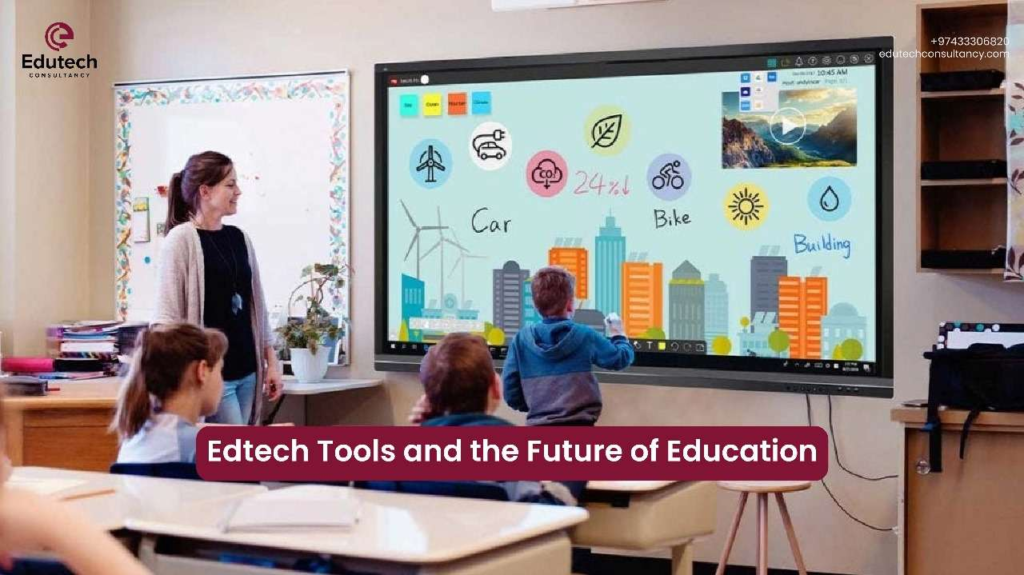
Smartboards, visual presentation tools, and interactive content allow teachers to deliver lessons in more creative and engaging ways. Virtual classrooms enable them to connect with students even outside school hours, helping foster a culture of continuous learning.
Professional development is also seeing a boost. Teachers can now access online courses, webinars, and communities of practice to stay updated with the latest teaching strategies and tech tools.

Breaking Barriers With Remote and Hybrid Learning
One of the most significant turning points for EdTech in Qatar came during the COVID 19 pandemic. Schools had to adapt rapidly to remote learning. This challenge pushed EdTech adoption into overdrive.
What started as a necessity has now become a choice. Many schools in Qatar are continuing to offer hybrid learning options mixing physical classes with digital content. This model allows for greater flexibility and ensures that learning doesn’t stop, even in emergencies.
Students who may be absent due to illness or travel can attend virtual sessions. Teachers can record lectures and make them available on learning platforms, so no one is left behind.
Making Learning Fun and Interactive
EdTech isn’t just about screens it’s about making learning fun and meaningful. In Qatar’s classrooms, digital storytelling, augmented reality (AR), and gamified learning are now common tools.
Imagine learning history by taking a virtual tour of ancient civilizations. Or understanding biology by exploring the human body in 3D. These kinds of experiences spark curiosity and help students retain information longer.
Game based learning apps encourage healthy competition, teamwork, and problem solving. Even difficult subjects become approachable when they’re delivered in an engaging, game like format. Students become more motivated, focused, and enthusiastic about learning.
Bridging Gaps and Promoting Inclusivity
Technology is proving to be a great equaliser in Qatar’s classrooms. Students with special educational needs (SEN) now have better support, thanks to assistive technologies like text to speech software, voice commands, and customisation interfaces.
Language barriers are also being addressed through real time translation tools and bilingual platforms. As Qatar hosts a multicultural student population, this is a game changer.
No matter the background or learning style, EdTech ensures every student gets a fair shot at success. It promotes inclusivity, boosts confidence, and helps close the achievement gap.
Preparing Students for a Tech Driven Future
Qatar’s Vision 2030 outlines a bold ambition to build a world class education system that prepares students for the future. And that future is digital.
EdTech helps students develop not only academic skills but also digital literacy, critical thinking, and problem solving abilities. These are the competencies they’ll need in tomorrow’s job market whether they choose to be engineers, designers, entrepreneurs, or researchers.
Coding platforms, robotics kits, and AI powered tools are now part of school curriculum. Students learn by doing, experimenting, and innovating just like they would in real world scenarios.
By embracing EdTech early on, Qatar is building a generation that’s not just tech savvy but also ready to lead in a global digital economy.
Parental Engagement in a Digital Age
Parents are no longer passive observers in their child’s education. Thanks to EdTech, they’re more involved than ever. Apps and portals allow parents to track attendance, view grades, communicate with teachers, and monitor progress all in real time.
This level of transparency builds trust and fosters stronger school home partnerships. When parents understand how their child is performing, they’re better equipped to support them academically and emotionally.
EdTech also makes it easier for working parents to stay connected with school activities, reducing stress and improving overall satisfaction with the education system.
Challenges Still Remain
Despite its many advantages, EdTech adoption in Qatar is not without challenges. Access to devices and internet connectivity, especially in rural areas or low income households, remains a concern. There’s also the issue of screen fatigue, digital distraction, and maintaining a healthy balance between online and offline learning.
Some teachers may still feel overwhelmed by the rapid pace of change or lack confidence in using new technologies. To ensure long term success, continued investment in infrastructure, training, and inclusive policies is essential.
Cyber security and data privacy are also important considerations, especially as more student information is stored and shared online.
A Bright Road Ahead
Qatar is on a promising path. By integrating EdTech into every layer of its education system, the country is laying the groundwork for smarter classrooms and smarter futures.
From personalised learning and virtual reality to teacher empowerment and parental involvement, the rise of EdTech in Qatar’s classrooms is nothing short of inspiring. It’s not just about gadgets and apps it’s about creating meaningful connections, fostering growth, and unlocking potential.
As the world moves toward an increasingly digital future, Qatar’s embrace of EdTech ensures that its students won’t just keep up they’ll lead the way.
Do follow Gulf Magazine on Instagram
Also Read – Qatar Space Technology Journey Sparks Global Innovation and Excitement

