

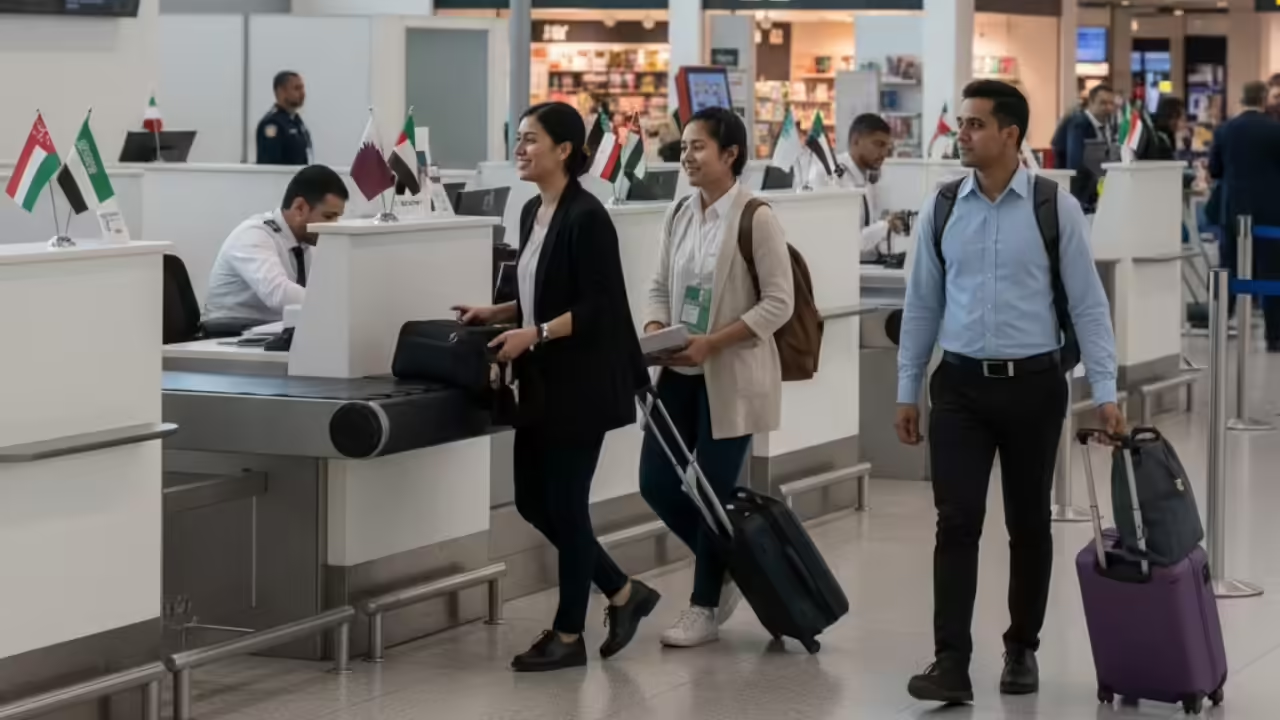
Travelers to the Gulf are set to experience a transformation like never before. Saudi Arabia has officially joined its neighboring countries – Bahrain, UAE, Qatar, Kuwait, and Oman – in introducing a pioneering travel system designed to eliminate arrival immigration checks. This innovative approach aims to make entry and exit processes smoother, faster, and more secure for visitors and residents alike.
The new system reflects a significant step toward modernizing airport experiences, reducing wait times, and enhancing traveler convenience. For a region that thrives on international business, tourism, and global connectivity, this initiative could reshape perceptions of Gulf travel.
How the Innovative Travel System Works
The system leverages state-of-the-art technology, including biometric verification, advanced facial recognition, and automated passport scanning. Travelers will be able to move through checkpoints without traditional immigration queues.
Passengers can pre-register their details through an official platform before arrival. Once verified, their information is linked to biometric data, allowing for rapid, automated clearance at the airport. The process is designed to maintain high security standards while significantly reducing the friction often associated with international travel.
Authorities emphasize that the system is built with privacy in mind. Personal data is encrypted and stored securely, ensuring that travelers’ information remains confidential while allowing for a smooth entry and exit experience.
Saudi Arabia’s Role in Regional Travel Transformation
By adopting this system, Saudi Arabia aligns itself with its Gulf neighbors in promoting regional cooperation and technological advancement. The Kingdom’s inclusion signals a shared vision for future-ready airports and a commitment to global best practices in travel management.
Saudi Arabia’s airports are expected to become hubs of efficiency and innovation. Travelers arriving in Riyadh, Jeddah, or Dammam will soon experience the same streamlined entry process that has been successfully implemented in other Gulf nations.
Officials in the Kingdom have highlighted that the initiative will not only enhance the visitor experience but also boost tourism and business travel. By minimizing delays and simplifying immigration processes, Saudi Arabia is positioning itself as a highly attractive destination for global travelers.
Regional Cooperation Strengthens Gulf Travel Network

The adoption of this system across multiple Gulf countries is a testament to the strength of regional cooperation. Governments in Bahrain, UAE, Qatar, Kuwait, Oman, and now Saudi Arabia, have collaborated to create a unified framework that standardizes travel procedures across borders.
Such collaboration ensures that travelers moving between these nations enjoy a consistent and seamless experience. Business executives, tourists, and expatriates will benefit from reduced paperwork, faster processing times, and greater predictability when moving across the Gulf.
Experts suggest that this type of regional integration can serve as a model for other parts of the world, demonstrating how technology and cooperation can simplify international travel while maintaining high security standards.
Benefits for Travelers
For international visitors, the new system promises a host of advantages:
- Time Efficiency: Dramatically shorter immigration lines mean travelers spend less time waiting and more time exploring or conducting business.
- Convenience: Automated verification allows for a frictionless entry experience, reducing stress and uncertainty.
- Enhanced Security: Advanced biometric systems provide a secure, reliable method for verifying identity.
- Consistency Across Borders: A standardized approach across Gulf nations ensures a smooth journey whether traveling for leisure or business.
Frequent travelers in the region are particularly excited about the potential for quicker airport processing, which can transform long-haul connections and reduce layover stress.
Economic and Tourism Impacts
Beyond convenience, the initiative is expected to have a positive economic impact. By making travel easier and more attractive, Gulf countries are likely to see increased tourism, more international conferences, and higher business engagement.
Hotels, airlines, and retail sectors in airports stand to benefit from the increased footfall and efficiency. Travelers spending less time in immigration lines are more likely to engage with airport amenities, creating additional revenue streams for service providers.
Moreover, by positioning themselves as pioneers in travel innovation, Gulf nations strengthen their international reputation, attracting both tourists and investors. The move underscores a commitment to modernization and technological leadership, aligning with broader national visions for economic diversification and global competitiveness.
Challenges and Considerations

Implementing such a transformative system is not without challenges. Authorities must ensure that technology infrastructure is robust and reliable, especially during peak travel times. Comprehensive staff training and passenger education will also be crucial to ensure smooth adoption.
Privacy and data security remain central concerns. While biometric and digital verification offers speed and convenience, authorities must maintain transparent policies on data use, storage, and access to build public trust.
Additionally, ensuring seamless coordination between multiple countries requires continuous monitoring and updates to the system. As the program evolves, it will need to adapt to changes in international travel regulations, security requirements, and technological advancements.
Looking Ahead: The Future of Gulf Travel
The adoption of this innovative travel system represents a major leap toward the future of air travel in the Gulf. Saudi Arabia’s participation not only demonstrates national commitment but also reinforces the region’s role as a leader in travel modernization.
In the years ahead, we can expect further technological enhancements, potentially including AI-driven travel assistants, more extensive use of biometric passports, and smart airport infrastructure that anticipates traveler needs.
The initiative also reflects a broader global trend toward digitalization and automation in travel, setting a benchmark for other regions to follow. By eliminating traditional immigration bottlenecks, Gulf countries are creating an environment where travel is not only efficient but also enjoyable and secure.
Conclusion
Saudi Arabia joining Bahrain, UAE, Qatar, Kuwait, and Oman in the innovative travel system marks a transformative moment for the Gulf. Travelers can look forward to a faster, safer, and more seamless experience, while the region benefits from economic growth, tourism expansion, and global recognition as a hub of travel innovation.
This initiative is more than a technological upgrade; it is a reflection of a forward-thinking approach to mobility, security, and international collaboration. With a shared vision for the future, Gulf countries are redefining what it means to travel, setting new standards that could shape the global travel landscape for years to come.
Do Follow Gulf Magazine on Instagram
Read More:- Oman’s Bold Visa-Free Move Unlocks Exciting Travel Freedom for Filipinos 2025

