

Luxury hospitality used to be sold with a handful of glossy images and a promise of five-
star service. Today, that is noise. Guests scroll past perfection every day. The brands that
stay are the ones that make people feel something before they ever book.
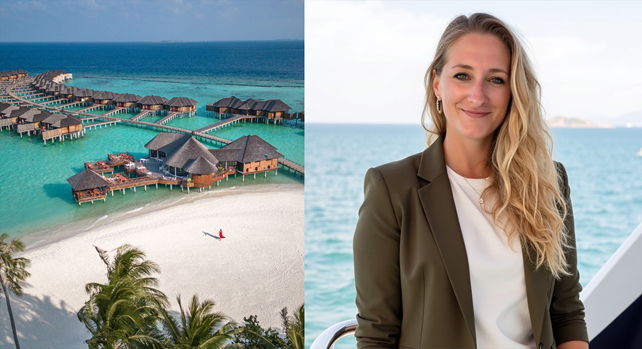
Industry specialist Melanie Hoefler sits exactly in that space and is leading a new wave of
AI PR in hospitality. Based in Abu Dhabi, she develops and runs hospitality brands under
the region’s development giant Modon Hospitality, and builds strategic communications for
a digital-first world. Here, discovery happens through algorithms, social feeds and AI
search, long before a guest lands on a booking engine. But how can hoteliers make use of
the current wave in AI search engine usage?
For Melanie as an industry leader in Marketing, PR has become a performance channel in
slow motion. A solid, crawlable listing is no longer just nice to show on a mood board. It is
an ROI machine in the background. It sits quietly on a reputable domain, gathering
authority, and keeps inserting a brand into AI answers months or years after publication.
That is why she treats PR strategy, SEO and AI awareness as one conversation. Which
stories are we feeding the machines. Which key phrases, locations and categories do we
want to be “picked up” for. Where do we need depth instead of just mentions. This thinking
moves PR out of the “soft” corner and into the core of digital acquisition.
Digital Brand Marketing In Hospitality: A Landscape In Flux
Hospitality marketing teams are working in an environment where platforms evolve faster than hotel owners. Static brand manuals designed in a pre-Instagram era are suddenly expected to function in TikTok loops, reels, live streams, newsletters and AI-generated travel suggestions.
Melanie’s answer is to design brands as living systems, not rigid sets of rules. The brand has to be clear enough to hold shape as it moves through very different formats, from a LinkedIn post about asset strategy to a drone shot of a beach club. At the same time, it has to be flexible enough so that creators, guests and influencers can interact with it without breaking it.
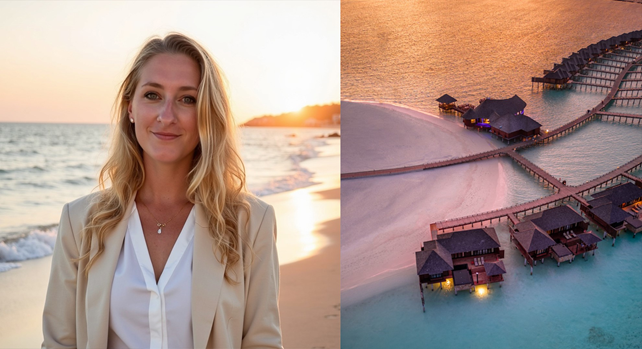
“I see my job as translating analogue brands into digital spaces in a way the limbic system understands first and the rational brain only later. When we design with colour, light and texture, we are not decorating a feed, we are triggering emotional shortcuts in the brain. A single frame can calm, energise or create desire long before a guest reads a caption. If we use colour perception consciously in our campaigns, the digital version of a brand does not feel like a copy, it feels like the same atmosphere the guest will walk into on property.”
This is where she leans into human behavior. People do not remember Pantone codes. They remember how a place made them feel, what role it played in their life, what problem it solved. Was it an escape from the city. A place to exhaust the kids. A venue where a promotion was celebrated. She builds campaigns around those human needs rather than around empty slogans.
Digital media, in Melanie’s view, is not just a distribution channel. It is the environment where a brand is perceived first, judged fastest and discussed most freely. That is why she pushes against “pretty but generic” content. If a guest cannot tell your overwater villa or dune camp apart from that of a competitor after three posts, the brand has failed before any AI does.
Seeing All Sides: Agency, Hotelier, Creator
What makes Melanie Hofler particularly effective in this landscape is how many sides of
the table she has sat at. She has worked in-house as a hotelier, responsible for
occupancy, rate and reputation. She has worked with and inside PR and communications
environments, learning how editors, journalists and media owners think. In parallel, she
has built her own presence as a creator, photographer and publisher, understanding what
it takes to capture and share content that audiences actually respond to.
This multi-angle experience means she intuitively understands the flow of a story from idea
to impact. She knows how a small detail in a brief affects a photographer’s day on site,
how that footage later influences a journalist’s impression of a property, and how both
ultimately change what an AI model surfaces in its suggestions.
Owners and GMs often experience her as a translator between worlds. She can explain
creative needs to financially minded stakeholders without resorting to vague language, and
she can explain commercial realities to creative teams without shutting down
experimentation. The goal is simple: a brand that looks strong, feels honest and performs.
Working With Human Perception, Not Against It
In many ways, Melanie’s work is about respecting how humans actually perceive brands.
People do not experience a hotel as a logo or a list of USPs. They experience small
sequences: the way a confirmation email is written, the feeling of the website on a phone,
the tone of the first WhatsApp message, the smell of the lobby, the design of the coffee
cup, the way a sunset is framed on Instagram later
She designs for those sequences. Analogue and digital are not separate worlds for her.
They are continuous touch points in the same narrative. A bill folder at the beach club and
a retargeting ad a week later are both part of the same psychological arc: “This place
understands who I am and what I like” or “This place is just shouting at me.”
This is also where her disruptive side shows. She is not interested in copying category
language or trends just because they are popular. If a phrase, colour or visual trope feels
overused, she would rather find a new angle rooted in the specific site, culture and use
case of the brand. The aim is always recognition that is earned, not borrowed.
Standing Out In A Saturated Market
There is no shortage of marketing talk in hospitality. What makes Melanie stand out to
those who work with her is a combination of creative instinct and operational realism. She
will discuss taste, light and texture, but she will also ask about RevPAR, F&B capture, OTA
mix and the actual behaviour of guests on property.
Her projects show a consistent pattern: analogue experiences that are thoughtfully
designed, translated into digital storytelling that makes you feel the place long before you
visit, and supported by a PR and AI-aware strategy that keeps those stories surfacing
where it matters.
In a landscape where digital hospitality marketing is becoming more technical and more
automated, she argues for something simple: brands that take human perception
seriously, use technology intelligently, and treat every story, listing and image as an asset
with long-term impact, not just a post to fill a calendar
For an industry that is still learning how to live inside AI, that kind of thinking is not just
attractive. It is necessary.
A New Kind Of Brand Discipline
The hospitality industry is entering a phase where technology is no longer a separate topic
from branding and PR. AI sits inside the discovery journey, not next to it. That reality can
feel overwhelming, or it can be used as leverage.
Professionals like Melanie Hoefler show what that leverage looks like. Work with human
perception rather than against it. Build brands that make sense in the real world before you
amplify them online. Use classic PR tools like “best of” lists and destination features with
new intent, seeing them as structured data that fuels AI recommendations. Design content
that allows people to almost taste and hear a place from a single frame.
For executives, the message is clear. Investing in well positioned, digitally intelligent PR
and in serious digital brand craft is no longer a “nice marketing upgrade”. It is a structural
decision about whether your hotel will still be visible at the point where guests now begin
to plan their trips.
Follow Melanie’s journey on instagram.
Also Read – Dar Al Uloom Schools Tabuk A Hub of Academic Excellence

