

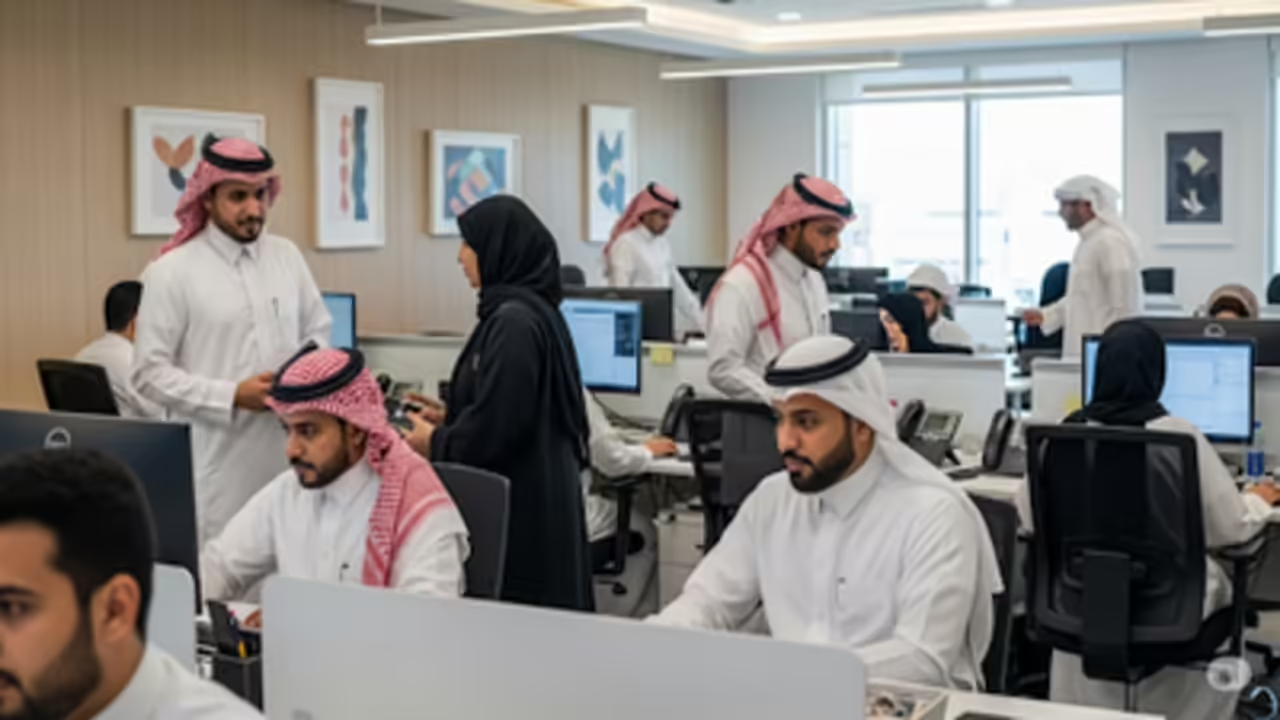
Saudi Arabia has quietly delivered one of the most unexpected labor market turnarounds in the global economy. Once defined by heavy public-sector employment and high joblessness among nationals, the Kingdom has surpassed its own Vision 2030 employment targets years ahead of schedule. Unemployment among Saudi nationals has fallen sharply, prompting authorities to raise the bar even higher with a new long-term goal of reaching 5 percent by 2030.
This achievement did not come from a single policy or headline-grabbing reform. Instead, it was the result of a deep restructuring of how the Saudi economy creates jobs, how businesses hire, and how citizens view work itself. Behind the statistics lies a story of ambition, adaptability, and a society in transition.
From Structural Challenge to National Priority
For decades, unemployment among Saudi nationals was a persistent challenge. A fast-growing population, skills mismatches, and a preference for public-sector jobs created pressure on the labor market. Private companies often relied on expatriate workers, while many young Saudis waited for government roles that could no longer absorb them.
Vision 2030 reframed this issue as a national priority rather than a structural inevitability. Employment was no longer treated as a byproduct of growth but as a core outcome to be engineered through policy, education, and private-sector engagement. The initial unemployment target set under Vision 2030 was ambitious for its time, yet it was designed with flexibility to evolve as reforms gained traction.
Labor Market Reforms That Changed the Rules
One of the most decisive moves was modernizing labor market regulations. Hiring Saudi nationals became more attractive for private employers through a mix of incentives, training support, and regulatory clarity. Wage subsidies and employment support programs reduced the cost and risk of onboarding new Saudi talent, especially young graduates and first-time job seekers.
At the same time, the labor market became more flexible. Part-time work, remote roles, and contract-based employment expanded, opening doors for students, caregivers, and professionals seeking non-traditional work arrangements. This flexibility allowed more Saudis to enter the workforce without the rigid expectations that once limited participation.

Saudization Becomes Smarter and Sector-Focused
Localization policies, often referred to as Saudization, were redesigned to be more targeted and practical. Instead of blanket quotas, authorities focused on specific sectors with strong growth potential such as retail, tourism, logistics, healthcare, finance, and technology.
This sector-based approach ensured that Saudi nationals were placed in roles with clear career pathways rather than symbolic positions. As a result, employment gains were more sustainable, and private companies began to see local talent as an asset rather than a compliance requirement.
Women Enter the Workforce in Record Numbers
One of the most transformative elements of Saudi Arabia’s employment success has been the rise in female workforce participation. Reforms enabling greater mobility, workplace inclusion, and professional development unlocked a vast pool of talent that had long been underutilized.
Women entered sectors ranging from finance and education to retail, hospitality, and technology. Flexible work models, childcare support initiatives, and evolving workplace norms made it easier for women to balance professional and personal responsibilities. This shift did more than lower unemployment figures; it reshaped household incomes and social expectations across the Kingdom.
Youth Employment and Skills Alignment
Saudi Arabia’s demographic profile skews young, making youth employment a decisive factor in overall labor market health. Authorities invested heavily in aligning education outcomes with private-sector needs. Vocational training, technical programs, and partnerships with employers ensured that graduates entered the job market with relevant, practical skills.
Internship programs, apprenticeship models, and on-the-job training initiatives bridged the gap between education and employment. For many young Saudis, the transition from classroom to career became smoother and faster, reducing long-term unemployment risks early in life.
The Private Sector Steps Into the Spotlight
A key reason unemployment fell faster than expected was the expanding role of the private sector. Vision 2030 accelerated diversification beyond oil, fueling growth in entertainment, tourism, sports, renewable energy, and digital services. Each new sector created thousands of jobs that did not exist a decade earlier.
Mega-projects and giga-developments generated employment not only during construction but also through long-term operations. Hospitality staff, event managers, engineers, designers, marketers, and technology specialists all found new opportunities as the economy broadened its base.

Entrepreneurship and Small Businesses Create Momentum
Small and medium-sized enterprises became powerful job creators. Access to financing improved, business licensing became simpler, and digital platforms reduced barriers to entry. Entrepreneurship was no longer viewed as risky or niche but as a viable career path.
Startups and family-owned businesses absorbed local talent, often offering more flexible and innovative work environments. This entrepreneurial momentum helped distribute employment growth beyond major corporations and into communities across the Kingdom.
Digital Transformation Fuels Job Creation
Digitalization played a quiet yet critical role in reducing unemployment. E-government platforms improved job matching, streamlined hiring processes, and provided real-time labor market data. Online training platforms enabled continuous upskilling, allowing workers to adapt as industries evolved.
Technology also created entirely new categories of jobs. Roles in data analysis, cybersecurity, software development, digital marketing, and e-commerce expanded rapidly, attracting young Saudis eager to work in future-oriented fields.
Economic Stability Builds Employer Confidence
Macroeconomic stability reinforced labor market gains. Fiscal reforms, improved efficiency, and diversified revenue streams strengthened confidence among investors and employers. As businesses felt more secure about long-term prospects, they were more willing to hire and expand operations.
This confidence effect cannot be overstated. Job creation thrives in environments where companies believe growth will be sustained, not temporary. Saudi Arabia’s clear policy direction under Vision 2030 sent that signal consistently.
Surpassing Targets and Raising the Bar
When unemployment among nationals fell faster than anticipated, policymakers made a bold choice. Instead of declaring victory, they raised expectations. The new target of 5 percent unemployment by 2030 reflects confidence in the reforms already delivered and ambition for what lies ahead.
This decision also signals a shift in mindset. Employment is no longer about meeting minimum thresholds but about building a resilient, inclusive labor market that can withstand global shocks and technological change.
Human Impact Beyond the Numbers
Behind every percentage point drop in unemployment are real lives transformed. Families gained financial security, young professionals found purpose, and communities experienced renewed optimism. Work became more than income; it became a pathway to contribution and dignity.
As more Saudis participate in the workforce, the social fabric strengthens. Skills circulate within the economy, productivity rises, and a shared sense of progress takes hold. These human outcomes are as significant as any economic metric.
The Road to 2030 and Beyond
Reaching a 5 percent unemployment rate will not be effortless. Global economic uncertainty, automation, and shifting skills requirements present ongoing challenges. However, Saudi Arabia’s experience so far demonstrates an ability to adapt policies quickly and respond to emerging trends.
Continued investment in education, innovation, and private-sector collaboration will be essential. Equally important will be ensuring that job quality keeps pace with job quantity, offering meaningful careers rather than short-term placements.
A Model of Accelerated Transformation
Saudi Arabia’s employment success story stands as one of the clearest indicators of Vision 2030’s momentum. By treating unemployment as a solvable challenge rather than a fixed condition, the Kingdom rewrote expectations for what economic reform can achieve in a relatively short time.
The journey is still unfolding, but the direction is clear. With bold targets, human-centered policies, and sustained commitment, Saudi Arabia has shown that rapid labor market transformation is not only possible but repeatable.
Do follow Gulf Magazine on Instagram.
Also Read – GCC Unified Visa: One Permit to Travel the Gulf

