

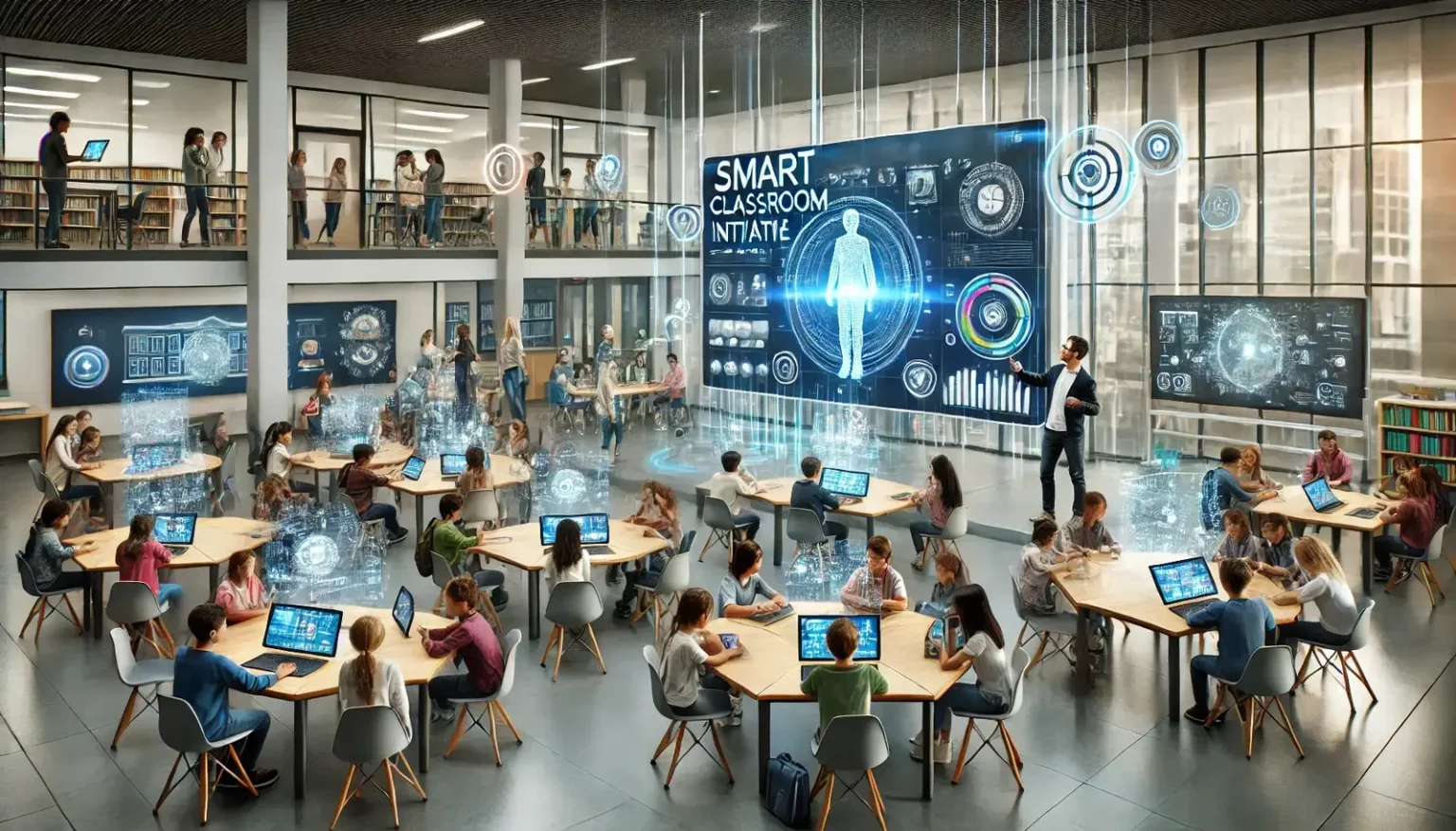
Education has always been the foundation of progress in any nation, and in recent years, Oman has made remarkable strides to strengthen its learning environment. With the rise of digital technology, the traditional blackboard and chalk are being replaced with interactive boards, digital projectors, and online learning platforms. Smart classrooms are no longer just a dream but a reality in many Omani schools. These modern learning spaces are not just about fancy technology; they are about creating an engaging, interactive, and highly effective environment that helps students perform better. The impact is already visible as Omani students show improved learning outcomes, stronger motivation, and higher adaptability to the challenges of the modern world.
What Are Smart Classrooms?
Smart classrooms are advanced learning spaces that integrate technology into teaching. Instead of relying solely on textbooks, teachers can use projectors, interactive whiteboards, tablets, and digital resources to explain complex topics. Imagine a history class where instead of only reading about ancient civilizations, students can watch 3D models of ruins or take a virtual tour of historical sites. Similarly, in a science class, experiments that are otherwise dangerous or time-consuming can be demonstrated virtually with complete safety. These innovations make lessons more relatable and enjoyable, ensuring that students not only learn but also remember concepts effectively.
Transforming the Teaching-Learning Experience
For decades, teaching in Oman, like in many other countries, followed a traditional model where the teacher spoke, and students listened. This method often made learning passive and monotonous. Smart classrooms are breaking this cycle by encouraging active participation. Teachers now use interactive quizzes, videos, and animations to make their lessons more dynamic. Students can answer questions instantly using digital tools, and teachers can track their understanding in real-time. This creates a more personalized experience where no student is left behind.
Moreover, teachers find it easier to manage classrooms with smart technology. With access to vast online libraries and resources, they can prepare engaging lesson plans without being limited to textbooks. This not only saves time but also raises the quality of education.
Boosting Student Engagement
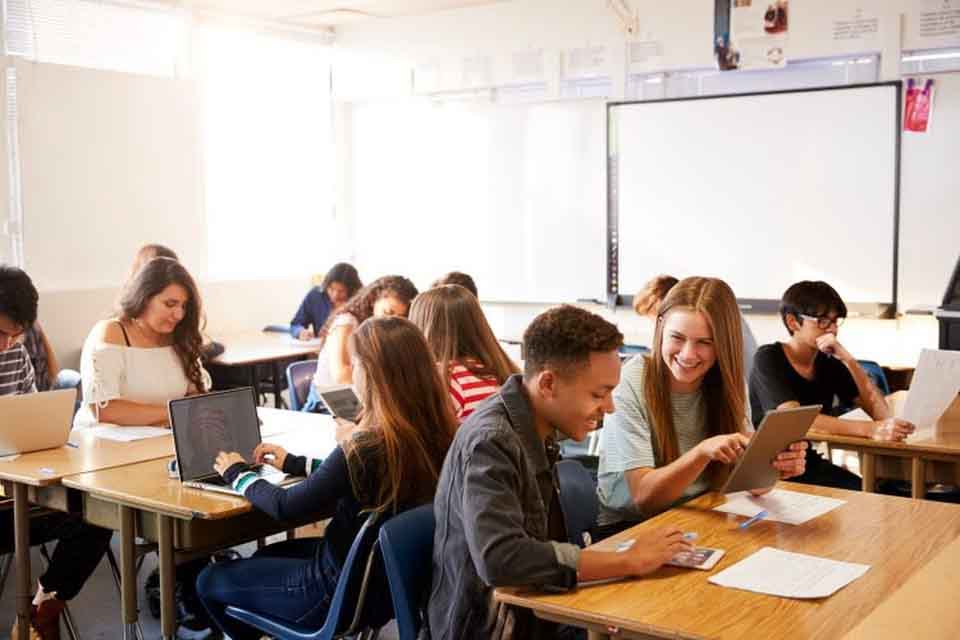
One of the biggest challenges in education has always been maintaining student interest. Young learners often get bored with long lectures, and as a result, their performance suffers. Smart classrooms solve this problem by making lessons interactive and visually appealing. For example, a geography lesson about volcanoes becomes fascinating when students can watch a live 3D simulation of an eruption. Similarly, mathematics becomes less intimidating when formulas are explained using colorful diagrams and real-life applications.
Students in Oman are responding positively to this shift. Many report that they feel more connected to their lessons and are more eager to participate in classroom activities. When students are engaged, their ability to focus, understand, and retain information improves significantly.
Encouraging Collaborative Learning
Smart classrooms are not just about individual learning; they also promote collaboration. Group projects become easier when students can work together on shared digital platforms. For instance, multiple students can contribute ideas on an interactive whiteboard or brainstorm solutions for a science project using online collaboration tools. This creates a culture of teamwork, communication, and problem-solving skills that are essential in today’s competitive world.
In Oman, where community values and cooperation hold cultural importance, smart classrooms align perfectly with the social fabric. They encourage students to respect each other’s opinions and work towards common goals, enhancing both their academic performance and personal growth.
Improving Academic Performance
The true measure of any educational tool lies in its impact on student performance. Early observations in Oman indicate that smart classrooms are helping students achieve better results. Interactive methods simplify difficult concepts, making them easier to grasp. Students who previously struggled with subjects like mathematics or science find them less intimidating when explained with visual aids and simulations.
Additionally, the availability of recorded lessons ensures that students can revisit difficult topics anytime. This flexibility reduces the stress of keeping pace with the class and allows slower learners to catch up without feeling left out. The overall outcome is a more balanced learning environment where students of different abilities can thrive.
Building Digital Literacy
Another significant impact of smart classrooms is the development of digital literacy. In today’s world, being comfortable with technology is as important as reading and writing. By integrating technology into daily learning, students in Oman are becoming more confident in using digital tools. This early exposure prepares them for higher education and future careers, where digital competence is a must.
Smart classrooms also encourage creativity. Students can design presentations, create digital projects, and explore subjects beyond the standard curriculum. These experiences nurture innovation and problem-solving abilities that go far beyond textbooks.
Bridging the Urban-Rural Gap
In Oman, like in many countries, there has been a gap between urban and rural education facilities. Students in major cities often had access to better resources, while rural students faced limitations. Smart classroom initiatives are helping to bridge this gap. Digital resources can reach even the most remote areas, ensuring that students across the country receive quality education. Recorded lessons, online tutorials, and interactive resources can be shared with schools that lack specialized teachers, giving every student an equal opportunity to learn.
Empowering Teachers
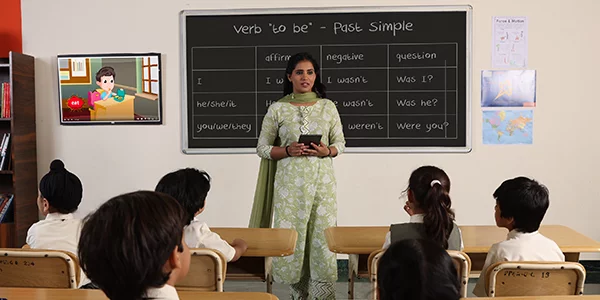
While much focus is on students, smart classrooms also empower teachers. Many teachers in Oman initially worried that technology might replace their role, but in reality, it has made their job more efficient. With smart tools, they can better assess student progress, identify learning gaps, and provide targeted support. Instead of spending hours on manual grading or repetitive tasks, they can dedicate more time to creative teaching and mentoring.
Training programs for teachers have also improved their digital skills, boosting their confidence and professional growth. As teachers become more tech-savvy, they inspire students to embrace technology positively.
Overcoming Challenges
Of course, the journey is not without challenges. Implementing smart classrooms requires investment in infrastructure, training, and maintenance. Some schools in remote areas may face issues like poor internet connectivity or lack of devices. Additionally, there is a need to balance technology with traditional methods to ensure that human interaction and cultural values are not lost.
However, Oman’s commitment to education reform shows that these challenges are being addressed steadily. With continued support, smart classrooms can become the norm across the country, not just in select schools.
Preparing Students for the Future
The modern world demands skills that go beyond memorization. Critical thinking, creativity, communication, and digital literacy are now the pillars of success. Smart classrooms in Oman are equipping students with these very skills. By encouraging interactive learning, problem-solving, and innovation, they are preparing young Omanis to compete in global education and job markets.
Students are becoming more confident, independent, and curious learners. They are no longer passive recipients of knowledge but active participants in their educational journey. This shift not only boosts academic performance but also builds character and resilience.
Conclusion
The impact of smart classrooms on student performance in Oman is undeniably transformative. From improving academic results and boosting engagement to developing digital literacy and bridging educational gaps, the benefits are immense. More importantly, these classrooms are nurturing a generation of confident, skilled, and future-ready learners who can carry Oman’s vision of progress forward.
As technology continues to evolve, the possibilities for smart classrooms will only expand. The future of education in Oman looks bright, where every student, regardless of background, has the tools and opportunities to succeed. Smart classrooms are not just about gadgets; they are about creating a smarter, stronger, and more successful generation.
Do follow Gulf Magazine on Instagram.
Also Read – Oman’s Inspiring Steps to Empower Teachers with Lifelong Learning

