

The Bahrain National Museum stands as one of the most important cultural landmarks in the Kingdom, offering a deeply human and immersive look into Bahrain’s past and present. Located near Al Muharraq, the historic heart of the country, the museum is not just a place to observe artifacts but a space to understand how history, culture, and everyday life in Bahrain have evolved over centuries. For locals, it is a place of pride. For visitors, it is often the first meaningful introduction to the soul of Bahrain.
Overlooking calm waters and designed with simplicity and elegance, the museum creates an immediate sense of openness. It invites curiosity without overwhelming the visitor, making history feel accessible, personal, and alive rather than distant or academic.
The Significance of Bahrain National Museum
The Bahrain National Museum is considered the kingdom’s primary museum of national history. It brings together archaeology, folklore, crafts, traditions, and social life under one roof, offering a complete narrative of Bahrain’s identity. Unlike many museums that focus only on ancient artifacts, this museum balances the old with the familiar, showing how the past continues to shape modern Bahraini society.
Its proximity to Al Muharraq adds another layer of meaning. Al Muharraq is known as the former capital and cultural heartbeat of Bahrain, and the museum acts as a bridge between the historical city and contemporary Bahrain. Together, they form a cultural corridor that tells a continuous story of trade, tradition, resilience, and community.
Architectural Design That Reflects Calm and Clarity
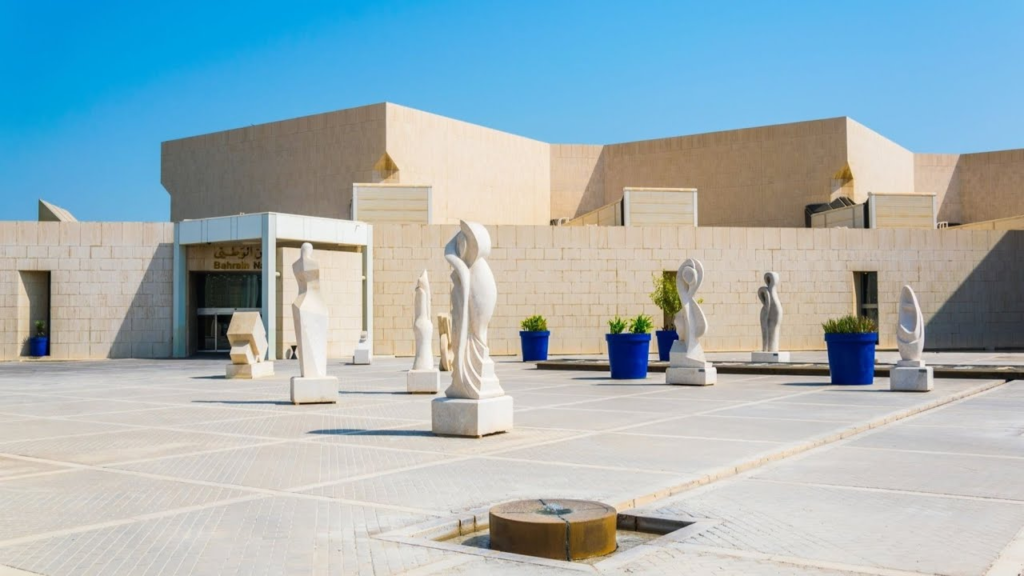
The design of the Bahrain National Museum is intentionally understated. Clean lines, open courtyards, and natural light create a peaceful environment where visitors can move comfortably from one gallery to another. The building does not compete with the exhibits; instead, it enhances them.
Water features surrounding the museum reflect Bahrain’s historical connection with the sea, reminding visitors of the role maritime trade, pearling, and fishing played in shaping the nation. The architecture itself feels welcoming, making it easy to spend hours exploring without fatigue.
Archaeology Galleries: Tracing Bahrain’s Ancient Roots
One of the most compelling sections of the museum is its archaeological galleries. These spaces take visitors back thousands of years, showcasing Bahrain’s role as the ancient Dilmun civilization, once known as a major trading hub connecting Mesopotamia and the Indus Valley.
Stone tools, seals, pottery, and burial artifacts reveal a society that was organized, skilled, and deeply connected to global trade routes. The presentation is clear and thoughtful, helping visitors understand not just what these objects are, but why they mattered in daily life.
Dilmun Civilization and Its Legacy
The Dilmun era is often described as Bahrain’s golden chapter in ancient history. Through carefully curated displays, the museum explains how Dilmun became a center of commerce and culture. Maps, reconstructions, and explanatory panels make this ancient civilization feel tangible and relevant, even to those unfamiliar with regional history.
Traditional Life and Folklore Exhibits
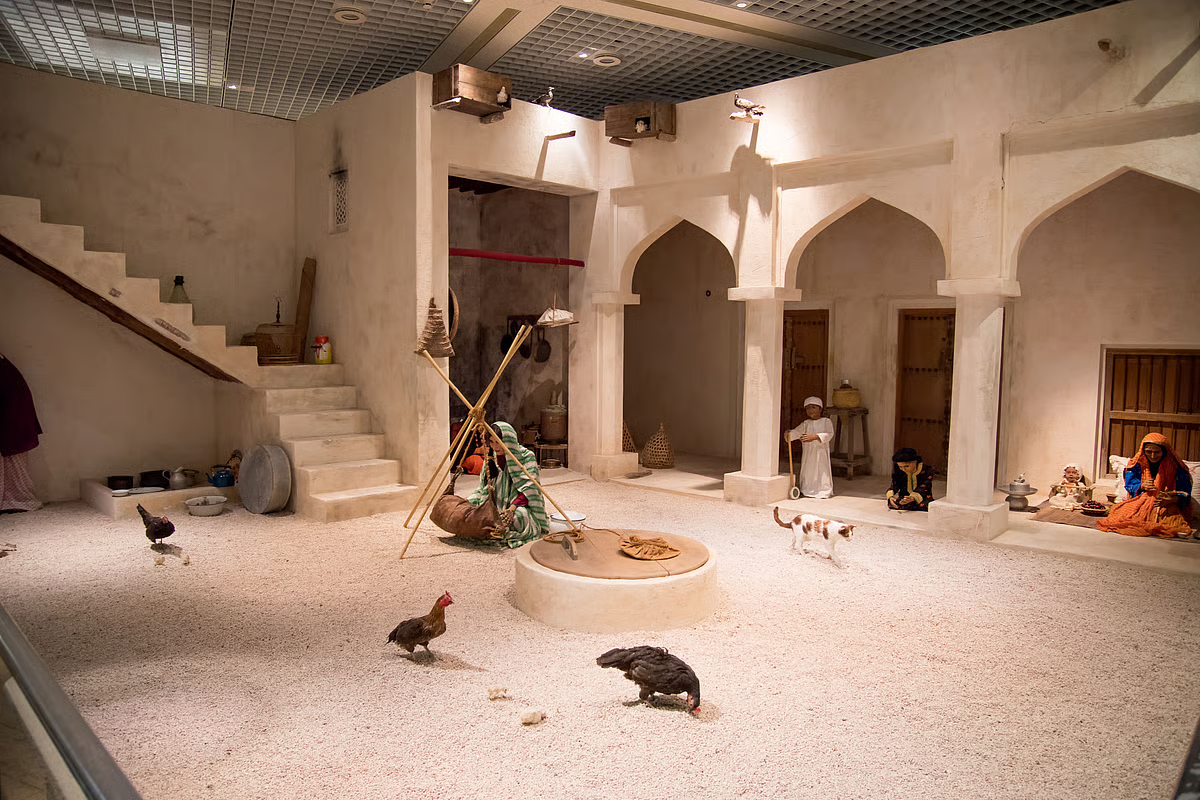
Moving beyond archaeology, the museum transitions into exhibits focused on traditional Bahraini life. These galleries are often the most emotionally engaging, as they recreate everyday scenes from the past. Visitors can walk through life-sized dioramas showing traditional homes, markets, and villages.
These displays focus on family life, hospitality, and community values, which remain central to Bahraini culture today. The use of realistic settings and natural poses helps visitors imagine what daily life once felt like, rather than just reading about it.
Crafts, Clothing, and Daily Tools
Another highlight is the collection of traditional clothing, jewelry, and household tools. These items reflect not only aesthetic beauty but also social values, climate adaptation, and craftsmanship passed down through generations. Each piece tells a story of identity, pride, and practicality.
The Pearl Diving Heritage of Bahrain
Pearling holds a special place in Bahrain’s history, and the museum dedicates significant space to this heritage. Before the discovery of oil, pearling was the backbone of the economy and a defining aspect of life along the coast.
Through artifacts such as diving tools, boats, and trade records, the museum explains the physical challenges and emotional sacrifices of pearl divers. This section is particularly moving, as it honors the resilience and courage of those who risked their lives to support their families and communities.
Human Stories Behind the Pearls
Rather than focusing only on objects, the museum highlights the human experience of pearling. Songs, traditions, and rituals associated with pearl diving are presented to show how this profession shaped social bonds and cultural expression.
Connection to Al Muharraq’s Cultural Landscape
The museum’s location near Al Muharraq enhances its cultural importance. Al Muharraq is known for its traditional architecture, historic houses, and heritage trails. Visiting the museum often inspires people to explore Al Muharraq itself, creating a deeper and more complete understanding of Bahrain’s history.
The stories told inside the museum are reflected in the streets of Al Muharraq, where old homes, mosques, and marketplaces still stand. Together, they offer a living narrative rather than a static historical account.
Educational Role and Community Impact
Beyond exhibitions, the Bahrain National Museum plays a vital educational role. It serves as a learning space for students, researchers, and families, helping new generations connect with their roots. Interactive displays and clear explanations make complex history easy to understand for all age groups.
Workshops, cultural programs, and guided tours further strengthen the museum’s role as a community hub. It is not just a place to visit once, but a space people return to for reflection, learning, and inspiration.
A Humanized Experience for Every Visitor
What truly sets the Bahrain National Museum apart is its human approach to storytelling. Instead of presenting history as distant or grand, it focuses on real lives, shared experiences, and cultural continuity. Visitors often leave with a sense of emotional connection, feeling that they have not just learned about Bahrain, but understood it.
Whether someone is a first-time visitor, a long-term resident, or a Bahraini national, the museum offers something meaningful. It respects the past while speaking to the present, creating a sense of belonging and appreciation.
Why Bahrain National Museum Matters Today
In a rapidly changing world, the Bahrain National Museum stands as a reminder of identity and continuity. It preserves stories that might otherwise fade and presents them in a way that feels relevant and personal. Its presence near Al Muharraq strengthens Bahrain’s cultural narrative, linking ancient history with living heritage.
The museum is more than a collection of artifacts. It is a reflection of Bahrain’s journey, shaped by trade, tradition, resilience, and openness to the world. For anyone seeking to understand the heart of the kingdom, the Bahrain National Museum remains an essential and deeply rewarding destination.
Do Follow Gulf Magazine on Instagram
Read More:- Hala Plaza Redefines Family Fun With Ice, Shopping, Joy 2026

