

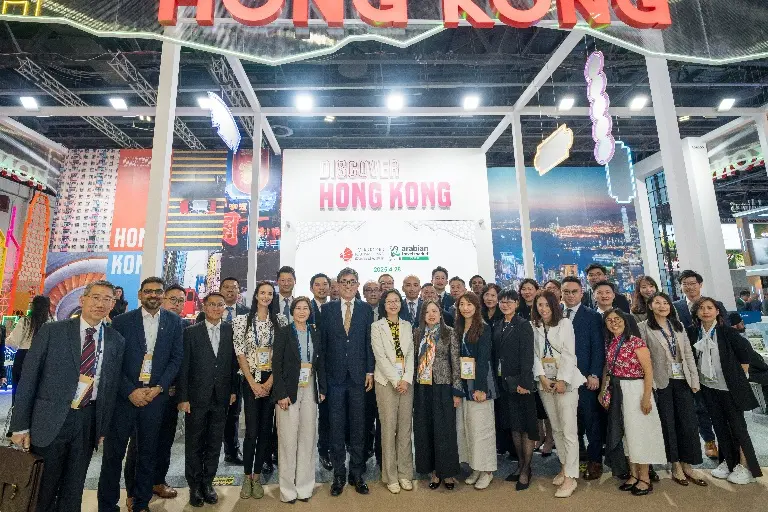
Economic Partnership a groundbreaking move to strengthen Hong Kong’s economic relations with the Gulf region, Chief Executive John Lee Ka-chiu has launched a series of high-level discussions and initiatives aimed at enhancing trade and investment with Kuwait. Leading a prominent delegation consisting of over 50 business leaders, entrepreneurs, and financial experts from Hong Kong and mainland China, Lee’s visit marks a significant step towards reinforcing Hong Kong’s position as a global financial hub. With a keen focus on developing deeper ties with the Middle East, the delegation’s arrival signals the city’s commitment to international economic growth and cooperation.
Strengthening Bilateral Relations
Lee’s visit to Kuwait began with high-level talks with key Kuwaiti officials, including Emir Sheikh Meshal Al-Ahmad Al-Jaber Al-Sabah, Crown Prince Sheikh Sabah Al-Khaled Al-Hamad Al-Sabah, and Acting Prime Minister Sheikh Fahad Yousuf Saud Al-Sabah. These discussions were aimed at solidifying the foundation for closer cooperation across various sectors, with a specific emphasis on trade, investment, and cultural exchanges.
During the meetings, Lee underscored Hong Kong’s role as a “super connector” between East and West. He highlighted the city’s unique advantages, including its world-class financial infrastructure, free trade policies, and its strategic position as a gateway to China. Hong Kong’s openness to collaboration in the fields of commerce, technology, and innovation made it a valuable partner for Kuwait, which is increasingly looking to diversify its economy away from oil reliance.
Paving the Way for Free Trade Agreements
One of the key outcomes of Lee’s visit was the proposal to initiate negotiations for a Free Trade Agreement (FTA) between Hong Kong and the Gulf Cooperation Council (GCC) countries. Recognizing Kuwait’s influential position as the current chair of the GCC, Lee sought Kuwaiti support for advancing these talks. The FTA would enhance economic integration, reduce trade barriers, and open new avenues for bilateral collaboration between Hong Kong and the GCC nations.
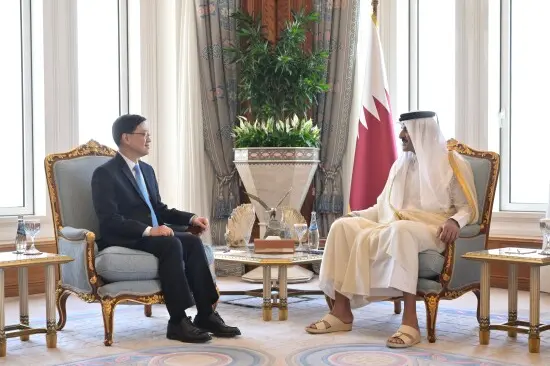
By securing the support of Kuwait, Hong Kong aims to enhance its trade relationships with the Gulf region, enabling smoother exchanges of goods, services, and investments. This FTA would be a major milestone, not only facilitating trade between Hong Kong and Kuwait but also strengthening the broader economic links between the East and the West. Both regions stand to benefit from a more integrated and efficient trade framework.
Memoranda of Understanding: A Step Toward Deeper Collaboration
In a bid to further formalize these emerging ties, two key Memoranda of Understanding (MoUs) were signed during the visit. The first MoU, between Invest Hong Kong and the Kuwait Direct Investment Promotion Authority, focuses on promoting direct investment flows between the two regions. This agreement is a step toward fostering mutual growth through cross-border investments, with Hong Kong positioned as an attractive hub for Kuwaiti investors seeking opportunities in Asia.
The second MoU, signed between the Hong Kong Trade Development Council and the Kuwait Direct Investment Promotion Authority, aims to bolster trade relations and create new business opportunities. This agreement paves the way for enhanced cooperation on trade missions, market access, and joint promotional events, helping both regions tap into new markets and resources. These initiatives are expected to lead to the creation of stronger economic ties and increased business ventures across the two regions.
Exploring Investment Opportunities
One of the most promising aspects of Lee’s visit was his encouragement for Kuwait’s sovereign wealth fund to consider increasing its investments in Hong Kong. With its robust financial systems, ease of doing business, and proximity to China’s vast markets, Hong Kong is an attractive destination for international investors. Lee invited Kuwait’s investment community to explore opportunities in Hong Kong, including potential projects in areas such as technology, real estate, and green energy.
The delegation also extended an invitation for the Kuwaiti investment community to establish a presence in Hong Kong by setting up an official investment office. Such an office would facilitate smoother communication, streamline business operations, and provide better access to Hong Kong’s highly developed infrastructure and business networks. This move demonstrates Hong Kong’s commitment to enhancing its reputation as a global investment hub and further solidifying its role as a gateway to Asian markets.
Cultural and Educational Exchanges
While the economic focus of Lee’s visit was paramount, cultural diplomacy also played an important role in the discussions. Lee emphasized the significance of fostering cultural exchanges between Hong Kong and Kuwait as part of a broader strategy to build a deeper understanding and connection between the two societies. Cultural initiatives, including joint art exhibitions, theater performances, and educational exchanges, were discussed as potential projects to strengthen ties between Hong Kong and Kuwait on a more human level.
Both Hong Kong and Kuwait have rich cultural traditions, and their mutual interest in arts, education, and history provides fertile ground for future collaborations. Lee expressed his vision of enhanced educational exchanges between universities, as well as initiatives to promote language studies and cultural awareness in both regions. These initiatives would not only deepen mutual respect but also serve as a platform for greater social and diplomatic cooperation.
Looking Ahead: A Vision for the Future
As Hong Kong continues to navigate its post-pandemic recovery and reposition itself on the global stage, its deepening ties with Kuwait represent a strategic and timely move. By fostering bilateral partnerships that span trade, investment, education, and culture, Hong Kong is not only opening doors for new economic opportunities but also reinforcing its role as a central player in global affairs.
The future of Hong Kong-Kuwait relations looks promising. The ongoing negotiations for a Free Trade Agreement, paired with the MoUs signed during Lee’s visit, lay the foundation for a prosperous and mutually beneficial partnership. In a world that is increasingly interconnected, such collaborations between East and West are vital for continued growth and innovation.
Conclusion
Chief Executive John Lee’s visit to Kuwait marks the beginning of an exciting new chapter in Hong Kong’s international relationships. Through strategic investments, trade agreements, and cultural exchanges, the two regions are poised to benefit from closer ties. As the Hong Kong government continues to explore and implement new avenues for economic and diplomatic cooperation, the fruits of this partnership with Kuwait could pave the way for even stronger connections with the broader Middle East and beyond. By taking decisive action now, Hong Kong is positioning itself as a vital bridge in the global economy, ready to seize the opportunities that lie ahead.

