

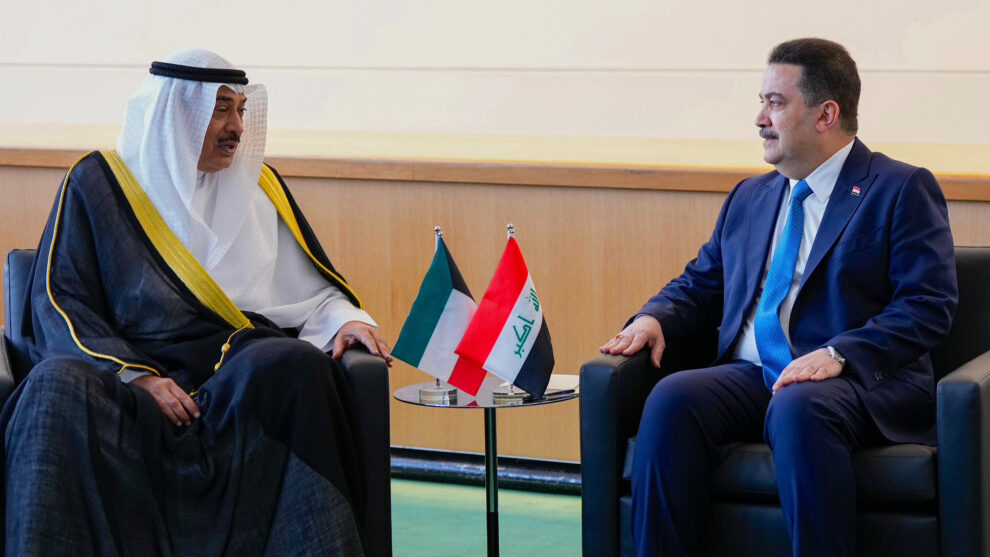
Iraq’s Supreme Court Faces Pressure to Reinstate Maritime Deal with Kuwait
In a significant and growing development in Iraq-Kuwait relations, Iraq’s Supreme Federal Court is now under increasing pressure to reconsider its controversial 2023 decision, which annulled the Khor Abdullah maritime agreement with Kuwait. This long-standing deal, first signed in 2012 and ratified in 2013, had served as a key framework to regulate maritime navigation in the Khor Abdullah waterway. This waterway is one of Iraq’s primary access routes to the Arabian Gulf and plays a crucial role in the nation’s trade and economic interests. Now, amid ongoing political debate, the future of the agreement hangs in the balance.
The relationship between Iraq and Kuwait has long been marked by tension over territorial disputes, but the Khor Abdullah agreement was seen as a significant step toward regional cooperation. However, its annulment by Iraq’s top court in 2023 has reignited contentious debates surrounding national sovereignty, economic development, and foreign relations.
Background of the Agreement
The Khor Abdullah waterway, which separates Iraq’s Al-Faw Peninsula from Kuwait’s Bubiyan Island, is vital for Iraq’s economic future. This narrow but strategically important passage leads to the Arabian Gulf and is essential for facilitating the transportation of goods and oil. Iraq, which has limited access to the sea, relies heavily on the Khor Abdullah waterway to facilitate maritime trade and exports, particularly for its oil industry.
The agreement between Iraq and Kuwait was initially signed in 2012 after years of negotiations. It aimed to regulate and facilitate safe navigation in the Khor Abdullah, thereby allowing for the free flow of goods while ensuring that both countries could maintain their sovereignty over the waterway. Despite its practical benefits, the deal was met with skepticism by various political factions in Iraq. Some argued that it compromised Iraq’s territorial integrity, particularly concerning the waterway’s sovereignty. These political concerns have persisted over the years, particularly after the court’s annulment of the deal in 2023.
Court’s 2023 Decision
The pivotal moment in this ongoing saga occurred in September 2023, when Iraq’s Supreme Federal Court ruled that the maritime agreement with Kuwait was unconstitutional. The court’s decision was based on the claim that the law ratifying the agreement had not been approved by a two-thirds majority in Iraq’s parliament, which is a constitutional requirement for all international treaties and agreements. This ruling effectively nullified the maritime deal, causing uncertainty and confusion over the legal status of the maritime border between Iraq and Kuwait.
The decision of Iraq’s Supreme Federal Court was met with mixed reactions. While the annulment was seen by some as a necessary step to preserve Iraq’s sovereignty, it also raised concerns about the future of Iraq’s economic interests, particularly its ability to access the Arabian Gulf for oil exports and maritime trade.
Recent Developments
Fast forward to April 2025, and the situation has taken a new turn. A group of influential Iraqi lawmakers has petitioned the Supreme Federal Court to revisit its 2023 decision and reinstate the Khor Abdullah agreement. Their argument is centered on the economic benefits of reactivating the deal, particularly Iraq’s long-term access to the Gulf for trade and oil exports. With Iraq facing significant economic challenges, the group believes that maintaining a stable and cooperative relationship with neighboring Kuwait is vital to Iraq’s economic growth and stability in the region.
The petitioners have highlighted the strategic importance of the Khor Abdullah waterway as a major trade route, which has become even more crucial given Iraq’s reliance on oil exports. Additionally, they stress that a stable relationship with Kuwait is key to ensuring peace and cooperation in the region. The move to reinstate the agreement is being backed by those who believe that it will open up economic opportunities for Iraq and help resolve tensions that have long simmered between the two nations.
Political and Public Reactions
As expected, the debate surrounding the possible reinstatement of the Khor Abdullah maritime agreement has sparked intense political reactions within Iraq. Supporters of the deal argue that it is essential for Iraq’s economic prosperity and regional cooperation. They point to the fact that Iraq has limited access to the Gulf and that the agreement helps ensure a steady flow of trade and oil exports, crucial components of the Iraqi economy. Many see the agreement as a way to build trust and positive relations with Kuwait, which has been a key regional player in the Gulf.
On the other hand, opponents of the agreement strongly oppose any attempt to reinstate it, viewing it as a potential compromise to Iraq’s sovereignty. These critics argue that Iraq’s territorial waters and maritime borders should be under full Iraqi control and that any agreement that limits this control is a threat to Iraq’s national integrity. For these opponents, the annulment of the agreement by the Supreme Federal Court was a necessary move to protect Iraq from further encroachment on its sovereignty. They believe that restoring the agreement could open the door to future concessions, undermining Iraq’s control over its maritime borders.
International Perspectives
The international community has closely followed the developments between Iraq and Kuwait, particularly with respect to the Khor Abdullah maritime agreement. The United Nations had previously mediated the land border dispute between Iraq and Kuwait after the 1990 invasion and had set the framework for resolving maritime boundaries. However, the maritime boundary itself was left for the two countries to resolve bilaterally. The annulment of the agreement in 2023 raised concerns internationally, especially regarding the stability of the region and the potential for renewed disputes over the border.
The maritime issue also holds significance for Iraq’s relations with other Gulf countries, particularly as Iraq seeks to assert itself as a regional power and ensure economic growth. Many regional observers are concerned that prolonged instability or a breakdown in Iraq-Kuwait relations could have broader implications for the Gulf’s economic and political landscape.
Conclusion
As Iraq’s Supreme Federal Court now deliberates on the petition to reinstate the Khor Abdullah maritime agreement, the outcome of this case will have far-reaching implications for both Iraq and Kuwait. The reinstatement of the agreement could provide Iraq with the economic access it desperately needs to the Gulf, while also ensuring greater stability in the region. On the other hand, upholding the annulment would likely intensify concerns about Iraq’s sovereignty and could strain relations with Kuwait.
Ultimately, the decision will not only affect Iraq’s economic interests but also set a precedent for how Iraq handles international agreements and constitutional matters in the future. With such high stakes, all eyes will remain on the Supreme Federal Court, as it prepares to make a decision that will shape the future of Iraq-Kuwait relations and the broader Middle East region.
For more information click here
Qatar’s Ashghal Set to Award Major Healthcare Design Contract Soon

