

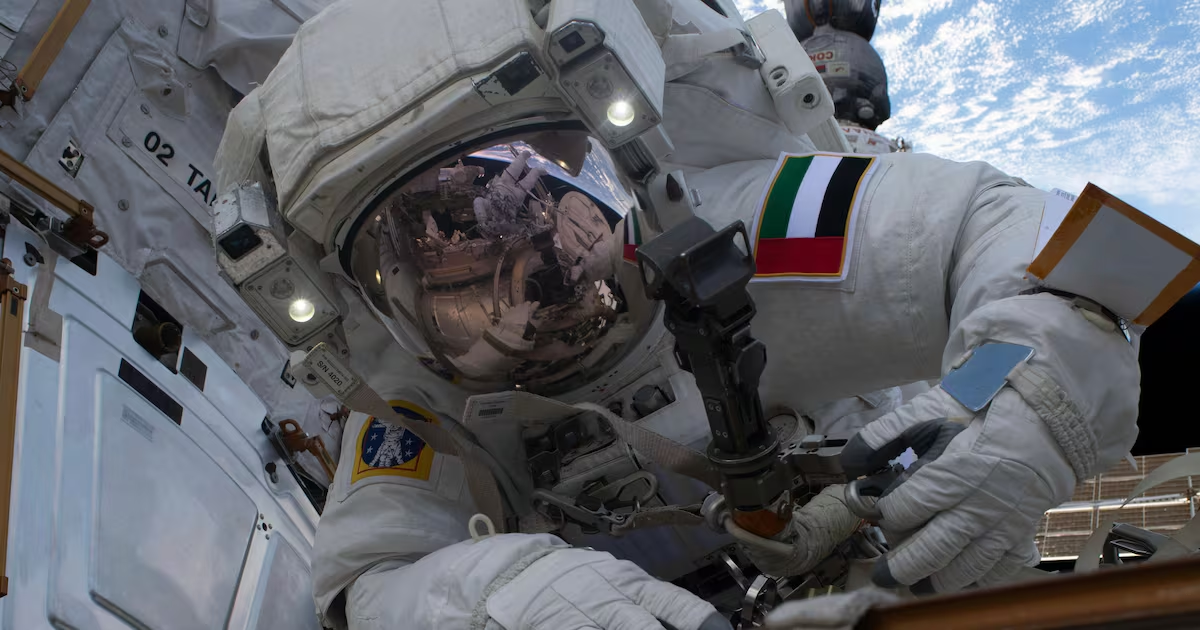
KUWAIT — In a significant step for space science in the Arab world, the Prime Minister of Kuwait, Sheikh Ahmad Abdullah Al‑Ahmad Al‑Sabah, welcomed Mohammed bin Rashid Space Centre (MBRSC) Director General Salem Humaid Al‑Marri and his delegation at the majestic Bayan Palace. The meeting, held on November 30, 2025, laid the foundation for deep cooperation between Kuwait and the UAE in space technology, scientific research and national capacity building.
The discussion focused on strengthening collaboration in vital areas such as satellite development, remote sensing, applied space science, and the training of a new generation of engineers and scientists across both nations.
The Agreement: MoU for Shared Vision
During the visit, MBRSC and the Kuwait Foundation for the Advancement of Sciences (KFAS) signed a formal Memorandum of Understanding (MoU). This MoU sets up a comprehensive framework for collaboration in space science, research and national capability development.
Under the pact, both countries will engage in:
- Joint research and technical projects in satellite applications, remote sensing, and space exploration.
- Exchange of scientific and technical expertise.
- Training programmes, workshops, and seminars for researchers, engineers, and students building human capital for future space missions.
Officials from both sides said the agreement isn’t just symbolic it’s a practical pathway towards building a fully integrated Arab space ecosystem rooted in collaboration, innovation, and long‑term scientific growth.
Why This Matters: Building the Arab Space Ecosystem
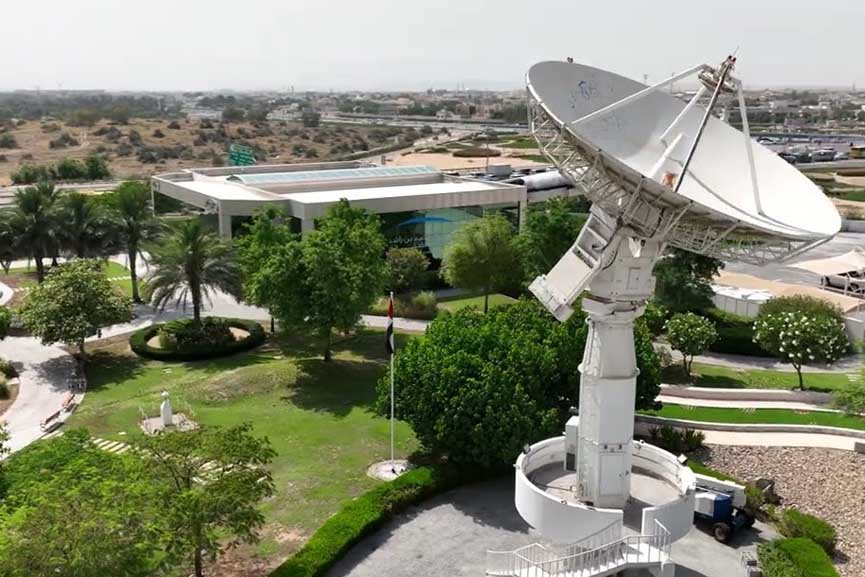
For years, the gulf region has been witnessing growing interest in space and technology. Through this new partnership, Kuwait and the UAE aim to join hands to strengthen regional presence in space science and its applications.
The MoU comes at a time when the newly launched Kuwait National Space Research Centre (KNSRC) is just gaining shape. KNSRC established with support from the Amiri leadership and in collaboration with Kuwait University — will serve as Kuwait’s hub for space research, satellite science, education, and training of emerging talent. The collaboration with MBRSC is expected to significantly boost KNSRC’s capabilities.
For the UAE side, MBRSC’s outreach beyond national borders demonstrates its ambition to lead an Arab-wide push into space science. Through this partnership, the Centre hopes to foster a regional network of scientific talent, data sharing, satellite operations and joint missions — thus making the Arab world more competitive at the global level in space exploration, applied research, and technological innovation.
Faces Behind the Deal: Their Journey, Vision & Commitment
Salem Humaid Al‑Marri — MBRSC Chief
Salem Al‑Marri leads MBRSC, the UAE’s premier institution for space services, satellite operations, and scientific research. Over the years, MBRSC has grown from a small team of committed engineers to a major incubator for the UAE National Space Programme.
Under his leadership, MBRSC has already forged new partnerships — for instance, a recent agreement with the UAE’s maritime authorities to use space technologies for smart maritime navigation and coastal security.
But beyond technical achievements, Al‑Marri’s vision appears rooted in people — in grooming young scientists, engineers and students to become the backbone of Arab space ambition. The cooperation with Kuwait reflects this commitment: to share experience, transfer knowledge, and build a pan‑Arab scientific community.
Kuwait’s Youth & Researchers — A New Chance
On the Kuwait side, the MoU with MBRSC opens tremendous opportunities for students, engineers and young scientists. With training programmes, workshops and research projects, they get access to cutting‑edge satellite technology, remote sensing know‑how, and scientific mentorship that was perhaps unavailable before.
For a young Kuwaiti engineer or space‑enthusiast, this cooperation could offer a chance to work on real‑life satellite missions, data analysis, and even collaborative projects with experts from MBRSC.
This kind of exposure — rare in their region — can inspire many, nurturing a new generation of space professionals. It’s not just about satellites or rockets; it’s about shaping futures, creating ambition, and giving hope to dreamers.
Shared Vision: Beyond Technology to Sustainable Development
What makes this partnership extra important is that it’s not just about space exploration for show — it’s about applying space science for real‑world benefits.
The MoU outlines cooperation in remote sensing and applied research sectors. That means satellite data could help monitor environmental changes, land use, water resources, climate patterns — all vital for sustainable development.
In a region vulnerable to climate change, water scarcity and environmental challenges, such tools can play a critical role. Combining Kuwait’s geographical needs with MBRSC’s scientific strength could help build better early warning systems, resource‑management strategies, and ways to protect natural heritage.
Moreover, by pooling students, researchers, and institutions from across the Gulf, the partnership fosters a shared Arab identity in science — encouraging collaboration rather than competition. In a world racing for space dominance, this kind of regional unity and capacity building could make space science more accessible and meaningful for ordinary people.
What’s Next: Roadmap & Aspirations
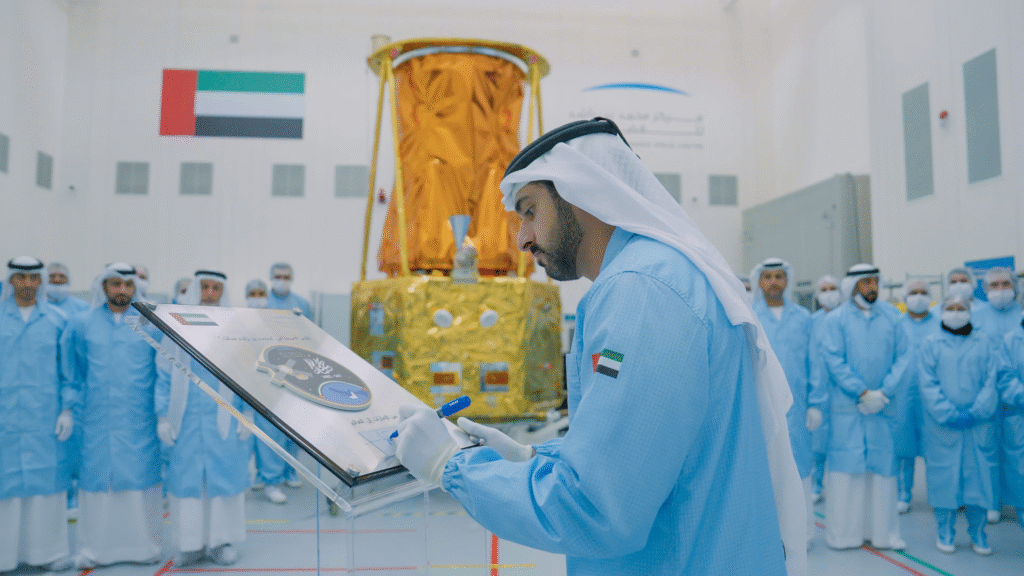
With the MoU signed, the coming months are likely to see:
- Launch of joint training programmes for engineers, researchers and students from Kuwait and UAE.
- Workshops, seminars and educational events in space science, remote sensing, satellite design and data analysis.
- Initiation of collaborative research and technical projects — possibly leading to satellites co‑designed by teams from both countries, or joint missions.
- Capacity‑building in Kuwait via KNSRC, gradually making it a central player in regional space research and applications.
- Broader regional cooperation, with hopes that other Arab countries may join or replicate similar frameworks.
For now, this cooperation stands as a beacon of what collective vision, hard work, and shared dreams can achieve — especially when nations look beyond borders, and invest in talent, science and future generations.
The Bigger Picture: Why It Matters to the Region (and the World)
Space is no longer the domain of superpowers alone. In recent decades, emerging nations have used satellite technologies for environmental monitoring, disaster management, agriculture, communications — enhancing quality of life back home.
With this new UAE–Kuwait alliance, a growing part of the Middle East is positioning itself to contribute meaningfully to global space science — not just as passive users of satellite data, but as active developers, researchers, and innovators.
By empowering youth, sharing expertise, building institutions and fostering cross‑border collaboration, the partnership signals that space is not a luxury — it’s a tool for sustainable development, progress and hope.
Especially for young Arabs who look up at the stars and dream — this initiative says: reach higher. The sky isn’t the limit; it’s just the beginning.
Conclusion: A Small Meeting, A Big Leap
What began as a formal meeting at Bayan Palace has the potential to transform into something far greater — a joint Arab space ecosystem.
For the leadership, for scientists, for students — this cooperation between MBRSC and KFAS (with support from Kuwait’s government) could mark the start of a new era. An era where Arab talent, ambition and collaboration shape the future of space science.
From remote sensing to satellite missions; from national pride to regional unity — the seeds planted now can bloom into a legacy that inspires generations.
When decades from now people look back they may remember this December as the moment when Kuwait and UAE looked beyond borders and looked up to the stars, together.
Do Follow Gulf Magazine on Instagram