

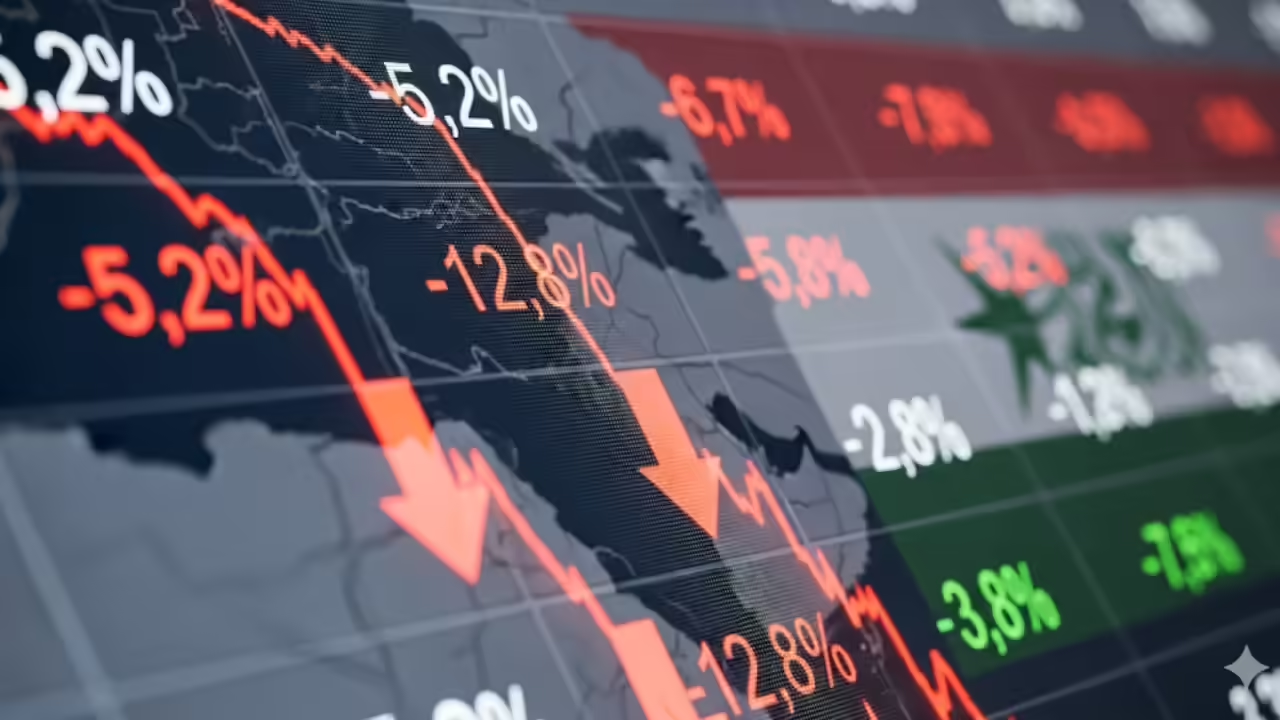
The major Gulf markets decline reported on Tuesday reflects a sudden shift in investor mood across the region, as escalating geopolitical tensions pushed traders into risk-off mode. A detailed market report highlighted that almost all key Gulf bourses turned red, with selling pressure intensifying throughout the trading session. While Gulf economies remain fundamentally resilient, the day’s market action showed how sensitive regional equities are to global and regional uncertainty.
From Dubai to Riyadh and beyond, benchmark indices faced broad-based losses. High-profile stocks bore the brunt of the sell-off, dragging markets toward their steepest single-day declines in months. The mood was cautious, emotional, and unmistakably defensive, as investors reassessed short-term risks without abandoning longer-term optimism.
Dubai Market Faces Sharpest Pressure in Months
Dubai’s equity market emerged as one of the most affected during the session, reinforcing concerns that the major Gulf markets decline may have deeper short-term implications. The benchmark index slid sharply, placing it on track for its most significant daily fall in several months. Heavyweight stocks were among the worst performers, amplifying the downward momentum.
Emaar Properties saw notable selling as investors trimmed exposure to real estate amid uncertainty over regional stability and capital flows. Emirates NBD, another pillar of the Dubai market, also retreated as banking stocks across the Gulf faced renewed pressure. Financial shares often act as a barometer of economic confidence, and their weakness reflected broader investor caution rather than company-specific issues.
Despite the sharp fall, market participants noted that liquidity remained healthy, suggesting this was more of a reassessment than a panic-driven exit.
Abu Dhabi and Saudi Markets Join the Regional Retreat
The major Gulf markets decline was not confined to Dubai alone. Abu Dhabi’s market followed a similar trajectory, with blue-chip stocks trending lower throughout the session. Energy-linked equities and financial institutions faced steady selling as investors reduced exposure to cyclical sectors.
In Saudi Arabia, the region’s largest market, the benchmark index also slipped. While losses were relatively contained compared to Dubai, the tone remained cautious. Investors appeared reluctant to take new positions until greater clarity emerges on geopolitical developments. Defensive sectors fared slightly better, but overall sentiment leaned firmly negative.
The synchronized decline across multiple Gulf markets underscored how interconnected investor psychology has become, even when domestic economic indicators remain stable.

Geopolitical Tensions Drive Risk-Off Sentiment
At the heart of the major Gulf markets decline lies a worsening geopolitical dispute that unsettled regional investors. Markets tend to react swiftly to uncertainty, especially when tensions carry the potential to disrupt trade, energy flows, or diplomatic relations.
Even without immediate economic impact, the perception of heightened risk can trigger portfolio adjustments. Institutional investors, in particular, often move quickly to protect gains accumulated earlier in the year. This dynamic was evident in the widespread selling across sectors and markets.
For retail investors, the session served as a reminder that geopolitical headlines can override fundamentals in the short term, shaping market direction with remarkable speed.
Sector-Wise Performance Highlights Investor Caution
A closer look at sector performance reveals how the major Gulf markets decline unfolded in practice. Banking and financial stocks were among the most pressured, reflecting concerns over credit growth, capital flows, and regional exposure. Real estate stocks also struggled, as uncertainty tends to weigh heavily on property-related investments.
Energy stocks delivered mixed performance. While oil prices provided some underlying support, the broader risk-off sentiment limited upside. Consumer and telecom stocks proved relatively resilient, benefiting from their defensive characteristics and stable cash flows.
This uneven sectoral response suggests that investors are not exiting Gulf markets entirely but are selectively reallocating capital toward perceived safety.
Investor Psychology Shifts from Optimism to Prudence
Earlier this year, Gulf markets were buoyed by strong earnings, economic reforms, and steady foreign inflows. The sudden major Gulf markets decline marks a psychological shift rather than a structural breakdown. Confidence has not vanished, but it has become more measured.
Traders described the mood as cautious rather than fearful. Many investors chose to lock in profits, waiting on the sidelines for clarity. This behavior is typical during periods of heightened uncertainty and often precedes consolidation rather than prolonged downturns.
Human emotions play a powerful role in markets, and Tuesday’s decline was a clear example of sentiment temporarily overpowering fundamentals.
Foreign Investors Reassess Short-Term Exposure
Foreign institutional investors were particularly active during the session, contributing to the major Gulf markets decline through portfolio rebalancing. Global funds often respond swiftly to geopolitical risk, especially in emerging and frontier markets.
However, analysts pointed out that long-term foreign interest in the Gulf remains intact. Structural reforms, diversification away from oil, and improved market accessibility continue to make the region attractive. The current pullback may ultimately be viewed as a tactical adjustment rather than a strategic retreat.
This distinction matters, as it influences how quickly confidence can return once tensions ease.
Economic Fundamentals Remain Largely Intact
Despite the market turbulence, the underlying economic picture across the Gulf remains relatively strong. Governments continue to invest heavily in infrastructure, tourism, technology, and energy transition projects. Corporate earnings have shown resilience, and fiscal positions remain solid.
The major Gulf markets decline therefore appears disconnected from domestic economic weakness. Instead, it reflects external pressures and sentiment-driven trading. History suggests that such declines often reverse once uncertainty subsides, especially in regions with strong policy support.
For long-term investors, this disconnect between fundamentals and market performance may present selective opportunities.
What This Decline Means for Everyday Investors
For everyday investors, the major Gulf markets decline can feel unsettling, especially when headlines focus on losses and volatility. Yet seasoned market participants often view such periods as part of the normal investment cycle.
Short-term traders may remain cautious, focusing on risk management and capital preservation. Long-term investors, however, may use market dips to reassess portfolios and identify quality stocks trading at more attractive valuations.
The key is perspective. Market declines driven by sentiment tend to be temporary, while those driven by fundamentals require deeper reassessment.
Outlook: Cautious Near Term, Constructive Long Term
Looking ahead, the near-term outlook for Gulf markets remains cautious. Much will depend on how geopolitical developments unfold and whether investor confidence stabilizes. Volatility may persist in the coming sessions, particularly if headlines continue to dominate market narratives.
Over the longer term, however, the outlook remains constructive. Economic diversification, regulatory reforms, and strong government backing provide a solid foundation for recovery. The major Gulf markets decline may ultimately be remembered as a pause in an otherwise resilient growth story.
For now, patience, discipline, and informed decision-making are likely to define successful investment strategies across the Gulf region.
Do follow Gulf Magazine on Instagram.
Also Read – Gulf Markets Retreat as Saudi–UAE Yemen Tensions Rise

