


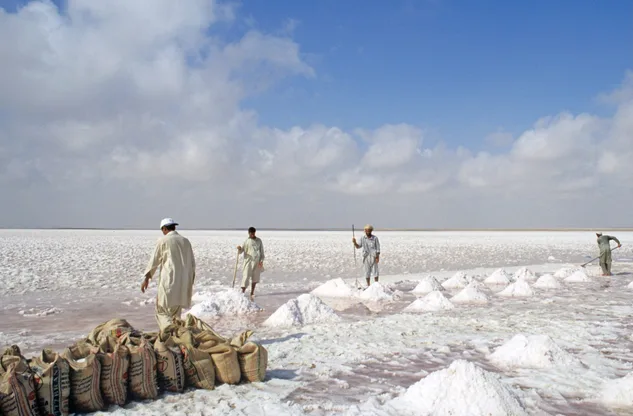
Across Oman’s agricultural landscape, salt-affected farmland has long been a quiet but persistent barrier to productivity. High soil salinity often caused by seawater intrusion, over-irrigation, and arid climatic conditions has rendered vast stretches of land difficult or impossible to cultivate.
For farmers who rely on every patch of fertile soil, this challenge isn’t just environmental; it is deeply personal, touching livelihoods, traditions, and the hope for a sustainable future. Now, a new study emerging from Oman’s scientific community is delivering a breakthrough that could redefine the country’s agricultural resilience. The findings present new, practical methods to reclaim salt-affected farmland, bringing renewed optimism to rural communities and national food security ambitions.
Understanding the Challenge of Soil Salinity in Oman
Soil salinity is one of the most significant agricultural constraints in arid and semi-arid regions, and Oman is no exception. Over decades, farmers have battled declining soil fertility, stunted crop growth, and increasing dependence on imported produce. Traditional methods—such as flushing fields with freshwater or shifting to salt-tolerant crops—have brought limited relief, often proving unsustainable or too costly in the long term.
What makes this situation more complex is the natural geography. With high evaporation rates and limited freshwater supplies, salts accumulate quickly in topsoil, making reclamation difficult. For many farmers, the land they inherited from past generations has slowly transformed from thriving fields into barren stretches. The emotional toll is evident: a sense of loss mixed with uncertainty about the future.
Breakthrough Findings That Could Change Everything
The recent study provides fresh hope by presenting a multi-layered approach that not only addresses salinity but also restores the biological health of the soil. While earlier solutions often focused solely on reducing salt concentration, the new research integrates soil amendments, biological processes, and innovative water management techniques.
Researchers discovered that combining organic soil conditioners with specific microbial treatments accelerates the breakdown of harmful salts and rejuvenates the soil structure. These microorganisms bind salts, enhance soil porosity, and support nutrient regeneration—creating conditions where crops can thrive again. This is a significant shift from previous approaches because it restores the soil’s natural ecosystem rather than relying solely on mechanical or chemical interventions.
Another important recommendation from the study is the use of controlled irrigation with treated wastewater. This offers a dual benefit: reducing water wastage and slowly leaching salts deeper into the ground without overwhelming the soil. For a country where water preservation is critical, this innovation aligns perfectly with national sustainability goals.
Practical Applications for Farmers on the Ground
One of the most encouraging aspects of the study is how accessible the solutions are for farmers. Instead of requiring expensive machinery or rare materials, the recommended methods rely on local resources—organic compost, biochar, and microbial formulations that can be produced domestically.
For small-scale farmers, this is transformative. Many expressed frustration over solutions that demanded investments beyond their reach.
Now, they have a pathway that is both effective and financially feasible. The study outlines step-by-step soil rehabilitation techniques, enabling farmers to gradually restore fertility without interrupting their planting cycles. Moreover, by adopting salt-tolerant crop varieties during the recovery phase, farmers can continue generating income while the soil improves beneath the surface.
Long-Term Benefits for Oman’s Food Security
Reclaiming salt-affected farmland extends far beyond individual farms—it strengthens the nation’s food resilience. Oman has been steadily working toward reducing reliance on food imports and boosting its domestic agricultural output. By enabling more land to be brought back into productive use, the breakthrough supports this long-term vision.
Agricultural experts predict that if widely adopted, these techniques could restore thousands of hectares over the next decade. This would increase local production of key crops such as vegetables, grains, and fodder. More importantly, it would restore confidence among farming communities who may have abandoned their land due to salinity issues.
Empowering Rural Communities Through Knowledge and Training
The success of this breakthrough will depend largely on community engagement. The study emphasizes the importance of farmer training programs to ensure that techniques are correctly applied. Local agricultural centers across Oman are already preparing to offer workshops and field demonstrations, bridging the gap between scientific research and hands-on application.
For many rural families, this new direction brings emotional relief. Farming is more than an occupation; it is an identity tied deeply to family heritage. The opportunity to revive their land brings renewed pride, along with a sense of empowerment as they learn to adopt modern agricultural methods.
Environmental Sustainability at the Core of the Breakthrough
Beyond productivity, the study places strong emphasis on environmental sustainability. By promoting organic soil amendments and microbial treatments, the approach reduces dependence on chemical fertilizers that can harm long-term soil health. Water-efficient irrigation methods further support Oman’s broader environmental conservation efforts.
Restoring soil health also means supporting biodiversity. Healthy soils nurture a range of microorganisms, insects, and plant species that create a balanced agricultural ecosystem. For Oman, this shift represents a move toward regenerative farming practices that can withstand harsh climatic conditions.
A Roadmap for Future Research and Development
Although the study marks a major milestone, it also opens the door for future research. Scientists plan to test the proposed methods across different regions of Oman, from coastal zones where salinity is highest to inland farms affected by long-term irrigation. These trials will help refine best practices and create region-specific guidelines.
There is also growing interest in exploring advanced biotechnologies, such as genetically enhanced microorganisms or nanotechnology-based soil treatments. These innovations could further accelerate land recovery, positioning Oman as a regional leader in sustainable agriculture.
Modernizing Agriculture Through Technology and Innovation
As Oman continues its diversification journey, technology is playing an increasingly important role in modern agriculture. Drones are being used to map soil salinity levels, while IoT sensors track soil moisture and nutrient content. When combined with the new reclamation methods, these technologies can help farmers monitor recovery progress, optimize water use, and identify problem areas early.
Young entrepreneurs in Oman are already developing apps and digital tools to guide farmers through soil restoration practices. These innovations not only support agricultural revival but also create opportunities for youth engagement in farming—a field traditionally dominated by older generations.
Voices From the Field: Farmers Share Their Hope
Farmers who have participated in early trials described a renewed sense of possibility. Many shared stories of watching once-fertile fields turn white with salt deposits, forcing them to reduce crop cycles or abandon cultivation. Seeing the soil gradually soften and regain fertility through the new treatments has been emotionally uplifting.
One farmer described the experience as “watching life return to land that was slipping away.” Another explained that the breakthrough has restored hope for future generations, ensuring that their children can continue the family’s agricultural heritage.
Economic Impact Across the Agricultural Value Chain
Reviving salt-affected farmland will also stimulate growth across Oman’s wider agricultural ecosystem. Increased crop production supports local markets, boosts agribusiness revenue, and strengthens supply chains. Food processing companies, livestock sectors, and exporters stand to benefit from improved availability of locally grown produce.
Additionally, reduced reliance on imports saves national resources and promotes self-sufficiency—a key pillar of Oman Vision 2040. The ripple effect reaches transportation companies, equipment suppliers, and small businesses that depend on agricultural activity.
Government Support Strengthens the Initiative
Oman’s government continues to prioritize sustainable agriculture, and the study’s findings align well with national goals. Authorities are exploring ways to expand subsidies for organic soil conditioners, support for treated wastewater infrastructure, and incentives for adopting sustainable irrigation. Collaborative projects involving universities, research centers, and farmers’ associations are being designed to accelerate implementation.
With government backing, the breakthrough is poised to move quickly from research to real-world impact, making it accessible to farmers across the Sultanate.
Conclusion: A Hopeful Future for Oman’s Farmland
The breakthrough study represents a turning point in Oman’s agricultural journey. For years, salt-affected farmland has posed challenges that seemed almost insurmountable. Now, with a combination of scientific innovation, community engagement, and sustainable practices, Oman is set to reclaim vast areas of land that were once considered lost.
This breakthrough isn’t just about science—it’s about people, their heritage, and their future. It reflects a nation’s commitment to progress, resilience, and harmony with the environment. As more farmers adopt the recommended techniques, Oman’s agricultural landscape could undergo one of its most significant transformations in decades. The promise of restored farmlands brings renewed hope, not only for farmers but for the entire country as it strengthens food security and ensures a sustainable tomorrow.
Do Follow Gulf Magazine on Instagram
Read More:- Saudi Arabia vs Oman: Exciting Tips to Stream Every Goal Live 2025

