

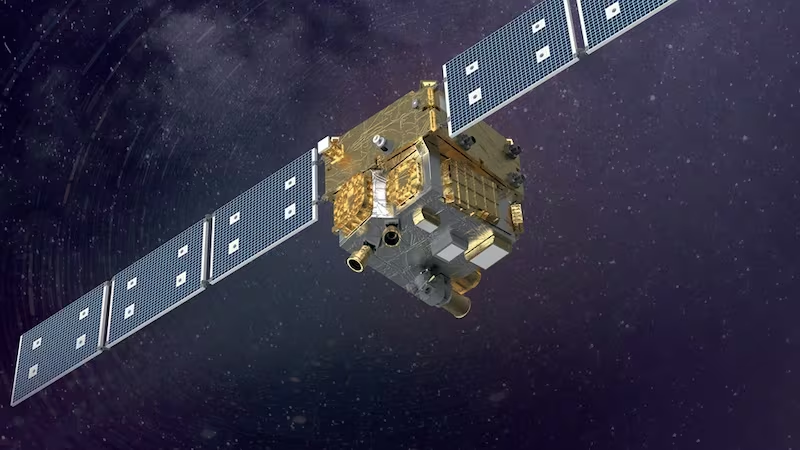
A Historic Partnership in Space Exploration
The United Arab Emirates (UAE) has taken another giant leap in its ambitious space program by partnering with Saudi Arabia for a joint satellite launch. This collaboration marks a historic moment in the Gulf region, reflecting the growing cooperation between the two nations in science, technology, and innovation.
The joint satellite project is designed to enhance both countries’ capabilities in space observation, data collection, and communication. By pooling resources, knowledge, and expertise, the UAE and Saudi Arabia are setting a benchmark for regional collaboration in aerospace technology.
This mission highlights a shared vision of leveraging space technology to address national priorities, including environmental monitoring, urban planning, disaster management, and scientific research.
Strengthening Regional Collaboration
The UAE has been a regional leader in space initiatives, with notable achievements such as the Hope Probe mission to Mars. Saudi Arabia, meanwhile, has been rapidly expanding its technological infrastructure and space research programs. The joint satellite launch represents a convergence of these efforts, creating opportunities for mutual growth.
Officials from both countries emphasize that collaboration in space extends beyond technology. It fosters stronger diplomatic ties, encourages joint research initiatives, and promotes innovation in STEM fields. Young scientists, engineers, and students across the region are expected to benefit from knowledge transfer, training programs, and internships tied to this project.
By uniting their expertise, the UAE and Saudi Arabia aim to not only advance regional space capabilities but also position the Gulf as a competitive hub in global aerospace technology.
Objectives of the Joint Satellite Project
The joint satellite launch has multiple objectives, reflecting the strategic priorities of both nations. One of the key goals is to enhance Earth observation capabilities. High-resolution satellite imagery will provide crucial data for climate studies, environmental monitoring, and urban development projects.
Another objective is to improve communication infrastructure. Satellites play a vital role in ensuring reliable internet connectivity, disaster warning systems, and emergency communications, particularly in remote or underserved areas.
Additionally, the project will focus on scientific research and technological innovation. By working together, both countries can develop cutting-edge satellite technology, optimize mission management systems, and establish long-term research collaborations that extend well beyond this single mission.
Technology and Innovation Driving the Mission
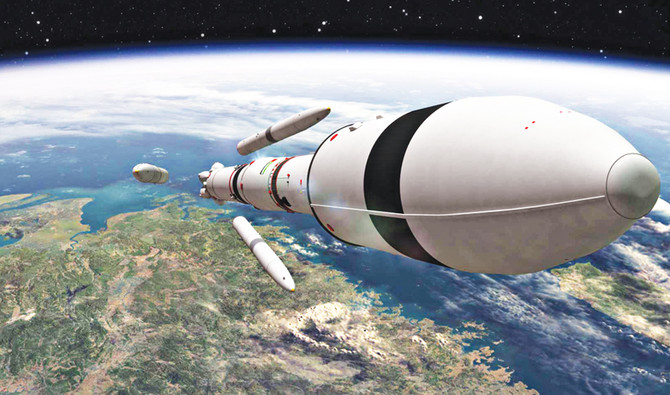
The joint satellite launch leverages state-of-the-art technologies, including advanced sensors, high-resolution cameras, and secure data transmission systems. These capabilities allow for real-time monitoring of environmental changes, urban expansion, and natural resources, providing valuable insights for government agencies and private enterprises.
The mission also emphasizes innovation in satellite design and deployment. Engineers from both nations are collaborating to build a satellite that is energy-efficient, durable, and capable of performing multiple functions simultaneously. The project serves as a platform for testing new materials, propulsion technologies, and data processing systems, ensuring that the satellite meets international standards for reliability and performance.
Building Human Capital and Expertise
A critical aspect of this collaboration is the development of human capital. Both countries are investing in training engineers, scientists, and technicians to handle the complexities of satellite design, launch operations, and data analysis.
Universities, research institutes, and space agencies are working together to create programs that equip students and young professionals with the knowledge and skills needed for the next generation of space missions. By nurturing talent locally, the UAE and Saudi Arabia aim to reduce dependence on external expertise and build sustainable, homegrown capabilities in aerospace technology.
Economic and Strategic Benefits
The joint satellite project carries significant economic and strategic benefits. The space sector is increasingly recognized as a driver of technological innovation, economic diversification, and national prestige. By investing in satellite technology, the UAE and Saudi Arabia are positioning themselves as leaders in a high-tech industry that supports a wide range of commercial applications.
Strategically, the collaboration strengthens both nations’ capacity to monitor natural resources, respond to environmental challenges, and ensure national security. High-quality satellite data can be used to detect climate risks, monitor water and energy resources, and support critical infrastructure planning.
Furthermore, the joint mission signals to the global community that the Gulf region is capable of undertaking complex, high-stakes space projects. This enhances international partnerships and opens doors for further collaboration with leading space agencies around the world.
Inspiring the Next Generation
Beyond technology and economics, the joint satellite launch carries a profound inspirational message. It shows that collaboration, vision, and ambition can achieve extraordinary outcomes. Young people across the UAE, Saudi Arabia, and the wider region are encouraged to dream big, pursue careers in science and technology, and contribute to global progress.
By highlighting the role of STEM education and innovation, the project aims to cultivate a culture of curiosity, problem-solving, and creativity. Aspiring engineers, scientists, and researchers can look to this initiative as proof that regional talent can compete on a global scale.
Overcoming Challenges
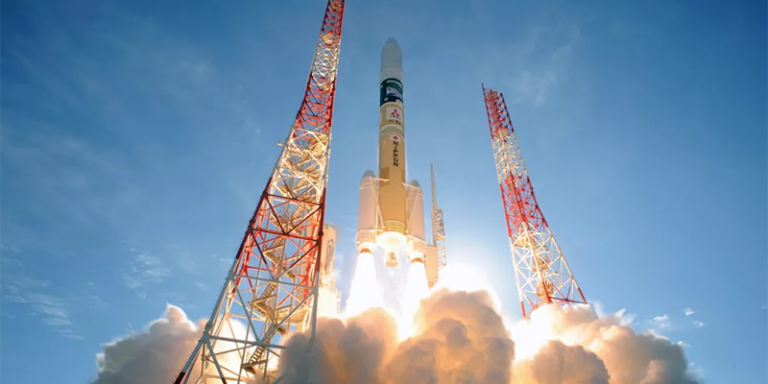
Space missions are inherently complex and come with significant challenges. Technical issues, resource allocation, and operational coordination require careful planning and execution. Both countries have invested in extensive testing, simulations, and quality control measures to ensure the mission’s success.
Moreover, collaboration across borders requires effective communication and alignment of objectives. The UAE and Saudi Arabia have established joint committees and task forces to manage project timelines, technology sharing, and regulatory compliance. By addressing these challenges proactively, the partners aim to set a standard for future cooperative space projects.
Looking Ahead: Expanding Regional Space Capabilities
The joint satellite launch is only the beginning of a broader vision for regional space collaboration. Both nations are exploring future projects, including satellite constellations, interplanetary missions, and advanced research in space sciences.
This partnership also has the potential to catalyze private sector involvement in aerospace technology. Startups and technology firms may be encouraged to develop complementary solutions in satellite components, software, and data analytics, creating a thriving ecosystem that drives innovation and economic growth.
By working together, the UAE and Saudi Arabia are demonstrating that regional collaboration can produce outcomes that rival global space programs, setting a precedent for other nations in the Gulf and beyond.
Conclusion
The UAE-Saudi Arabia joint satellite launch is a milestone in regional space exploration. It represents a fusion of expertise, vision, and ambition, highlighting the transformative potential of collaboration.
From advancing technology to inspiring future generations, the project embodies a commitment to innovation, knowledge-sharing, and regional development. As the UAE and Saudi Arabia prepare to launch their satellite, the world will witness not only a technological achievement but also a symbol of partnership, progress, and shared dreams.
This mission serves as a reminder that space exploration is not just about reaching the stars; it is about creating opportunities, inspiring people, and building a better future through science and innovation.
Do Follow Gulf Magazine on Instagram
Also read: UAE Unveils Smart AI Buses to Cut Emissions by 20%

