

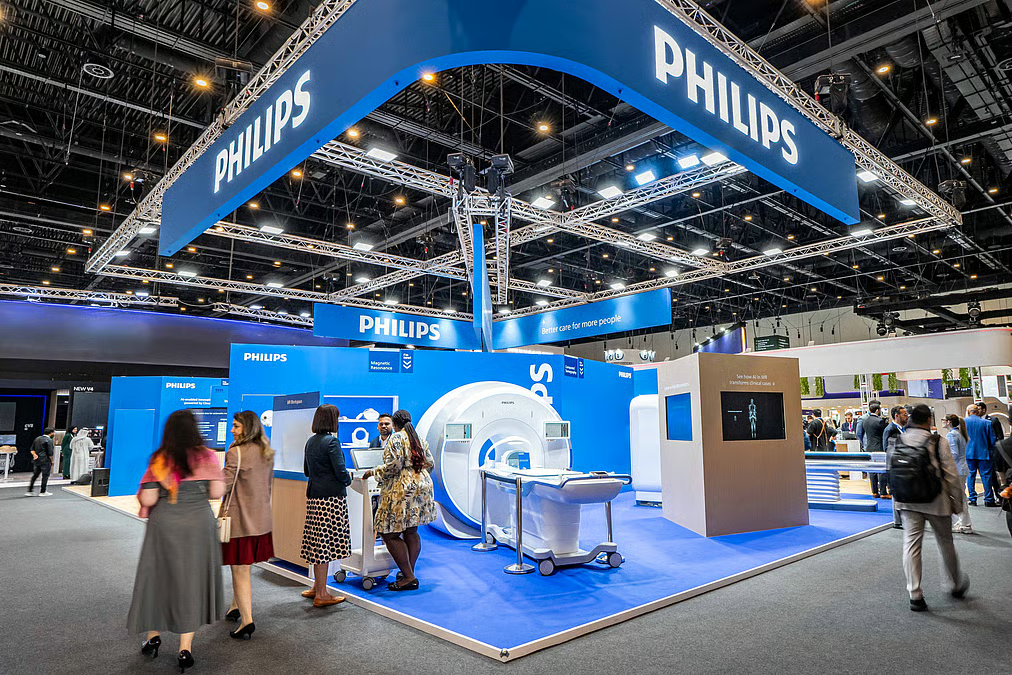
Healthcare is entering a new digital age, and Philips AI Healthcare Innovation is at the center of this transformation. At the World Health Expo Dubai 2026, global health leaders, doctors, policymakers, and technology experts gathered to witness how artificial intelligence is reshaping medicine — from diagnosis to treatment and patient monitoring.
At the heart of the exhibition stood Philips, presenting a powerful lineup of AI-driven solutions designed to make healthcare faster, smarter, and more accessible. The company’s showcase demonstrated not just new devices but a complete vision for the hospital of the future — one where machines assist doctors, data guides decisions, and patients receive personalized care.
Hosted in the vibrant city of Dubai in United Arab Emirates, the expo highlighted how innovation is becoming essential to address rising global health challenges such as aging populations, chronic diseases, staff shortages, and increasing healthcare costs.
A New Era of Philips AI Healthcare Innovation
Philips AI Healthcare Innovation focuses on using artificial intelligence to improve every stage of medical care. Rather than replacing doctors, the technology works alongside them — analyzing data, detecting patterns, and offering insights that humans might miss.
At the expo, Philips emphasized three core goals:
- Improve patient outcomes
- Reduce workload on medical staff
- Make healthcare systems more efficient
Artificial intelligence can process vast amounts of medical data in seconds. This ability allows clinicians to diagnose diseases earlier, choose the best treatments faster, and monitor patients continuously without overwhelming healthcare workers.
Philips executives described this shift as moving from “reactive care” to “predictive care,” where illnesses are identified before they become severe.
Smarter Diagnostics: AI That Sees What Humans Can’t
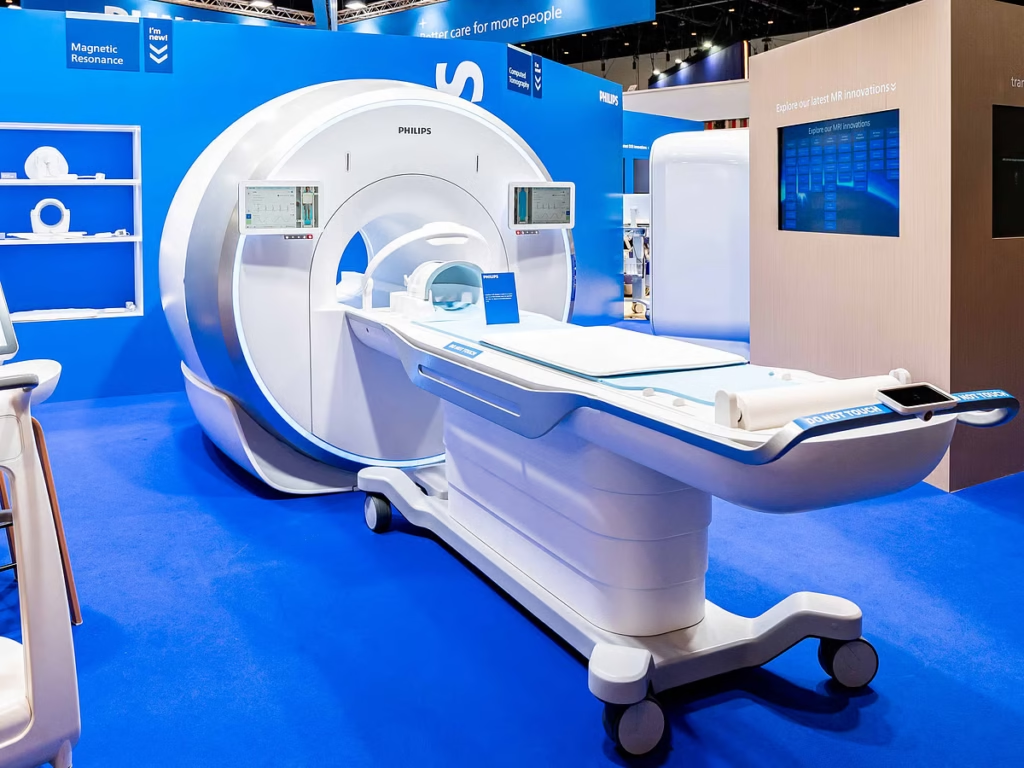
One of the biggest highlights of Philips AI Healthcare Innovation was advanced diagnostic imaging powered by AI.
Modern imaging systems — including MRI, CT scans, and ultrasound — produce enormous amounts of data. Interpreting these images quickly and accurately is critical, especially in emergencies.
Philips demonstrated AI tools that can:
- Detect tumors at very early stages
- Identify stroke signs within minutes
- Highlight abnormalities in scans automatically
- Reduce diagnostic errors
- Speed up reporting time
In stroke cases, for example, every minute matters. AI-assisted imaging can help doctors decide treatment options faster, potentially saving lives and preventing permanent disability.
The system also reduces fatigue for radiologists, who often review hundreds of images daily. By prioritizing urgent cases, AI ensures that critical patients receive attention first.
Transforming Patient Monitoring in Hospitals
Another major area of Philips AI Healthcare Innovation is real-time patient monitoring.
Traditional monitoring systems alert staff only after a patient’s condition worsens. AI-driven systems, however, analyze trends and predict deterioration before it happens.
Philips showcased smart monitoring platforms capable of:
- Tracking vital signs continuously
- Predicting cardiac arrest risks
- Detecting breathing abnormalities
- Alerting nurses early
- Reducing false alarms
False alarms are a major problem in intensive care units. They create noise, stress, and distraction for healthcare workers. Philips’ AI systems filter out unnecessary alerts and highlight only meaningful ones, allowing staff to focus on patients who truly need help.
Remote monitoring was another key feature. Patients can be observed from outside hospital rooms or even from home, reducing hospital stays and freeing up beds.
Bringing Hospital-Level Care to the Home
One of the most forward-looking aspects of Philips AI Healthcare Innovation is the shift toward home-based care.
With aging populations worldwide, hospitals cannot accommodate every patient long-term. AI-enabled devices allow many treatments and monitoring activities to happen at home safely.
Philips introduced connected solutions that:
- Monitor chronic diseases remotely
- Track recovery after surgery
- Send real-time data to doctors
- Alert caregivers during emergencies
- Support elderly independence
For patients with conditions like heart disease, diabetes, or respiratory illness, continuous monitoring can prevent complications and reduce hospital readmissions.
Home healthcare also lowers costs for both families and healthcare systems while improving patient comfort.
AI Supporting Healthcare Professionals
A major concern about artificial intelligence is whether it will replace jobs. Philips addressed this issue directly at the expo.
Instead of replacing doctors or nurses, Philips AI Healthcare Innovation is designed to assist them.
Healthcare workers today face severe burnout due to:
- Long working hours
- Administrative overload
- Staff shortages
- Increasing patient volumes
AI tools can automate repetitive tasks such as documentation, scheduling, and data analysis. This frees medical professionals to focus on what matters most — patient care.
Philips demonstrated software that converts spoken conversations into medical notes automatically, reducing paperwork and saving time during consultations.
Data-Driven Personalized Treatment
No two patients are the same, yet traditional medicine often uses standardized treatment plans. AI makes personalized care possible by analyzing individual data — genetics, lifestyle, medical history, and real-time health metrics.
Philips showcased decision-support systems that help doctors choose treatments tailored to each patient.
Benefits include:
- More effective therapies
- Reduced side effects
- Faster recovery times
- Better long-term outcomes
For cancer treatment, for example, AI can compare a patient’s case with thousands of similar cases worldwide to recommend the most successful approach.
Improving Workflow Across Hospitals
Beyond clinical tools, Philips AI Healthcare Innovation also targets hospital management and operations.
Healthcare facilities often struggle with inefficiencies such as overcrowding, long waiting times, and resource shortages.
Philips introduced AI platforms that optimize:
- Patient flow
- Bed management
- Staff scheduling
- Equipment usage
- Emergency response planning
These systems analyze real-time data to predict demand and allocate resources effectively.
For example, during peak periods in emergency departments, AI can recommend opening additional treatment areas or adjusting staff assignments.
Strengthening Healthcare Systems in the Middle East
The choice of Dubai as the venue highlights the region’s growing role in healthcare innovation.
Countries across the Middle East are investing heavily in digital health infrastructure to meet future demands.
Philips emphasized partnerships with regional governments and hospitals to support:
- Smart hospital development
- Telemedicine expansion
- Workforce training
- Public health initiatives
The United Arab Emirates, in particular, aims to become a global hub for medical innovation. Events like the World Health Expo accelerate knowledge exchange and collaboration between international organizations.
Sustainability in Healthcare Technology
Another key theme at the expo was sustainability — an increasingly important issue in healthcare.
Hospitals consume large amounts of energy and produce significant waste. Philips presented solutions designed to reduce environmental impact without compromising patient care.
Initiatives include:
- Energy-efficient imaging systems
- Longer-lasting equipment
- Circular design for reuse and recycling
- Reduced packaging waste
Sustainable healthcare not only benefits the environment but also lowers operating costs for hospitals.
Cybersecurity and Data Privacy
As healthcare becomes more digital, protecting patient data is critical.
Philips highlighted robust cybersecurity measures integrated into its AI systems. These safeguards ensure that sensitive medical information remains confidential while still enabling data sharing among healthcare providers.
Security features include:
- Encrypted communication
- Access controls
- Continuous monitoring for threats
- Compliance with international regulations
Trust is essential for widespread adoption of AI in healthcare, and companies must demonstrate strong protection mechanisms.
Global Collaboration for Better Health
Philips emphasized that innovation alone cannot solve healthcare challenges. Collaboration between governments, hospitals, technology companies, and researchers is equally important.
The expo served as a platform for partnerships aimed at improving health systems worldwide.
Key areas of cooperation include:
- Research and development
- Training healthcare workers
- Sharing best practices
- Expanding access in underserved regions
By working together, stakeholders can ensure that advanced technologies benefit not just wealthy countries but also developing nations.
The Human Side of Technology
Despite the focus on machines and data, Philips repeatedly stressed the human element of healthcare.
Technology should enhance compassion, not replace it.
AI can handle complex calculations and monitoring, but empathy, communication, and trust remain uniquely human qualities.
Philips leaders described their mission as “technology with purpose” — tools designed to support both patients and caregivers emotionally as well as physically.
Challenges Ahead
While Philips AI Healthcare Innovation offers tremendous promise, challenges remain.
These include:
- High implementation costs
- Training requirements for staff
- Integration with existing systems
- Ethical concerns about AI decisions
- Regulatory approval processes
Healthcare transformation takes time, and successful adoption requires careful planning and support.
However, experts at the expo agreed that the benefits far outweigh the obstacles.
What This Means for Patients Worldwide
For patients, the innovations showcased in Dubai could translate into tangible improvements in everyday healthcare:
- Faster diagnoses
- More accurate treatments
- Shorter hospital stays
- Better disease prevention
- Greater access to care
In remote or underserved areas, AI-powered telehealth solutions may provide medical expertise that was previously unavailable.
Looking Toward the Future
The World Health Expo Dubai 2026 demonstrated that healthcare is moving toward a connected, intelligent ecosystem where data flows seamlessly and care becomes proactive rather than reactive.
Philips AI Healthcare Innovation represents a major step toward this vision.
Future developments may include:
- Fully integrated smart hospitals
- AI-assisted robotic surgery
- Predictive public health systems
- Personalized medicine based on genetics
- Continuous health monitoring through wearable devices
As technology evolves, the boundary between healthcare and everyday life will continue to blur, enabling people to manage their health continuously rather than only during illness.
Conclusion
The showcase by Philips at the World Health Expo Dubai 2026 highlighted a powerful transformation underway in global healthcare. Through advanced imaging, predictive monitoring, personalized treatment, and smarter hospital operations, Philips AI Healthcare Innovation is redefining how care is delivered.
While challenges remain, the direction is clear: healthcare is becoming more intelligent, efficient, and patient-centered.
For doctors, these tools offer support and relief from overwhelming workloads. For governments, they provide solutions to rising costs and aging populations. And for patients, they promise safer, faster, and more personalized care.
As the world faces growing health challenges, innovations like these may not just improve healthcare — they may determine how effectively societies protect and enhance human life in the decades to come.
The future of medicine is no longer distant. It was on display in Dubai, powered by artificial intelligence and guided by a vision of healthier lives for all.
Do Follow Gulf Magazine on Instagram

