

A decisive response to a direct threat
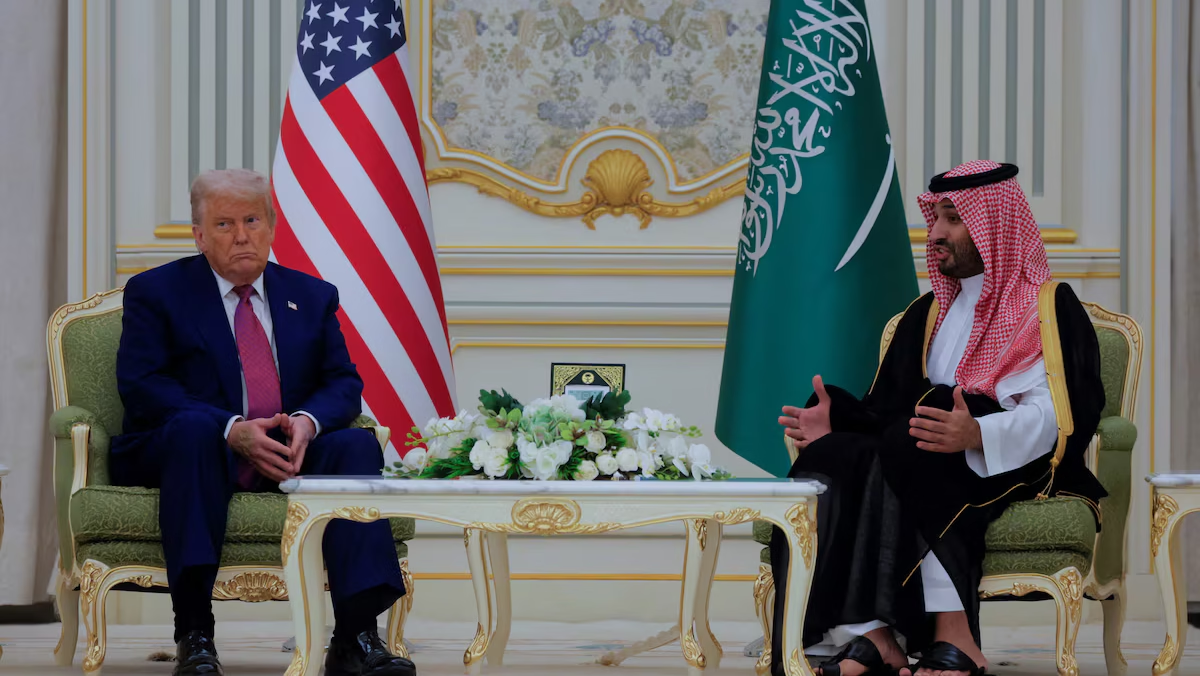
Saudi Arabia Executes Plotters to Protect Worship and National Safety,Saudi authorities announced the execution of two citizens after convicting them of joining a terrorist group that planned attacks on places of worship. The men had been linked to a plot that targeted religious sites and also involved plans against security facilities and personnel.
The human faces behind headline facts
When news like this reaches the public, it is easy to reduce people to labels such as suspect, terrorist, or convicted. But each case touches many human lives. There are families who wake to an impossible mixture of grief, shame, confusion and in some cases, relief that a violent plan may have been stopped. There are congregations and worship leaders who feel the vulnerability of sacred spaces. There are investigators, judges and front line officers who must weigh risks to public safety against deep responsibilities to justice and due process. These are the human stakes that sit beneath the brief lines of an official statement.
The nature of the charges and the state’s explanation
The official statements published by state outlets said the men had joined a foreign affiliated terrorist organisation and were involved in manufacturing explosives and harbouring other operatives. Authorities framed the action as necessary to protect public safety and the sanctity of places of worship. The ministry’s announcement did not detail when or where specific attacks were planned to take place.

What the decision means for worship communities
Places of worship are not only physical locations, they are homes of ritual, memory and social life. An attack threatens both lives and the quiet rhythms of community. For many religious leaders inside the kingdom and beyond, the news will revive questions about security measures, community vigilance, and the need to keep such spaces open and welcoming while protecting them from violence. At the same time, trauma and fear can linger long after a plot is disrupted. Communities will need emotional and practical support to rebuild a sense of safety.
The legal and moral conversation
Capital punishment remains a contentious topic around the world. For governments, the death penalty may be presented as a final deterrent and a tool of national security. For critics, it raises concerns about due process, transparency, and the possibility of miscarriages of justice. Within that debate, ordinary people are often left grappling with two needs that can feel irreconcilable: the desire for safety and the wish for a justice system that feels fair, humane and free from error. Reporting of this case shows the state’s reasoning. It also raises human questions that cannot be answered by headlines alone.
How communities and authorities can move forward
Preventing violence against places of worship is a shared responsibility. Security forces can enhance protective measures and intelligence work. Religious and community leaders can promote vigilance, conflict resolution and outreach. Social services can offer support to vulnerable people at risk of radicalisation. Most importantly, long term resilience comes from strengthening the social bonds that make communities resistant to fear and division. Inclusive education, economic opportunity, mental health and programmes that build trust across differences are the investments that reduce the chance anyone will be drawn into violence in the first place.
Stories often left out of initial coverage
Beyond the brevity of official releases, there are smaller, quieter stories. The neighbour who noticed odd behaviour and reported it, the mosque or church volunteer who organised a security briefing, the family member who tried to intervene, or the teacher who spotted signs of isolation in a student. Those human actions, prevention, reporting and outreach, are part of the ordinary infrastructure of safety and are worth recognising as much as the headlines. They remind us that community protection is a mosaic of many small choices.
A call for compassion and clarity
Incidents involving terrorism and capital punishment often inflame strong feelings. People on all sides want justice, but justice is most sustainable when it is perceived as fair and transparent. In the days and weeks after such announcements, policymakers and civil society both have a role. They can offer clear information where possible, support victims and vulnerable communities and maintain processes that respect human dignity. Compassion for victims, scrutiny of official processes and support for communities are not mutually exclusive, they are complementary pillars of a safer society.
Remembering the broader human cost
Statistics and official lines can obscure the human cost of violence and counter violence. Trauma, the disruption of family life, damaged trust between groups and the ripple effects that can last generations. Addressing those costs means investing in mental health, social services, restorative practices and community dialogue. Not only in walls and checkpoints. It means remembering that security is not simply physical protection, but the cultivation of conditions in which people feel they belong, have purpose and are heard.
Closing safety, justice and the slow work of rebuilding trust
This case will be read differently depending on one’s perspective, as necessary enforcement, as a tragic end, or as a reminder of the fragility of shared spaces. What remains constant is a human reality. Communities need protection, victims need care, accused individuals need fair process, and the long term work of reducing violence requires social repair. The path forward is never solely punitive. It also needs the patient work of rebuilding trust, listening to one another and investing in the conditions that make violence less likely. In that daily, often invisible work, societies find the best hope for lasting peace.
Do follow Gulf Magazine on Instagram.
Also Read – Saudi Week of Triumph: Blockbuster Signings and Awarded Excellence

