

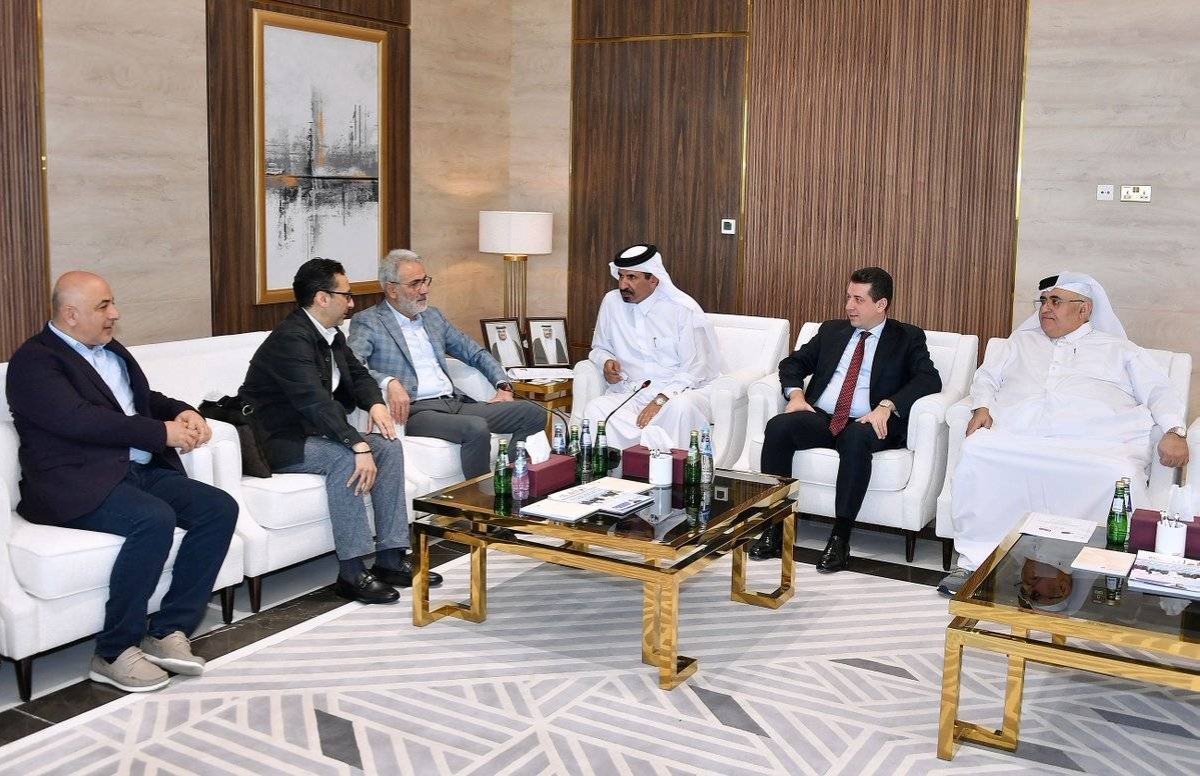
Qatar Chamber Türkiye ties are entering a promising new phase as a high-level delegation from the Sivas Chamber of Commerce and Industry visited the Qatar Chamber to explore deeper cooperation in trade, investment, and industrial development. The meeting highlights the growing economic partnership between Qatar and Türkiye, two nations that have steadily expanded collaboration across multiple sectors in recent years.
Business leaders on both sides expressed optimism that stronger institutional ties between regional chambers can unlock new opportunities for companies, investors, and entrepreneurs. The discussions focused on facilitating bilateral trade, encouraging joint ventures, and supporting small and medium-sized enterprises (SMEs).
Strategic importance of Qatar Chamber Türkiye ties
The strengthening of Qatar Chamber Türkiye ties reflects a broader strategic alignment between the two countries. Political cooperation, defense partnerships, and cultural exchange have already laid a solid foundation. Now, economic institutions are moving to translate that goodwill into tangible business outcomes.
Officials emphasized that chambers of commerce play a critical role as bridges between governments and private sectors. By connecting companies directly, they help reduce barriers, share market information, and identify viable projects.
Key objectives discussed during the meeting included:
- Increasing bilateral trade volumes
- Promoting investment opportunities in both markets
- Facilitating partnerships in manufacturing and industry
- Supporting SMEs seeking international expansion
- Organizing trade fairs and business forums
The visit signals a practical step toward these goals rather than merely symbolic diplomacy.
Focus on regional cooperation: Why Sivas matters
Located in central Anatolia, the city of Sivas is emerging as an important industrial and logistics hub. Its chamber represents a wide range of sectors, including manufacturing, agriculture, mining, textiles, and food processing.
Representatives highlighted that Sivas offers several advantages for foreign investors:
- Strategic location connecting eastern and western Türkiye
- Growing infrastructure and transportation networks
- Competitive labor costs
- Expanding organized industrial zones
- Strong agricultural production base
By engaging directly with regional chambers rather than only national bodies, Qatar aims to diversify its partnerships and discover niche opportunities that may otherwise remain overlooked.
Opportunities for Qatari investors in Türkiye
Türkiye has long been an attractive destination for Qatari investment due to its large domestic market, skilled workforce, and strategic position between Europe, Asia, and the Middle East.
During the talks, Turkish officials presented sectors in Sivas that could benefit from Qatari capital, including:
1. Manufacturing and heavy industry
Sivas hosts various industrial facilities producing machinery, metal products, and construction materials. Joint ventures could help modernize production and expand exports.
2. Agriculture and food processing
The region’s fertile land supports livestock, grain, and dairy production. Investment in processing facilities could increase value-added exports to Gulf markets.
3. Mining and natural resources
Sivas possesses significant mineral reserves, including iron and other metals. Cooperation could involve technology transfer and sustainable extraction methods.
4. Tourism development
With historical sites and natural landscapes, Sivas has untapped tourism potential. Qatari investors are increasingly active in global hospitality projects.
What Türkiye offers to Qatar’s diversification plans
For Qatar, strengthening economic partnerships aligns with its long-term strategy to reduce reliance on hydrocarbons. The country has been investing heavily in manufacturing, logistics, technology, and food security.
Türkiye’s diverse industrial base can support these ambitions by providing:
- Technical expertise
- Industrial know-how
- Skilled labor partnerships
- Supply chain diversification
- Agricultural cooperation
Turkish companies already operate in construction and infrastructure projects across Qatar. Expanding into manufacturing and services could deepen the relationship further.
Benefits for Turkish businesses entering Qatar
The Qatar Chamber Türkiye ties are not one-sided. Turkish companies are eager to expand into the Gulf region, and Qatar offers a stable, high-income market with ambitious development plans.
Key attractions for Turkish firms include:
- Large infrastructure and urban development projects
- Strong purchasing power
- Investor-friendly regulations
- Strategic access to Gulf markets
- Growing demand for food imports
Chamber officials discussed how business delegations, exhibitions, and B2B meetings can help Turkish SMEs establish a presence in Qatar.
Role of chambers as facilitators
Both chambers emphasized their responsibility to support companies throughout the investment process. This includes providing market intelligence, legal guidance, and networking opportunities.
Potential initiatives mentioned include:
- Joint business councils
- Trade missions in both directions
- Information exchange on regulations and incentives
- Training programs for exporters
- Digital platforms for matchmaking
Such institutional cooperation can reduce uncertainty for companies entering unfamiliar markets.
Strengthening supply chains and trade resilience
Recent global disruptions have highlighted the importance of diversified supply chains. By deepening ties with regional partners like Türkiye, Qatar can secure alternative sources of goods and services.
Meanwhile, Turkish exporters gain a reliable market in the Gulf. This mutual benefit makes economic cooperation more resilient to external shocks.
Experts note that regional partnerships are increasingly important as global trade becomes more complex and competitive.
Logistics and connectivity advantages
Transport links between the two countries have improved significantly in recent years, supporting trade growth. Direct shipping routes and air connections facilitate faster movement of goods and people.
The capital city of Doha serves as a major logistics hub in the Gulf, while Türkiye’s extensive transport network connects Europe and Asia. Enhanced chamber cooperation could further streamline logistics processes and reduce costs for businesses.
Cultural and historical ties support economic growth
Economic relations are often strengthened by cultural affinity, and Qatar and Türkiye share close social and political bonds. Educational exchanges, tourism flows, and media cooperation have created familiarity between the two societies.
Business leaders believe this cultural connection reduces barriers to collaboration and fosters trust — a crucial factor in long-term investment decisions.
SMEs at the center of future cooperation
While large corporations often dominate headlines, small and medium-sized enterprises are expected to be major beneficiaries of the Qatar Chamber Türkiye ties.
SMEs typically face greater challenges when entering foreign markets, such as limited resources and lack of contacts. Chamber-to-chamber cooperation can provide:
- Networking platforms
- Export training programs
- Access to financing opportunities
- Market research support
- Legal and regulatory guidance
Encouraging SME participation ensures that the benefits of cooperation reach a broader segment of the economy.
Technology and innovation collaboration
Another area discussed was cooperation in emerging industries. Both countries are investing in digital transformation, smart manufacturing, and innovation ecosystems.
Potential collaboration fields include:
- Information technology services
- Renewable energy solutions
- Smart agriculture
- Construction technologies
- E-commerce platforms
Joint projects in these areas could create high-value opportunities beyond traditional trade.
Food security as a shared priority
Food security has become a strategic concern for Gulf countries, including Qatar. Türkiye’s strong agricultural sector makes it a natural partner.
Investment in farming, storage, and processing facilities in regions like Sivas could help ensure stable food supplies while boosting Turkish exports.
This win-win arrangement demonstrates how economic cooperation can address long-term national priorities.
Expectations for future developments
Officials from both chambers expressed commitment to maintaining regular dialogue and translating discussions into concrete projects. Planned follow-up actions may include reciprocal visits, sector-specific meetings, and joint events.
Analysts suggest that if these initiatives succeed, they could significantly increase bilateral trade volumes in the coming years.
Challenges to overcome
Despite the optimism, several challenges remain:
- Regulatory differences between the two markets
- Currency fluctuations affecting investment decisions
- Logistics costs for certain goods
- Competition from other regional partners
- Need for greater awareness among businesses
Chambers aim to address these issues through information sharing and policy advocacy.
A model for regional economic diplomacy
The engagement between the two chambers illustrates how sub-national institutions can play a powerful role in international economic relations. Instead of relying solely on government agreements, business organizations can drive cooperation from the ground up.
This approach often leads to more practical outcomes because it focuses on real commercial needs rather than abstract policy goals.
Conclusion: A promising path forward
The strengthening of Qatar Chamber Türkiye ties through the Sivas delegation visit marks an encouraging step toward deeper economic integration. By connecting regional industries, promoting investment, and supporting SMEs, both countries stand to gain significantly.
If followed by concrete initiatives and sustained engagement, this partnership could open new avenues for trade, innovation, and development. In an increasingly interconnected yet uncertain global economy, such collaborative efforts provide stability and growth opportunities for businesses on both sides.
Ultimately, the success of this initiative will depend on how effectively the two chambers transform dialogue into action. For now, the signals are positive — suggesting that Qatar and Türkiye are committed to building a dynamic and mutually beneficial economic future together.
Do follow us: Instagram
Read More: Oman-India CEPA Nearing, Promising Prosperous Bilateral Future

