

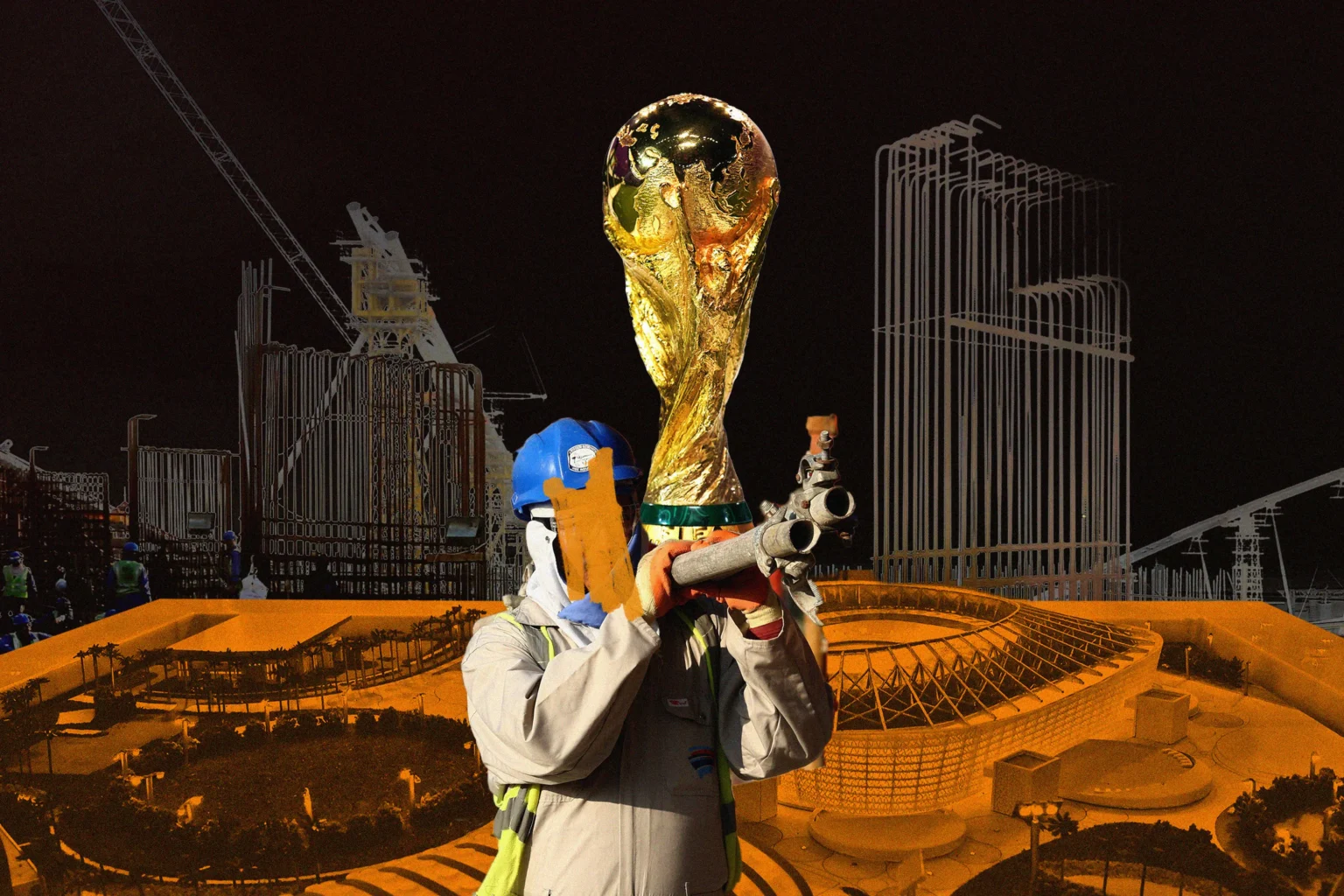
The 2022 FIFA World Cup in Qatar was one of the most expensive and widely watched tournaments in history. The games were played in world-class stadiums, new cities rose from the desert, and millions celebrated the sport. But far from the cheering crowds, a different story was unfolding—one of migrant workers, long hours, unsafe conditions, and unanswered deaths.
Behind the Stadium Walls
To host the World Cup, Qatar launched massive construction projects. New stadiums, roads, airports, and hotels were built almost entirely by migrant workers. These workers came mainly from South Asian countries such as India, Nepal, Bangladesh, Pakistan, and the Philippines. Many of them left their families and homes behind, hoping to earn a better living.
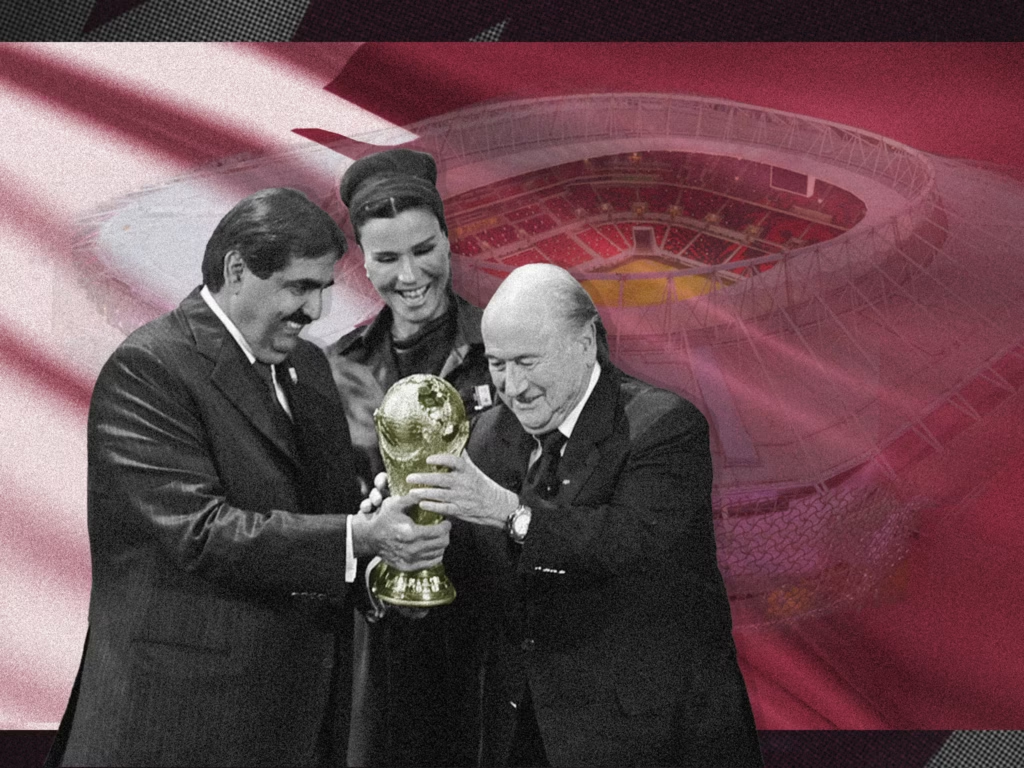
However, the reality they faced was harsh. Workers were often made to work in extreme heat, sometimes over 45 degrees Celsius, for many hours a day. There were reports of unpaid wages, poor housing, and little access to medical care. Although Qatar promised better treatment and labor reforms, many say these changes came too late and were not always enforced.
A Shocking Number of Deaths
The official Qatari government number for work-related deaths linked directly to stadium construction is three. However, investigations and reports by human rights groups and international media suggest that the real number of migrant worker deaths is much higher. Since Qatar won the bid to host the World Cup in 2010, more than 6,000 migrant workers from just five South Asian countries are believed to have died.
Not all of these deaths happened on stadium sites, and not all were labeled as “work-related.” Many were classified as “natural causes” or “heart failure,” even though the men were often young and previously healthy. Experts and rights groups argue that heat stress, poor living conditions, and long working hours likely contributed to many of these deaths.
One Tragedy That Sparked Global Outrage
One death in particular made headlines around the world. In December 2022, during the World Cup, a Filipino migrant worker died while fixing lights at the Sealine Beach resort. This was one of the official training sites for the Saudi Arabian national team. The man reportedly fell to his death while doing maintenance work.
What shocked many was the reaction from Qatar’s World Cup chief, Nasser Al-Khater. When asked about the incident by reporters, he replied, “Death is a natural part of life.” His comment was widely criticized as insensitive and dismissive, especially given the growing concerns over worker safety and treatment in the country.
Legal Action but Still Many Questions
After pressure from international groups, Qatar’s government confirmed that a criminal investigation had been launched into the Filipino worker’s death. The worker’s employer, Salam Petroleum, became the focus of the probe. Officials said the company might face charges for failing to follow safety standards.
While this legal action is a step forward, many critics say it’s a rare case. Most deaths of migrant workers are not investigated thoroughly. Families of the deceased often return home without clear answers, and many receive little or no compensation.
FIFA’s Responsibility Under Scrutiny
FIFA, the global governing body of football, has also come under fire. Human rights organizations say that FIFA failed to ensure safe working conditions for the people who made the World Cup possible. Despite calls for worker compensation, FIFA has not set up a dedicated fund for victims or their families.
Instead, FIFA announced a $50 million “legacy fund” meant to support social programs in developing countries. However, this fund does not include direct financial aid for the families of workers who died or were injured while working on World Cup-related projects.
Many activists believe FIFA should have created a fund worth at least $440 million, equal to the prize money awarded at the World Cup. This money could help the thousands of families left without a main breadwinner.
Qatar’s Labor Reforms: Real Change or Public Relations?
In response to global criticism, Qatar introduced several labor reforms in recent years. One of the biggest changes was ending the “kafala” system, which tied workers to one employer and made it very hard for them to leave or change jobs. The country also set a new minimum wage and allowed workers to join labor committees.
But many say these reforms look better on paper than in practice. Reports still surfaced during the World Cup preparation period of workers being underpaid, forced to work in dangerous conditions, or living in overcrowded and unsanitary accommodations. Some workers reported they were too afraid to speak out for fear of being deported or punished.
A Global Conversation on Human Rights
The tragic deaths of migrant workers in Qatar have sparked an important conversation worldwide. Should global sports events like the World Cup be awarded to countries with poor labor records? Can governing bodies like FIFA be held responsible for what happens behind the scenes?
These questions are now being asked more urgently, especially as Saudi Arabia prepares to host the 2034 FIFA World Cup. Many human rights groups are already watching closely and warning against repeating the same mistakes.
What Happens Next?
As the cheers from the World Cup fade and the spotlight moves elsewhere, many fear that the stories of these workers will be forgotten. Rights groups are pushing for further investigations, compensation programs, and real changes to ensure worker safety in future mega-events.
Meanwhile, the families of the thousands of men who died continue to grieve. They deserve not only answers but also justice and recognition for the sacrifices made in the name of sport and spectacle.
Final Thoughts
The 2022 FIFA World Cup in Qatar was a celebration of football, unity, and global pride. But its success came at a cost—one paid by some of the most vulnerable people in the world. If real change is to come, the world must not ignore the price of that celebration.
It’s time for FIFA and host nations to commit to human rights—not just in words, but in action. The lives lost deserve more than silence.

