

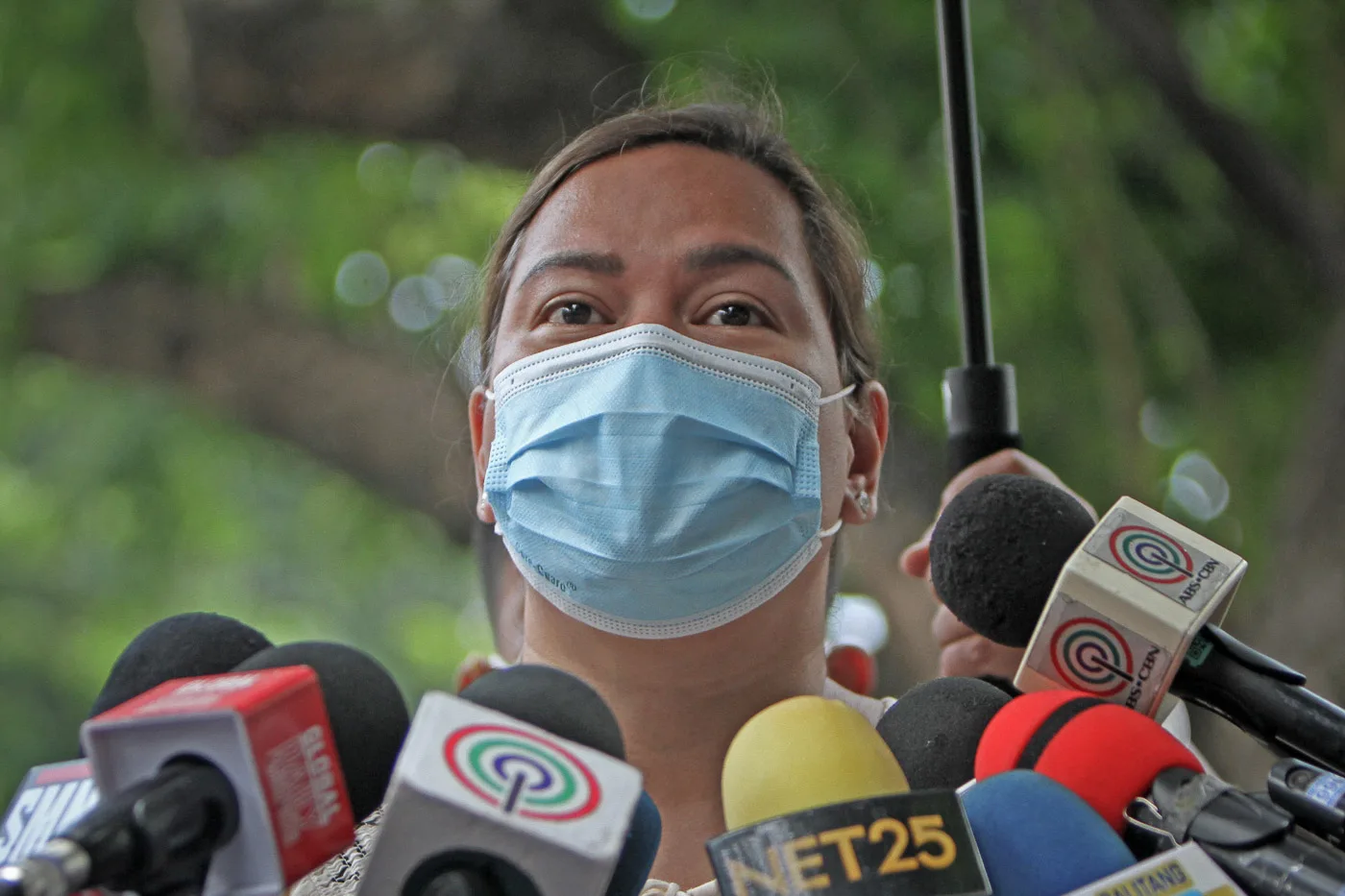
When Sara Duterte, the Vice President and Education Secretary, openly admitted that some high school students in the Philippines still do not know how to read, her words sent shockwaves across the country. It was not just a statement but a mirror held up to the nation’s education system, revealing deep cracks that have long been ignored. For parents, teachers, and students, this revelation is both painful and urgent. Literacy is the foundation of learning, and without it, the future of thousands of children is at risk.
Her concern highlights a reality that many communities already see every day. There are classrooms where teenagers sit in silence, struggling to read even basic sentences, while others feel embarrassed that their peers may notice their weakness. For a country that takes pride in the talent and intelligence of its people, this situation is a wake-up call that change can no longer be delayed.
Why Reading Matters Beyond the Classroom
The inability to read is not just an academic issue; it is a life issue. Reading is the gateway to every subject, from understanding math problems to interpreting science concepts. Without literacy, students fall behind in every area, creating a cycle of frustration, low confidence, and eventually, dropping out. Beyond academics, reading is what empowers individuals to understand the world, to engage in society, and to pursue opportunities.
Imagine a teenager applying for a job but unable to fill out a form correctly, or a young person who cannot follow written instructions in the workplace. This disadvantage follows them well into adulthood. It limits career choices, financial independence, and even the ability to make informed decisions as a citizen. Duterte’s remarks, therefore, touch on an issue that affects not only education but also the long-term progress of the nation.
The Courage to Speak the Truth
What made Sara Duterte’s statement powerful is her willingness to acknowledge a problem that many would rather sweep under the rug. It takes courage for a leader to admit that the education system is failing some of its students. By doing so, she opened the door for real conversations, honest reflection, and the possibility of reform.
Leaders are often measured not by their silence, but by their courage to face uncomfortable truths. Duterte’s honesty signals a determination to confront weaknesses head-on. For teachers, parents, and local communities, it is an invitation to join the mission of lifting the education system to a standard that truly empowers young people.
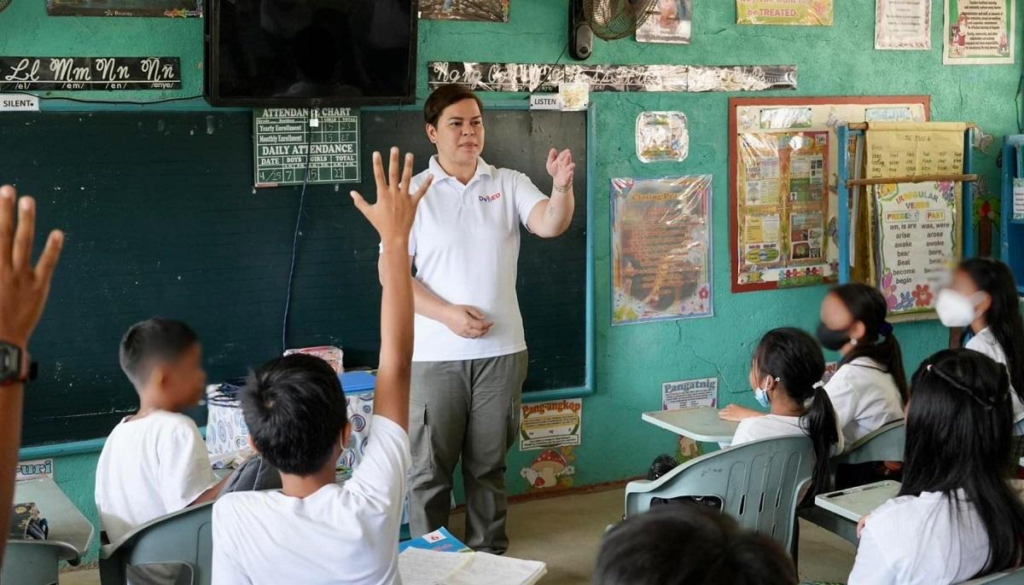
Understanding the Root Causes
Why do some high school students still not know how to read? The reasons are complex and layered. Poverty plays a huge role, as many children grow up without access to books, proper tutoring, or even consistent schooling. In some remote areas, classrooms are overcrowded, teachers are underpaid and overworked, and learning materials are limited.
Another reason is the lack of early intervention. When reading struggles are not identified at the primary level, students continue moving up grade levels without mastering the basics. This results in high schoolers who are academically misplaced and unable to keep up. The pandemic has also worsened the problem, with many children left behind due to limited online access and the absence of proper guidance at home.
Teachers at the Frontline of Change
Teachers carry an enormous responsibility. They are not only educators but also motivators, role models, and sometimes even second parents. For a student who struggles with reading, a dedicated teacher can be the difference between failure and success. Duterte’s statement indirectly honors the silent warriors in classrooms who refuse to give up on their students, even in the face of overwhelming challenges.
But teachers cannot do it alone. They need support in the form of better training, fair salaries, updated teaching tools, and manageable class sizes. When educators are empowered, they can create learning environments where no child is left behind.
The Role of Families and Communities
Education is not the responsibility of schools alone. Families and communities play a crucial role in nurturing literacy. Reading habits must be cultivated at home, where parents encourage children to explore books, listen to stories, and develop curiosity about words. Communities, too, can provide support by establishing reading centers, libraries, and peer tutoring programs.
The culture of reading in a society directly affects the quality of education. If books are valued, if storytelling is encouraged, and if children grow up in an environment where learning is celebrated, literacy will naturally flourish. Duterte’s call should therefore inspire not just policy changes, but also a cultural shift where every Filipino sees literacy as a shared responsibility.

A Nation’s Progress Depends on Literacy
The strength of a nation lies in the education of its people. Economies thrive when citizens are skilled, innovative, and capable of adapting to change. Literacy is the foundation of these skills. Without it, the Philippines risks falling behind in a rapidly advancing world.
Investing in literacy is investing in the nation’s future leaders, innovators, and workers. A student who learns to read well today could become tomorrow’s engineer, doctor, teacher, or entrepreneur. Duterte’s words remind us that the fight for literacy is not about statistics or reports; it is about real children, real dreams, and real futures.
Turning a Crisis Into an Opportunity
While the statement may seem alarming, it also provides an opportunity. Acknowledging the problem is the first step toward fixing it. With this honesty comes a chance for reforms that could transform the education system for the better.
Duterte’s leadership can pave the way for nationwide literacy programs, stronger teacher support, and partnerships with private organizations to provide resources where the government cannot. This crisis can be turned into a movement that unites the country in uplifting the quality of education.
The Road Ahead
The journey will not be easy. Literacy cannot be fixed overnight, nor can decades of systemic issues vanish in a single term. But progress is possible with consistent effort, collaboration, and strong political will. Duterte’s bold acknowledgment is the starting point, and the road ahead requires action, patience, and persistence.
If the Philippines can commit to this cause, future generations will no longer face the painful reality of reaching high school without the ability to read. Instead, they will enter classrooms with confidence, curiosity, and the tools to succeed.
A Call to Hope and Action
Sara Duterte’s words were not meant to shame, but to awaken. They serve as a challenge to every Filipino to take part in reshaping the nation’s education system. From the halls of government to the smallest barangay, from teachers to parents, from policy makers to children themselves—the responsibility is shared.
Change begins with awareness, but it grows with action. The dream of a literate, empowered, and intelligent Philippines is within reach if everyone works together. This is not just about solving a problem; it is about building a future where no child is left behind.
Do follow Gulf Magazine on Instagram.
Also Read – Kuwait KMCC Leadership Workshop Empowers Youth and Inspires Community Growth

